 Caution
South America · Herb · № 378
Lemon verbena
Aloysia citrodora
Traditionally attributed effects: relaxing, helps you fall asleep.
The Guaraní and the mate tradition+4Folklore
Tradition in South America
An ancient Guaraní drink; shared today across parts of South America

The Guaraní have lived for centuries in the area of present-day Paraguay, north-eastern Argentina, southern Brazil and parts of Bolivia. Their language, Guaraní, is an official language in Paraguay alongside Spanish and is spoken by most of the population.
Long before the Europeans arrived, the Guaraní drank an infusion of the leaves of maté (Ilex paraguariensis), ka’a in Guaraní. They used it as a drink, as a remedy and in rituals.
In the seventeenth century Jesuits set up mission villages in this region, the reducciones, where Guaraní lived and worked. The Jesuits succeeded in cultivating maté, which until then had only been gathered in the wild, and sold the leaves throughout South America as “Jesuit tea”. In 1767 the Jesuits were expelled, but maté drinking remained.
Drinking maté is first of all a social gesture. The drink is prepared in a gourd, the mate or guampa, and drunk through a metal straw, the bombilla. One person pours, and the gourd goes round the circle. Sharing means friendship and trust.
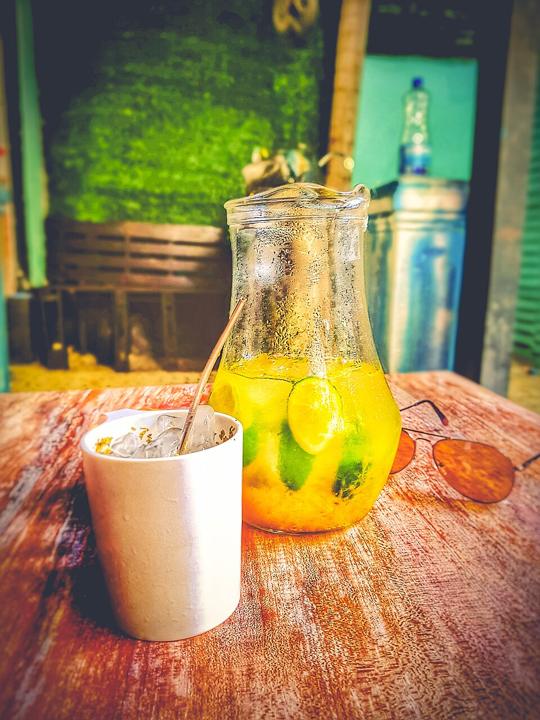
In Paraguay people often drink tereré: cold maté, with water in which medicinal herbs have been pounded, the pohã ñana. According to folk knowledge each herb has its own effect: cooling, good for digestion, or calming.
For the Guaraní themselves, ka’a belongs to a spiritual world in which plants have a soul and must be approached with respect.
Knowledge of the pohã ñana has been passed on in Paraguayan families since about the sixteenth century. Parents and grandparents teach children which herbs go into the tereré for which complaint.
At markets in Asunción and other cities, yuyeras, herb women, sell fresh herbs and pound them on the spot for tereré. They give advice and are keepers of folk knowledge.
Among Guaraní communities themselves, shamans and elders are the bearers of the deeper spiritual knowledge.
An early source on the Guaraní language and culture is the Tesoro de la lengua guaraní of 1639 by the Jesuit Antonio Ruiz de Montoya, a dictionary with much information on plants and customs.
In 2020 UNESCO recognised the “practices and traditional knowledge of tereré in the culture of pohã ñana, ancestral Guaraní drink in Paraguay” as intangible heritage.
On the health effects of maté, the International Agency for Research on Cancer (IARC) published an important report in 2016.
Maté is a national drink in Argentina, Uruguay, Paraguay and southern Brazil. In southern Brazil it is called chimarrão. People carry a thermos and a gourd to work, the park and the beach.
In Paraguay tereré is part of daily culture, and since 2020 world heritage. There is even a national Tereré Day.
The Guaraní communities themselves often have a hard time, with loss of land and poverty. Recognising their culture is also a matter of justice.
Maté is a species of holly that grows in the subtropical forests of South America. The leaves contain caffeine and theobromine. They are dried, sometimes roasted, and ground into yerba.
Herbs such as cedrón (lemon verbena), mint and many others go into tereré. Every region and every family has its own recipes.
Maté now grows mainly on plantations, but in some areas it is still gathered in the wild, in the shade of the forest.
Maté is a social ritual. If you are offered a gourd, drink it empty and hand it back to the person pouring. Only say “thank you” when you do not want any more maté.
Mind the temperature. According to the IARC, drinking beverages above 65 °C is probably carcinogenic, because of the damage to the oesophagus. Let hot maté cool a little. Maté also contains caffeine.
From the kitchen
Registry
CautionSouth America · Herb · № 378
Aloysia citrodora
Traditionally attributed effects: relaxing, helps you fall asleep.
 Caution
South America · Herb · № 165
Handroanthus impetiginosus (syn. Tabebuia avellanedae)
The inner bark is sold for fungal infections, inflammation and as a 'cancer remedy'. There is no reliable human evidence; its active compound lapachol proved too toxic at effective doses.
CautionSouth America · Food · № 15
Ilex paraguariensis
The leaves contain caffeine, theobromine and polyphenols; the drink is stimulating and dispels tiredness, like coffee or tea. It is a beverage and social drink, not a medicine.