Oceania · Herb · № 7
Kava
Piper methysticum
The drink slightly numbs the mouth and tongue and is relaxing. Research points to a modest effect on anxiety, but results vary and the safety of supplements is disputed.
Tradition in Oceania
Predates 1778; recognised again after long suppression

Lāʻau lapaʻau is the traditional plant medicine of Native Hawaiians. The Polynesian voyagers who settled Hawaiʻi brought plants they needed in their canoes: the “canoe plants”, such as ʻawa, kukui, noni, ʻōlena and kī.
The healers, kahuna lāʻau lapaʻau, were trained for decades. They knew the plants, the prayers and diagnosis, and had high status.
After the arrival of Western missionaries in 1820 and the spread of Christianity, traditional medicine was suppressed. The laws of Hawaiʻi punished kahuna who practised healing with fines or imprisonment; only lomilomi, massage, remained permitted. Only in 1988 did the US Congress recognise lāʻau lapaʻau in the Native Hawaiian Health Care Act.
According to Hawaiian tradition, illness arises from a loss of mana, life force, or of pono, the right balance and right relationships. A conflict in the family or the breaking of a taboo can make someone ill.
That is why healing is more than giving a herb. Prayer (pule) and chant (oli) belong to it. Hoʻoponopono, restoring relationships in the family through talk, forgiveness and reconciliation, is also an important part of care.
Nature, the land and the ocean are seen as sacred and alive. Whoever picks a plant asks permission and takes only what is needed.
A pupil learned for years from a kahuna: recognising the plants, gathering them at the right moment, preparing them and saying the right prayers. Knowledge often stayed within families.
A well-known kahuna of the twentieth century was Papa Henry Auwae (1906–2000), who did much to pass the knowledge on to a new generation.
After 1988 councils of elders in Hawaiian communities gained a role in recognising traditional healers.
An important early book is Hawaiian Herbs of Medicinal Value of 1922, by D.M. Kaaiakamanu and J.K. Akina.
The Hawaiian scholar Mary Kawena Pukui (1895–1986) wrote about language, culture and tradition, including in Nānā I Ke Kumu of 1972, on Hawaiian concepts of health and family, among them hoʻoponopono.
The Native Hawaiian Health Care Act of 1988 officially recognises lāʻau lapaʻau as traditional medicine.
Lāʻau lapaʻau is experiencing a revival, as part of a broader Hawaiian cultural renaissance. There are workshops, courses and clinics.
Some healthcare organisations for Native Hawaiians work together with traditional healers.
Noni has become known worldwide as a juice, though the scientific evidence for its health claims is limited.
The canoe plants form the core of the Hawaiian pharmacy. Noni was used for wounds, bruises and as a tonic. Kukui provided oil for the skin and the nuts were used as a laxative. ʻŌlena, turmeric, served for ear and nose complaints.
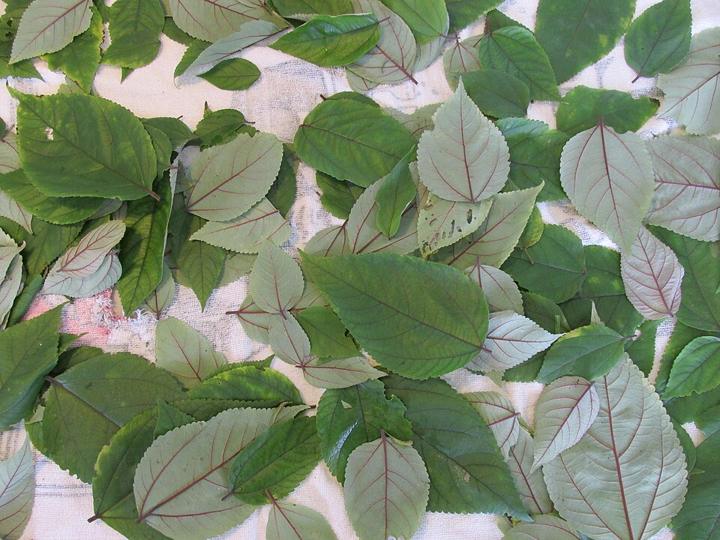
ʻAwa was used in ceremonies and to relax. The leaves of kī (ti) served for fever and to wrap food. Māmaki is drunk as a tea.
Native plants that grew there before people arrived were used too.
From the kitchen
Registry
Oceania · Herb · № 7
Piper methysticum
The drink slightly numbs the mouth and tongue and is relaxing. Research points to a modest effect on anxiety, but results vary and the safety of supplements is disputed.
Oceania · Herb · № 843
Cordyline fruticosa
A plant with large leaves, used in Hawaiʻi for fever and headache and to wrap food.
Oceania · Herb · № 842
Aleurites moluccanus
A tree whose oil cares for the skin; the nuts are laxative.
Asia · Herb · № 5
Curcuma longa
A traditional culinary spice containing curcumin; laboratory findings do not establish a cure for disease.
Oceania · Herb · № 844
Pipturus albidus
A native Hawaiian plant whose leaves are drunk as a tea.
Oceania · Food · № 50
Morinda citrifolia
Traditionally used for colds, infections, fever, and stomach complaints. There is no good evidence of treatment effects.
Oceania · Other · № 55
Calophyllum inophyllum
An oil used mainly in skin care; medical claims are not established.