 Caution
Central America and the Caribbean · Food · № 818
Annatto (achiote)
Bixa orellana
The red seeds are used as a colouring and spice; traditionally also as a remedy.
Maya healing knowledge+4
Tradition in Central America and the Caribbean
Cacao drinks documented from about 1900 BCE
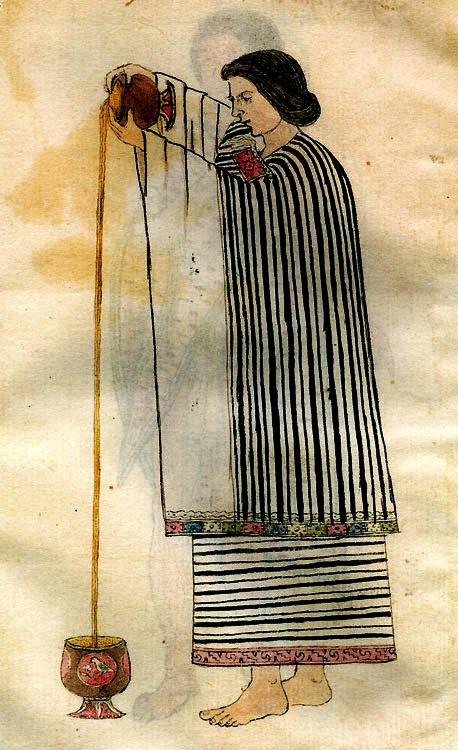
Cacao is older than the civilisations that made it famous. The plant was domesticated at least 5,300 years ago by the Mayo-Chinchipe culture in present-day Ecuador, and later reached Mesoamerica. Pottery from Chiapas and Veracruz, from around 1900 to 1750 BCE, contains residues of cacao drinks.
The Olmecs, the Maya and the Aztecs made cacao into a drink the elite drank at feasts and ceremonies. On Maya vases the word kakaw appears in hieroglyphs. Among the Aztecs cacao beans were so valuable that they served as currency.
In the sixteenth century the Spanish encountered cacao. They added sugar, and via Spain chocolate conquered Europe in the seventeenth century.
Cacao had a sacred meaning. The Maya saw it as a gift of the gods, and at weddings, births and funerals cacao was drunk or offered. The scientific name Theobroma means “food of the gods”.
The drink was not sweet but bitter and spicy. Cacao was mixed with maize, chilli, vanilla, annatto and fragrant flowers. The foam was the most important part: the drink was poured from a height from one vessel into another to whip it up.
Cacao gave strength. Warriors and travellers drank it to keep going for a long time, and it was also used as a remedy.
Knowledge of growing, fermenting, roasting and grinding cacao was passed on within families and communities. It is craftwork that takes a lot of experience.
Preparing the drink was often the work of women, who mastered the foam and the flavour. At ceremonies, priests or elders led the ritual.
That knowledge lives on in villages where cacao is still processed on a metate, a grinding stone.
Archaeologists have found cacao residues in pottery thousands of years old. A well-known example is a vessel from Río Azul in Guatemala, from the fifth century, with the Maya word for cacao and traces of the drink inside.
The Florentine Codex and the Libellus de medicinalibus Indorum herbis from the sixteenth century describe the use of cacao among the Aztecs, including as a remedy.
Spanish chroniclers wrote about the drink of the emperor Moctezuma, though some of the stories were later embellished.
Cacao is still grown in Mexico and Central America, though most of the world’s production now comes from West Africa.
In Oaxaca people drink tejate, a cold drink of maize, cacao and flowers that dates from before the Spanish. In Guatemala and Mexico cacao is still used in rituals and festivities.
There are also modern “cacao ceremonies” in Europe and the United States, which often have little to do with the original traditions.
Cacao (Theobroma cacao) is a tree of the tropical rainforest. The beans grow in large pods on the trunk. They are fermented, dried and roasted.
Cacao contains theobromine and some caffeine, and is rich in flavanols. In the old drinks cacao went together with maize, chilli, vanilla, annatto and flowers.
Cacao grows best in the shade of larger trees, in a rich forest.
For the Maya and other peoples cacao is a sacred plant. Be critical of modern “ceremonies” that adopt traditions without involving the communities.
When buying chocolate, choose fairly grown cacao. Theobromine is poisonous to dogs and cats.
From the kitchen
Registry
CautionCentral America and the Caribbean · Food · № 818
Bixa orellana
The red seeds are used as a colouring and spice; traditionally also as a remedy.
 Caution
Central America and the Caribbean · Food · № 166
Persea americana
A fruit rich in monounsaturated fats, fibre and potassium; it fits a diet that is favourable for cholesterol. Avocado oil is used in skin care.
 Caution
Central America and the Caribbean · Food · № 30
Theobroma cacao
The seeds are the basis of cocoa and chocolate and contain theobromine and some caffeine. Health claims do not make cacao a treatment.
 Caution
Central America and the Caribbean · Herb · № 161
Capsicum frutescens
Capsaicin from chilli peppers is used externally for nerve pain and joint pain; high-dose capsaicin patches are an approved medicine. Internally it is mainly a warming spice.
 Caution
Central America and the Caribbean · Food · № 266
Zea mays
Traditionally attributed effects: diuretic, heals the urinary tract lining, tonic, soothing.
 Caution
Central America and the Caribbean · Food · № 157
Solanum lycopersicum
A fruit-vegetable with vitamin C and lycopene. Research on lycopene and heart or prostate health is mostly observational and not conclusive.
 Caution
Central America and the Caribbean · Herb · № 222
Vanilla planifolia
Traditionally attributed effects: gives a feeling of calm and comfort; fragrance.
 Caution
North America · Herb · № 159
Dioscorea villosa
Traditionally used for abdominal and uterine cramps. Wild yam cream is sold as 'natural progesterone', but the body cannot convert diosgenin into hormones; only a laboratory can.