Skip to content
Herbs & Cultures

Maya, cacao and Caribbean sea

Central America and the Caribbean

44 remedies · 4 traditions

From Mexico and the Maya region to the islands of the Caribbean. Maize, beans, squash, cacao and vanilla were domesticated here, and Maya knowledge, curanderismo and the herbal traditions of the islands live side by side.

Characteristic plants

History and today

Cultures and traditions

Dates refer to surviving sources or written records where possible. Much orally transmitted knowledge predates its first written record.

Image of Cacao

Yucatán, Guatemala and Belize

Maya healing knowledge

Pre-colonial roots; living communities today

The Maya have lived for thousands of years in southern Mexico, Guatemala, Belize and parts of Honduras and El Salvador. In the Classic period, roughly from 250 to 900, they built cities such as Tikal, Palenque and Copán, and developed a script, a calendar and a rich knowledge of plants and the human body. What we know about their medicine in that time is mostly indirect: from images, from residues in pottery and from what was written down later. After the Spanish conquest in the sixteenth century most Maya books were burned. What remained mixed with Spanish and Catholic influences. Yet the traditions live on. There are now more than six million Maya, speaking some thirty different Mayan languages. Their medicine differs by region, language and village.

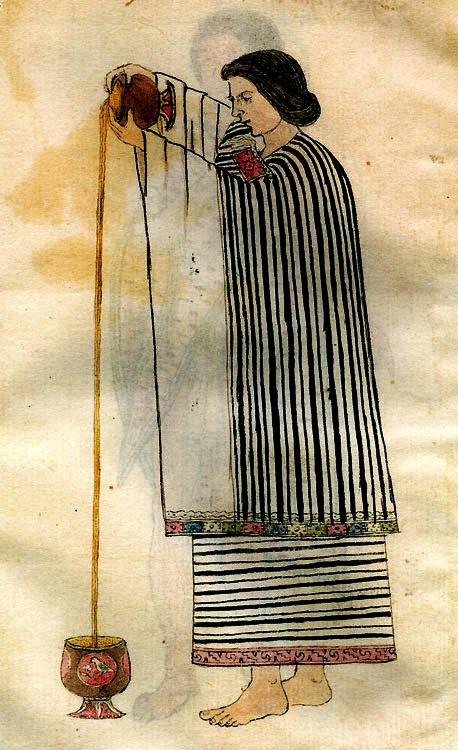
Image of Rue

Mexico and the US Southwest

Curanderismo

Indigenous and Spanish Catholic roots; living in Latin America and the US

Curanderismo is the tradition of the curanderos and curanderas, traditional healers in Mexico, Central America and the south-western United States. The name comes from the Spanish curar, to heal. The tradition has several roots. The Aztecs and other Mesoamerican peoples had an extensive medicine, with knowledge of hundreds of plants. The Spanish brought the European doctrine of the humours, the Catholic saints and their own herbs such as rue. African and Arab influences also played a part, via Spain and via the slave trade. From that mixture curanderismo arose in colonial times. In Texas, Don Pedrito Jaramillo (1829–1907) became a famous healer who helped thousands of people. In Mexico, Teresa Urrea, the “Saint of Cabora”, and El Niño Fidencio became legendary.

A woman pours cacao from a height to make it froth; Codex Tudela, 16th century.

Mesoamerica, from southern Mexico to Honduras

Cacao in Mesoamerica

Cacao drinks documented from about 1900 BCE

Cacao is older than the civilisations that made it famous. The plant was domesticated at least 5,300 years ago by the Mayo-Chinchipe culture in present-day Ecuador, and later reached Mesoamerica. Pottery from Chiapas and Veracruz, from around 1900 to 1750 BCE, contains residues of cacao drinks. The Olmecs, the Maya and the Aztecs made cacao into a drink the elite drank at feasts and ceremonies. On Maya vases the word kakaw appears in hieroglyphs. Among the Aztecs cacao beans were so valuable that they served as currency. In the sixteenth century the Spanish encountered cacao. They added sugar, and via Spain chocolate conquered Europe in the seventeenth century.

Image of Velvet leaf

The Antilles

Herbal knowledge of the Caribbean

Taíno roots; African and European influences since the 16th century

Long before 1492 the Taíno, the Kalinago and other Indigenous peoples lived on the islands of the Caribbean. They knew the plants of their islands and used them as food, as medicine and in ceremonies. The word tobacco comes from their language via Spanish; the Taíno used tobacco in rituals, among other things. After the Spanish conquest most Taíno died from violence, forced labour and new diseases. Part of their knowledge lived on in the families and villages that followed. From the sixteenth century hundreds of thousands of Africans were enslaved and brought to the plantations on the islands. They brought their own knowledge of plants and learned the plants of their new surroundings. From that mixture of Indigenous, African, European and later also Indian and Chinese knowledge grew the herbal medicine found on the islands today. On the English-speaking islands it is called bush medicine and bush tea; on Curaçao, Aruba and Bonaire, rèmedi di tera.

From the kitchen

Recipes from Central America and the Caribbean

All recipes (2) →

Registry

Herbs from Central America and the Caribbean

Search herbs, spices and other natural ingredients by name, use, or tag. Traditional use is cultural and historical information, not medical advice.

44 results

  • Caution

    Herb · № 819

    Tobacco

    Nicotiana rustica

    A ceremonial plant of many Indigenous peoples of the Americas. Tobacco is addictive and harmful to health.

    Maya healing knowledge+10
  • Caution

    Mushroom · № 904

    Teonanácatl (sacred mushrooms)

    Psilocybe mexicana (en andere Psilocybe-soorten)

    Small mushrooms containing psilocybin and psilocin. After half an hour to an hour they bring visions and an altered sense of time and space that last several hours.

    Curanderismo
  • Caution

    Food · № 157

    Tomato

    Solanum lycopersicum

    A fruit-vegetable with vitamin C and lycopene. Research on lycopene and heart or prostate health is mostly observational and not conclusive.

    Maya healing knowledge+4Folklore
  • Caution

    Herb · № 222

    Vanilla

    Vanilla planifolia

    Traditionally attributed effects: gives a feeling of calm and comfort; fragrance.

    Maya healing knowledge+3Folklore
  • Caution

    Herb · № 397

    Sweet acacia

    Acacia farnesiana

    Traditionally attributed effects: astringent, soothing, cleansing; for bleeding gums, gonorrhoea; gum as a substitute for gum arabic.

    Ayurveda
  • Caution

    Herb · № 632

    Yerba mansa

    Anemopsis californica

    Traditionally attributed effects: expels wind and dampness in joint pain that worsens in cold, wet weather, opens blocked sinuses and dries dampness in slow-healing wounds and swellings.

    Curanderismo+2
  • Caution

    Herb · № 922

    Zacatechichi

    Calea ternifolia (syn. Calea zacatechichi)

    A shrub of the daisy family with very bitter leaves. Contains caleicine and other sesquiterpene lactones, among others. Said to make sleep light and dreams clear and vivid; in a small study an extract caused a slight change of perception, drowsiness and a short sleep with vivid dreams.

    Curanderismo
  • Caution

    Herb · № 850

    Soursop

    Annona muricata

    A tree with a large, sweet-sour fruit. The leaf is drunk as a calming tea. Claims that soursop cures cancer are unproven.

    Herbal knowledge of the Caribbean+1