 Caution
Europe · Food · № 654
Watercress
Nasturtium officinale
Traditionally attributed effects: rich in vitamin C, beta-carotene and vitamin E; used to support detoxification, cool body heat and support the lungs.
Kallawaya healing knowledge+1
A cooling family soup with watercress, figs and apricot kernels.
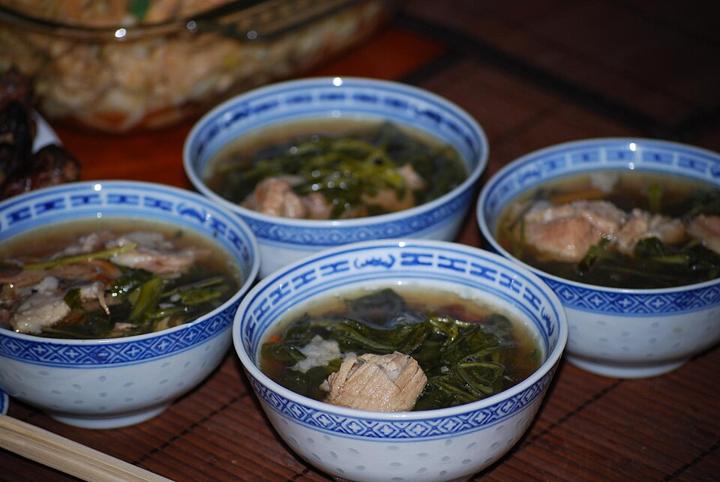
Watercress is full of vitamin C, beta-carotene and vitamin E and is regarded as cooling and good for the lungs. Figs and apricot kernels round out the taste.
350 g watercress 4 dried figs, halved
 2 tbsp sweet apricot kernel (bei xing ren)2 tbsp bitter apricot kernel (ku xing ren)
 A few slices of fresh ginger
Registry
Read more about effects and safety on each herb’s page.
CautionEurope · Food · № 654
Nasturtium officinale
Traditionally attributed effects: rich in vitamin C, beta-carotene and vitamin E; used to support detoxification, cool body heat and support the lungs.
CautionAsia · Food · № 272
Prunus armeniaca
Traditionally attributed effects: cough-suppressing, astringent, antibacterial, pain-relieving, diuretic, anti-inflammatory; wild cherry suppresses cough.
CautionAsia · Food · № 801
Ficus carica
Traditionally attributed effects: dried figs make Chinese soups naturally sweet, such as the watercress and spare-rib soup and the eight-treasure soup; they are regarded as moistening for lung and bowel.
CautionAsia · Herb · № 1
Zingiber officinale
Traditionally used for nausea and digestive discomfort; it has a warming flavor.
Cultures and traditions
The herbs in this recipe also appear in these traditions.