
 Caution
Europe · Herb · № 79
Elecampane
Inula helenium
The root is traditionally used for productive coughs and bronchitis; it is rich in inulin. Clinical evidence is limited.
Greco-Roman medicine+4
Tradition in Europe
Written works from the 5th century BCE
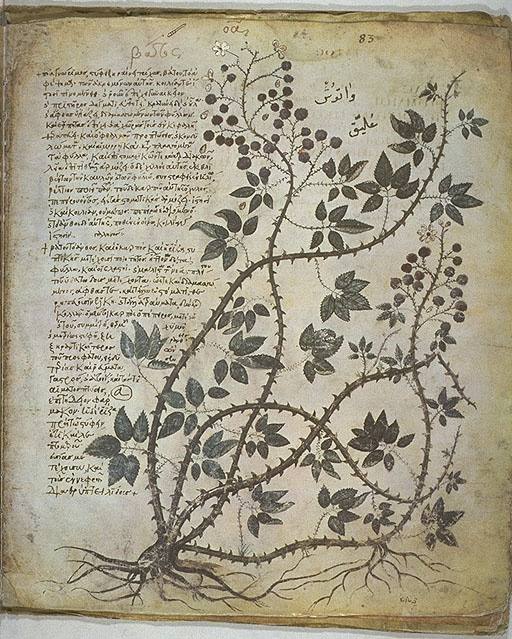
Greek medicine began not with physicians but with gods. In sanctuaries of Asclepius, such as at Epidaurus and on the island of Kos, the sick slept a night in the temple, hoping the god would heal them or give advice in a dream.
In the fifth century BCE a different approach arose on Kos, associated with the name of Hippocrates (c. 460–370 BCE). The so-called Hippocratic writings, some sixty texts by different authors, seek the cause of illness not with the gods, but in the body, diet, climate and way of life.
Others later built on this. In the fourth century BCE Theophrastus wrote the first great work on plants. In the first century CE the Greek army physician Dioscorides described some six hundred plants and their uses in De materia medica. Galen (129–c. 216), a physician from Pergamon who worked in Rome, brought everything together in a vast body of work that would shape European and Islamic medicine for more than fifteen hundred years.
The core of classical medicine is the doctrine of the four humours: blood, phlegm, yellow bile and black bile. They belong to the four elements and the four qualities: warm, cold, dry and moist. Health is a good mixture of the humours, krasis; illness is a disturbance of it.
Galen developed this into a theory of temperaments. Depending on which humour dominates, a person is sanguine, phlegmatic, choleric or melancholic. We still use those words.
Treatment followed nature. The body has its own healing power, and the physician supports it with diet, rest, exercise, baths and remedies. Diet, diaita, was the first medicine.
Physicians learned the craft in families, in schools such as those of Kos and Knidos, or with a master. In Alexandria in the third century BCE the human body was even studied by dissection.
The Hippocratic Oath, with promises to do the patient no harm and to keep confidentiality, shows that physicians saw themselves as a profession with its own ethics.
Alongside the learned physicians there were root-cutters, rhizotomoi, who dug up and sold roots and plants, often with their own rituals and secrets.
The Hippocratic writings deal with, among other things, the nature of man, airs, waters and places, epidemics and the oath. They mark the beginning of Western medical literature.
Dioscorides’ De materia medica remained the most important work on medicinal plants for centuries. A beautifully illustrated manuscript of it, the Vienna Dioscorides of 512, is on UNESCO’s Memory of the World register.
Pliny the Elder’s Naturalis Historia and Celsus’ De medicina are also important sources. Galen wrote hundreds of works; many have survived through Arabic translations.
The doctrine of the humours has been replaced by modern medicine, but the influence of classical medicine is everywhere. Medical terms come from Greek and Latin, physicians often take an oath based on the Hippocratic one when they graduate, and the rod of Asclepius with its snake is the symbol of medicine.
The emphasis on lifestyle, diet and preventing illness is topical again.
Many plants from Dioscorides are still used, and some have been studied and found to contain active substances.
Classical medicine used hundreds of plants from the Mediterranean. Olive oil was the basis of ointments and cooking. Bay laurel was sacred to Apollo, the father of Asclepius. Mint, fennel, rue, garlic and wormwood were common.
Some plants were dangerous. Hemlock was the poison with which the philosopher Socrates was put to death in 399 BCE. Mandrake was used as a painkiller and sleeping draught, and many legends surrounded it. The opium poppy provided opium.
A famous vanished plant is silphium from Cyrene, in present-day Libya, which was so sought after that it died out in antiquity.
From the kitchen
Registry
CautionEurope · Herb · № 79
Inula helenium
The root is traditionally used for productive coughs and bronchitis; it is rich in inulin. Clinical evidence is limited.
 Caution
Europe · Herb · № 835
Mandragora officinarum
A highly poisonous plant containing tropane alkaloids, used in antiquity as a painkiller and sleeping draught.
 Caution
Europe · Herb · № 63
Artemisia absinthium
One of the most bitter herbs; traditionally used to stimulate appetite and digestion and against intestinal worms. Clinical evidence is limited.
 Caution
Asia · Herb · № 228
Pimpinella anisum
Traditionally attributed effects: gives a natural lip-plumping effect.
 Caution
Europe · Food · № 65
Asparagus officinalis en A. racemosus
A nutritious vegetable; root and shoots were traditionally used as a diuretic. There is no good evidence for a medicinal effect.
 Caution
Africa · Herb · № 413
Anacyclus pyrethrum
Traditionally attributed effects: promotes salivation, strengthens the nerves; for toothache and caries, sore throat, tonsillitis, epilepsy, rheumatism.
 Caution
Europe · Herb · № 93
Betonica officinalis (syn. Stachys officinalis)
Traditionally used for tension headaches and nervousness. Modern clinical research is lacking.
 Caution
Europe · Herb · № 513
Hyoscyamus niger
Traditionally attributed effects: intoxicating, narcotic, pain-relieving, calming, antispasmodic, dilates the pupils.
 Caution
Europe · Herb · № 233
Cupressus sempervirens
Traditionally attributed effects: antiseptic, antispasmodic, calming, diuretic.
 Caution
Europe · Herb · № 56
Achillea millefolium
Traditionally used to stop bleeding from minor wounds, for fevers and colds, and as a digestive bitter. Clinical evidence is limited.
 Caution
Europe · Herb · № 76
Gentiana lutea
The root is one of the most bitter substances known and has long been used to stimulate appetite and digestion. Studies are small.
 Caution
Europe · Herb · № 836
Conium maculatum
A deadly poisonous member of the carrot family. Its poison, coniine, paralyses the muscles, including those used for breathing.
 Caution
Europe · Herb · № 59
Althaea officinalis
Root and leaf are rich in mucilage that forms a soothing layer; used for dry coughs, throat irritation and an irritated stomach. Evidence is modest.
 Caution
Europe · Herb · № 103
Verbena officinalis
Traditionally used for nervousness, exhaustion and as a digestive bitter. Scientific evidence is largely lacking.
 Caution
Asia · Herb · № 461
Cinnamomum tamala
Traditionally attributed effects: carminative, stimulating, diuretic and sudorific, decongestant, promotes milk flow; for lack of appetite, bladder complaints, dry mouth, colds, diarrhoea, nausea, indigestion, flatulence, vomiting.
 Caution
Europe · Herb · № 203
Iris florentina (I. germanica 'Florentina')
The dried root (orris root) smells of violets and is a fixative in perfume and potpourri. Medicinally it was used for coughs and for teething children; it can cause allergies.
 Caution
Asia · Herb · № 130
Nardostachys jatamansi
Used in Ayurveda as a calming remedy for insomnia and restlessness. There is mostly animal research; clinical evidence is lacking.
 Caution
Europe · Herb · № 100
Tussilago farfara
One of the oldest cough herbs; the leaf contains soothing mucilage. Because of its toxic alkaloids it is now advised against.
 Caution
Africa · Food · № 12
Allium sativum
A food with a long history of use. Supplement research suggests only limited effects and does not establish a treatment.
 Caution
Africa · Herb · № 464
Citrullus colocynthis
Traditionally attributed effects: drastically laxative and diuretic; in large doses emetic and highly irritant; for ascites, jaundice, urinary diseases, rheumatism, bile complaints, intestinal parasites, constipation, oedema; seed oil for snake and scorpion bites.
 Caution
Europe · Herb · № 102
Verbascum thapsus
Leaves and flowers contain mucilage and are traditionally used for irritating coughs and bronchitis; the flower oil for earache. Clinical evidence is limited.
 Caution
Europe · Herb · № 231
Coriandrum sativum
Traditionally attributed effects: aromatic, stimulating, carminative, stomachic, cooling, tonic, diuretic; for flatulence, colic, rheumatism, nerve pain, sore throat, indigestion, vomiting, colds, bile complaints.
 Caution
Europe · Herb · № 213
Laurus nobilis
Bay leaf is a culinary herb containing cineole and eugenol. The oil of the berries was used externally for muscle pain; a medicinal effect has hardly been studied.
 Caution
Europe · Herb · № 44
Lavandula angustifolia
A fragrant plant used in bath products, perfume, and aromatherapy. Evidence for medical effects is preliminary.
 Caution
Europe · Herb · № 113
Marrubium vulgare
A bitter herb traditionally used for coughs with sticky phlegm and bronchitis. In Europe it is recognised as a traditional herbal medicine; clinical evidence is limited.
 Caution
Asia · Herb · № 216
Origanum majorana
A mildly aromatic culinary herb related to oregano. It was drunk as tea for bloating, colds and restlessness; studies in humans are scarce.
 Caution
Africa · Other · № 28
Commiphora myrrha
A gum resin with a long history in medicine, ritual, perfume, and incense. Modern treatment claims are not established.
 Caution
Europe · Herb · № 291
Vitex agnus-castus
Traditionally attributed effects: stimulates the pituitary gland and hormone production.
 Caution
Europe · Herb · № 3
Mentha × piperita
Peppermint oil has been studied in irritable bowel syndrome and may reduce abdominal pain. The tea is used for a full stomach and nausea. With heartburn peppermint can make complaints worse.
 Caution
Europe · Food · № 362
Olea europaea
Olive oil is the basis of the Mediterranean diet, which is associated with a lower risk of cardiovascular disease. Olive leaf extract is sold as a remedy for infections and high blood pressure; the evidence for this is limited and there is no evidence that it treats flu or other viral infections.
 Caution
Europe · Herb · № 219
Petroselinum crispum
A culinary herb rich in vitamins C and K. Root and seed were used as a diuretic. Large amounts of seed or oil are toxic and can induce contractions.
 Caution
Asia · Herb · № 132
Paeonia lactiflora en P. suffruticosa
The peeled root (bai shao, white peony) is used in Chinese medicine for cramps, period pain and muscle pain. There are studies of combination formulas but few of peony alone.
 Caution
Europe · Herb · № 590
Mentha pulegium
Traditionally attributed effects: stimulating, astringent, promotes menstruation, induces sweating; brings on delayed menstruation, calms the stomach, lowers sudden high fever.
 Caution
Europe · Herb · № 91
Salix alba
The bark contains salicin, which the body partly converts to salicylic acid. There are hints of a moderate effect on low back pain and joint pain.
 Caution
Europe · Herb · № 43
Hypericum perforatum
Research suggests it may help mild to moderate depression; evidence for other uses is insufficient.
 Caution
Asia · Herb · № 180
Papaver somniferum
The latex of the unripe seed capsule (opium) contains morphine, codeine and other alkaloids. Morphine and related opioids are indispensable painkillers in modern medicine, but highly addictive. The seeds (poppy seeds) are an ordinary food.