 Caution
Asia · Food · № 272
Apricot
Prunus armeniaca
Traditionally attributed effects: cough-suppressing, astringent, antibacterial, pain-relieving, diuretic, anti-inflammatory; wild cherry suppresses cough.
Chinese medical traditions+2
Tradition in Asia
From the 5th–7th centuries; its own form mainly in the Edo period (1603–1868)
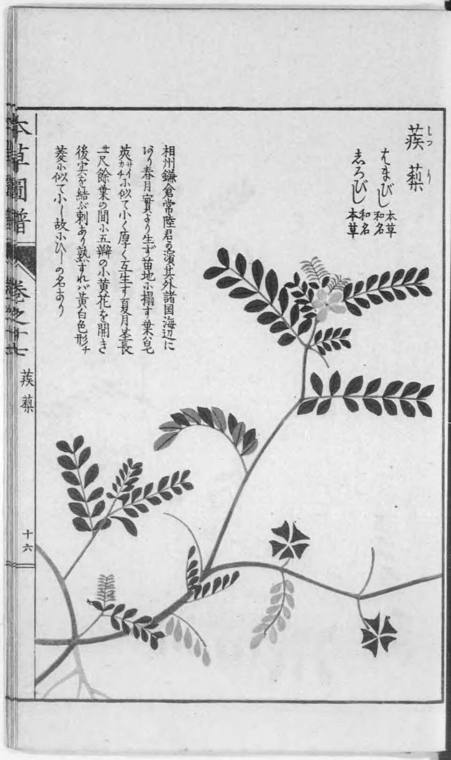
Kampo means “method of the Han” and refers to its Chinese origin. Chinese medicine reached Japan from the fifth and sixth centuries, via Korea and directly from China, together with Buddhism and Chinese writing.
The oldest surviving Japanese medical work is the Ishinpō, compiled in 984 by the court physician Tanba no Yasuyori. In the Edo period (1603–1868) Japanese physicians developed a practical form of their own. The school of “ancient formulas”, with physicians such as Yoshimasu Tōdō, went back to the Shanghan Lun and emphasised what the physician himself observes.
In 1874 the Meiji government decreed that new physicians had to study Western medicine. As a result Kampo was pushed aside. A small group of physicians kept the knowledge alive, and in the twentieth century a revival followed.
Kampo shares the basis of Chinese medicine, but is simpler and more practical. Instead of complicated theory, the “pattern” is central: the combination of signs that belongs to a particular formula.
A distinctive Japanese element is abdominal diagnosis, fukushin. The physician palpates the abdomen to feel tension, tenderness and resistance, and chooses a formula on that basis.
Kampo works with fixed formulas, which are prescribed as a whole and not adjusted for each patient.
In the Edo period Kampo was passed on in families and schools. From the eighteenth century European medicine also came in through the Dutch on Dejima, rangaku, and some physicians combined both.
After the Meiji reform only physicians who were already practising continued to use Kampo. Only after the Second World War did Kampo regain a place in training.
Today many Japanese physicians trained in Western medicine also prescribe Kampo. Since 2001 Kampo has been part of the medical curriculum.
The Ishinpō of 984 is the oldest Japanese medical work. It gathers knowledge from Chinese sources, some of which have otherwise been lost.
For Kampo practice, Zhang Zhongjing’s Shanghan Lun, from around 200 CE, is the most important classical work. Japanese physicians wrote many commentaries on it.
In the Edo period many Japanese works on formulas and abdominal diagnosis appeared.
In Japan Kampo is fully integrated into regular healthcare. In 1976 the first Kampo remedies were included in national health insurance; today 148 formulas are reimbursed.
Most Kampo is sold as standardised granules made by pharmaceutical companies. Many hospital doctors prescribe them, often alongside Western medicines.
There is a great deal of scientific research into Kampo in Japan.
Kampo formulas consist of a fixed combination of plants. A well-known formula is kakkontō, with kudzu, cinnamon, peony, liquorice, ginger, jujube and ephedra, used at the start of a cold.
Other frequently used plants are ginseng and bupleurum. Yokukansan is used in Japan for agitation in older people.
The plants come partly from Japan, but mostly from China.
In Japan Kampo is ordinary medicine. Kampo remedies have side effects too. A well-known example: the formula shōsaikotō, with bupleurum, was linked to pneumonitis, especially in combination with interferon.
Liquorice, present in many formulas, can raise blood pressure with long-term use. Ephedra strains the heart.
From the kitchen
There is no recipe from this tradition on the site yet. These recipes do use herbs it knows.
 Asia · Chinese kitchenSweetcorn soup with astragalusCorn soup on a 'jade windscreen' broth.ImmunityColdsAstragalus (huang qi) · White atractylodes (bai zhu) · Saposhnikovia root (fang feng)4–6 people · Preparation 15 min, cooking 35 min
 Asia · Chinese kitchenLingzhi soup with lean porkLong-simmered soup with lingzhi, Chinese yam, jujubes and goji.Health and long lifeTiredness and strengthLingzhi (reishi) · Chinese yam (shan yao) · Jujube (red date)4–6 people · Preparation 5 min, cooking 2 h 45 min
 Asia · Chinese kitchenFour-herb tonic soupWarming soup with fox nut, Chinese yam, lotus seed, fu ling and Job's tears.Tiredness and strengthRest and sleepFeeling coldFox nut (qian shi) · Chinese yam (shan yao) · Sacred lotus4–6 people · Preparation 10 min (plus overnight soaking), cooking 1 h 10 min
Registry
CautionAsia · Food · № 272
Prunus armeniaca
Traditionally attributed effects: cough-suppressing, astringent, antibacterial, pain-relieving, diuretic, anti-inflammatory; wild cherry suppresses cough.
 Caution
Asia · Herb · № 303
Achyranthes bidentata
Traditionally attributed effects: promotes circulation, liver tonic, pain-relieving.
 Caution
Asia · Herb · № 705
Akebia trifoliata (en A. quinata)
Traditionally attributed effects: drains heat via the urine in painful urination, mouth ulcers and restlessness; promotes milk flow.
 Caution
Asia · Herb · № 678
Phellodendron amurense
Traditionally attributed effects: drains damp heat from the lower body and cools heat from kidney yin deficiency.
 Caution
Asia · Herb · № 670
Anemarrhena asphodeloides
Traditionally attributed effects: cools heat in lungs and stomach and nourishes yin in fever, thirst and night sweats.
CautionAsia · Herb · № 149
Astragalus membranaceus
In Chinese medicine an important strengthening herb ('qi tonic') for fatigue, catching colds easily and sweating. NCCIH notes there is little reliable human research.
 Caution
Asia · Herb · № 36
Panax ginseng (ook P. quinquefolius)
Research consists mostly of small, short studies; there is little evidence of health effects.
 Caution
Asia · Herb · № 677
Scutellaria baicalensis
Traditionally attributed effects: cools and dries damp heat, especially in the lungs and upper body; calms a restless foetus from heat.
 Caution
Asia · Herb · № 310
Platycodon grandiflorus
Traditionally attributed effects: expectorant, antifungal, antibacterial, lowers blood sugar.
 Caution
Asia · Herb · № 293
Angelica pubescens
Traditionally attributed effects: antirheumatic, pain-relieving, anti-inflammatory.
 Caution
Asia · Herb · № 747
Aconitum carmichaelii (bereide zijwortel)
Traditionally attributed effects: the most strongly warming remedy in Chinese medicine, for collapse of yang and pain from cold.
 Caution
Europe · Herb · № 64
Artemisia vulgaris
Traditionally used as a digestive bitter and to bring on delayed periods. Clinical evidence is largely lacking.
 Caution
Asia · Herb · № 123
Citrus × aurantium
The dried unripe fruit (zhi shi) and peel are used in Chinese medicine for bloating and sluggish digestion. NCCIH warns that weight-loss products containing bitter orange (synephrine) pose risks to the heart and blood pressure.
 Caution
Asia · Herb · № 710
Artemisia capillaris
Traditionally attributed effects: drains damp heat from liver and gallbladder; main herb for jaundice.
 Caution
Asia · Herb · № 290
Bupleurum chinense
Traditionally attributed effects: energy tonic, stimulates the liver, cooling, antibacterial, anti-inflammatory, pain-relieving, promotes bile, lowers cholesterol.
 Caution
Asia · Herb · № 148
Forsythia suspensa
The fruits (lian qiao) are a 'cooling' herb in Chinese medicine for early colds with sore throat and fever, and for skin inflammation. There is little clinical research on lian qiao alone.
 Caution
Asia · Herb · № 738
Artemisia argyi
Traditionally attributed effects: warms the meridians and uterus, stops bleeding from cold and relieves pain; the herb of moxa.
 Caution
Asia · Food · № 636
Ziziphus jujuba
Traditionally attributed effects: sweet and strengthening in fatigue, anaemia and low energy; builds strength and blood and softens herbal dishes.
 Caution
Asia · Herb · № 125
Ephedra sinica
Contains ephedrine, which widens the airways and stimulates the nervous system and heart. It is the origin of modern ephedrine and pseudoephedrine medicines. As a supplement it has proved dangerous.
 Caution
Asia · Herb · № 120
Angelica sinensis
In Chinese medicine one of the most important herbs to 'nourish the blood', especially for menstrual complaints. Western studies found no clear effect on menopausal symptoms.
 Caution
Asia · Herb · № 679
Gentiana scabra
Traditionally attributed effects: drains damp heat and fire from liver and gallbladder.
Asia · Herb · № 304
Coptis chinensis
Traditionally attributed effects: promotes bile, antibacterial, pain-relieving, calming, anti-inflammatory.
 Caution
Asia · Herb · № 663
Asarum sieboldii (en A. heterotropoides)
Traditionally attributed effects: warms in wind-cold, relieves pain from cold and loosens cold phlegm in the lungs.
 Caution
Asia · Herb · № 729
Amomum villosum (en A. kravanh)
Traditionally attributed effects: warms the spleen, transforms dampness, calms a restless foetus and prevents tonics from lying heavy on the stomach.
 Caution
Asia · Herb · № 768
Polygala tenuifolia
Traditionally attributed effects: calms the mind and clears phlegm from 'the openings of the heart' and from the lungs.
 Caution
Asia · Food · № 635
Dioscorea polystachya (syn. D. opposita)
Traditionally attributed effects: strengthens spleen, stomach and lungs, helps regulate the hormone system in women and is said to lower blood sugar.
 Caution
Asia · Herb · № 665
Actaea cimicifuga (syn. Cimicifuga foetida)
Traditionally attributed effects: expels wind-heat, helps rashes come out and lifts the energy in prolapse.
 Caution
Asia · Herb · № 124
Chrysanthemum × morifolium
The flowers (ju hua) are used in Chinese medicine as a 'cooling' remedy for colds with fever, headaches and tired, red eyes. Clinical evidence is limited.
 Caution
Asia · Herb · № 731
Dolomiaea costus (syn. Saussurea lappa, Aucklandia lappa)
Traditionally attributed effects: moves the qi in spleen, stomach, intestine, liver and gallbladder; helps digest tonics.
 Caution
Asia · Herb · № 659
Angelica dahurica
Traditionally attributed effects: expels wind-cold, opens the nose and relieves headache and toothache; helps drain pus.
 Caution
Asia · Mushroom · № 701
Polyporus umbellatus
Traditionally attributed effects: drains fluid via the urine in oedema and difficult urination.
 Caution
Asia · Herb · № 336
Tetradium ruticarpum (syn. Evodia rutaecarpa)
Traditionally attributed effects: pain-relieving, antibacterial, warming, stimulating.
 Caution
Asia · Herb · № 200
Gardenia jasminoides
Traditionally attributed effects: fever-reducing, calming, lowers blood pressure, antibacterial, promotes bile.
 Caution
Asia · Herb · № 774
Gastrodia elata
Traditionally attributed effects: calms liver wind and relieves headache, dizziness and cramps.
 Caution
Asia · Herb · № 1
Zingiber officinale
Traditionally used for nausea and digestive discomfort; it has a warming flavor.
 Caution
Asia · Mineral · № 668
Gypsum fibrosum (calciumsulfaat)
Traditionally attributed effects: strongly cooling in high fever with thirst and sweating, lung heat and stomach fire.