Skip to content
Herbs & Cultures

Tradition in Europe

Folk magic and herbal magic

Centuries-old folk customs; present-day herbal magic mainly since the 20th century

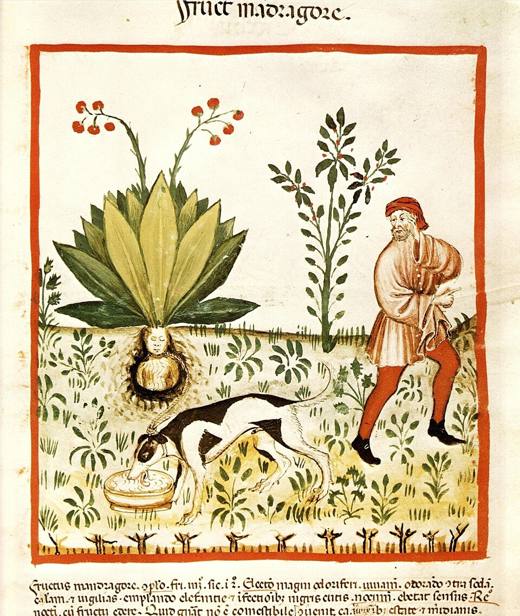
The mandrake is pulled from the ground by a dog, as legend required; Tacuinum sanitatis, c. 1390.
The mandrake is pulled from the ground by a dog, as legend required; Tacuinum sanitatis, c. 1390. public domain

History

All over Europe, folk belief gave plants special powers. They protected house and livestock, brought love, warded off thunderstorms and evil forces. These customs are often very old and were later linked to Christian feasts.

A fine example from the Low Countries is the kruidwis, the herb bundle. On the Feast of the Assumption, 15 August, bundles of herbs and grains are blessed in Dutch and Belgian Limburg. The bundle, with mugwort and wormwood among other things, was kept at home and thrown on the fire during thunderstorms, as protection against lightning.

Midsummer night, St John’s Eve on 24 June, was also a time for herbs. St John’s wort was picked and hung above the door against misfortune. In the nineteenth century folklorists collected such customs, and in the twentieth century a modern herbal magic arose, especially in pagan movements.
Key ideas

In folk belief plants have a power of their own, which you can use if you know how. What matters is the moment of picking, such as on a holy day or at full moon, the right words, and the purpose.

Plants protect: rowan above the stable door against witches, garlic against evil, mistletoe as a bringer of luck. They can also bring love or foretell the future.

There is a thin line between folk medicine and folk magic. The same herb could help against coughs and against witches.

Knowledge and its transmission

The knowledge was passed on orally, in families, by elders and by people known for their knowledge: herb women, wise women and men, and sometimes the village priest.

A persistent image is that the witch hunts of the fifteenth to seventeenth centuries mainly burned herb women. Historians see it more subtly: most of the accused were ordinary people, often poor or living alone, and not healers.

Today herbal magic lives on in modern pagan and Wiccan traditions, and in a broad interest in folklore.

Texts and figures

Nineteenth-century folklorists such as Jacob Grimm, in his Deutsche Mythologie of 1835, collected much folk belief about plants.

In the Netherlands the physician M.A. van Andel described folk medicine in the Netherlands in 1909, with many examples of magical and practical customs.

As early as the first century, Pliny the Elder described how Celtic druids cut mistletoe from the oak with a golden sickle.

Today

Many customs live on. The blessing of the herb bundle is still held every year in Limburg and in Elen in Belgian Limburg. Mistletoe hangs in Christmas decorations, and people kiss beneath it.

Modern herbal magic is popular, with books, rituals and shops.

Folklorists and historians study these traditions as valuable intangible heritage.

Nature in the tradition

Well-known plants of folk magic are St John’s wort, mugwort, vervain (verbena), elder, rowan, mistletoe, rosemary and rue.

Many stories surrounded the elder: a spirit lived in the elder, and anyone who wanted to cut a branch had to ask first.

There were also dangerous “witches’ herbs”, such as deadly nightshade, henbane and thorn apple, which turn up in stories about flying ointments. Mandrake, with its human-like root, was said to scream when pulled from the ground.

Approaching it with respect

Folk magic is cultural heritage. Appreciate it as a way in which people once understood their world.

The so-called witches’ herbs, such as deadly nightshade, henbane and thorn apple, are deadly poisonous. Never use them.

From the kitchen

Recipes with herbs from this tradition

There is no recipe from this tradition on the site yet. These recipes do use herbs it knows.

Registry

Herbs in this tradition

  • Caution

    Europe · Food · № 10

    Bergamot

    Citrus bergamia

    The peel yields bergamot oil, a fragrance in perfume and Earl Grey tea. The oil contains bergapten, which makes the skin sensitive to sunlight. Health claims are not well studied.

    Folk magic and herbal magicFolklore
  • Caution

    South America · Food · № 262

    Potato

    Solanum tuberosum

    A starchy tuber and one of the most important food crops in the world. In folk use raw slices or grated potato are laid on burns, swollen eyes and for headaches; this has not been studied.

    Kallawaya healing knowledge+1Folklore
  • Caution

    Europe · Food · № 253

    Strawberry

    Fragaria × ananassa

    The garden strawberry is a fruit rich in vitamin C. The leaf of the related wild strawberry was drunk as tea for mild diarrhoea; no medicinal effect is described for the garden strawberry itself.

    Folk magic and herbal magicFolklore
  • Caution

    Asia · Herb · № 376

    Alfalfa

    Medicago sativa

    Traditionally attributed effects: calming and moisture-restoring for dry skin.

    Chinese medical traditions+1Folklore
  • Caution

    Africa · Herb · № 4

    Aloe vera

    Aloe vera

    The gel from the leaf is used externally to soothe the skin and for minor burns. Research on wound healing gives mixed results; the gel is no substitute for wound care.

    Kallawaya healing knowledge+6Folklore
  • Caution

    Europe · Herb · № 835

    Mandrake

    Mandragora officinarum

    A highly poisonous plant containing tropane alkaloids, used in antiquity as a painkiller and sleeping draught.

    Greco-Roman medicine+1
  • Caution

    Europe · Herb · № 63

    Wormwood

    Artemisia absinthium

    One of the most bitter herbs; traditionally used to stimulate appetite and digestion and against intestinal worms. Clinical evidence is limited.

    Greco-Roman medicine+5
  • Caution

    Asia · Food · № 223

    Almond

    Prunus dulcis

    Traditionally attributed effects: sweet almond soothing, stimulating, nourishing, strengthens the nerves; bitter almond soothing, laxative, calming in cough.

    Ayurveda+2Folklore
  • Caution

    Central America and the Caribbean · Herb · № 374

    Amaranth

    Amaranthus spp.

    Traditionally attributed effects: flowers, leaf and root strongly antiseptic; wound healing.

    Folk magic and herbal magicFolklore
  • Caution

    South America · Food · № 250

    Pineapple

    Ananas comosus

    Traditionally attributed effects: fever-reducing, cleansing, bitter tonic; ripe fruit diuretic, induces sweating, cooling, digests protein; leaf laxative and expels worms; unripe fruit strongly diuretic, promotes menstruation and abortifacient.

    Ayurveda+1Folklore
  • Caution

    Asia · Herb · № 228

    Anise

    Pimpinella anisum

    Traditionally attributed effects: gives a natural lip-plumping effect.

    Unani medicine+2Folklore
  • Caution

    Europe · Herb · № 197

    Carnation

    Dianthus spp.

    The clove pink has fragrant, edible petals. In Chinese medicine the related Dianthus superbus (qu mai) is used for bladder infections; no medicinal effect is described for the garden carnation.

    Folk magic and herbal magic+1Folklore
  • Caution

    Europe · Food · № 84

    Apple

    Malus domestica

    A fruit rich in fibre such as pectin; grated apple is an old home remedy for mild diarrhoea. No specific medicinal effect has been proven.

    Western herbal medicine+2Folklore
  • Caution

    Africa · Herb · № 375

    Atlas cedar

    Cedrus atlantica

    Cedarwood oil is used in hair products against dandruff and as a fragrance. A small study of an oil blend for hair loss (alopecia areata) found improvement, but the effect of the cedar itself has not been established.

    Local African healing traditions+1Folklore
  • Caution

    Central America and the Caribbean · Food · № 166

    Avocado

    Persea americana

    A fruit rich in monounsaturated fats, fibre and potassium; it fits a diet that is favourable for cholesterol. Avocado oil is used in skin care.

    Maya healing knowledge+4Folklore
  • Caution

    Asia · Food · № 247

    Banana

    Musa spp.

    A fruit rich in starch and potassium. Ripe banana is easily digestible and belongs to the old BRAT diet after diarrhoea; green bananas contain resistant starch.

    Ayurveda+2Folklore
  • Caution

    Africa · Herb · № 8

    Basil

    Ocimum basilicum

    Traditionally used as an aromatic food plant and in herbal preparations.

    Western herbal medicine+1Folklore
  • Caution

    Asia · Herb · № 229

    Benzoin

    Styrax benzoin

    Traditionally attributed effects: expectorant, astringent, antispasmodic.

    Chinese medical traditions+3Folklore
  • Caution

    Europe · Herb · № 186

    Birch

    Betula pendula

    Traditionally attributed effects: bitter, astringent, antirheumatic.

    Western herbal medicine+1Folklore
  • Caution

    Europe · Herb · № 64

    Mugwort

    Artemisia vulgaris

    Traditionally used as a digestive bitter and to bring on delayed periods. Clinical evidence is largely lacking.

    Anglo-Saxon medicine+4Folklore
  • Caution

    Europe · Herb · № 513

    Henbane

    Hyoscyamus niger

    Traditionally attributed effects: intoxicating, narcotic, pain-relieving, calming, antispasmodic, dilates the pupils.

    Greco-Roman medicine+3
  • Caution

    North America · Food · № 254

    Blueberry

    Vaccinium spp.

    A fibre-rich berry with plenty of anthocyanins. Observational research links eating berries to a healthy diet; a medicinal effect has not been shown.

    Indigenous healing traditions of North America+1Folklore
  • Caution

    Central America and the Caribbean · Food · № 265

    Beans

    Phaseolus vulgaris

    A legume rich in protein and fibre. Raw or undercooked beans contain the toxic phytohaemagglutinin; thorough cooking is needed. Beans are otherwise mainly food, not medicine.

    Maya healing knowledge+3Folklore
  • Caution

    Europe · Food · № 255

    Blackberry

    Rubus fruticosus

    Traditionally attributed effects: astringent; for damp stomach and bowel complaints, diarrhoea, mucus; syrup or liqueur against sore throat.

    Western herbal medicine+1Folklore
  • Caution

    Europe · Food · № 48

    Stinging nettle

    Urtica dioica

    A food and fiber plant with a long tradition in folk medicine. Medical claims are not established.

    Monastic and folk knowledge+3Folklore
  • Caution

    Asia · Herb · № 379

    Camellia

    Camellia japonica / C. oleifera

    Traditionally attributed effects: nourishing oil that does not feel greasy.

    Chinese medical traditions+1Folklore
  • Caution

    North America · Herb · № 34

    Goldenseal

    Hydrastis canadensis

    There is not enough evidence to determine whether goldenseal helps any health condition.

    Indigenous healing traditions of North America+6Folklore
  • Caution

    Central America and the Caribbean · Herb · № 161

    Cayenne pepper

    Capsicum frutescens

    Capsaicin from chilli peppers is used externally for nerve pain and joint pain; high-dose capsaicin patches are an approved medicine. Internally it is mainly a warming spice.

    Maya healing knowledge+6Folklore
  • Caution

    Europe · Herb · № 233

    Cypress

    Cupressus sempervirens

    Traditionally attributed effects: antiseptic, antispasmodic, calming, diuretic.

    Greco-Roman medicine+2Folklore
  • Caution

    Asia · Food · № 221

    Lemon

    Citrus limon

    Traditionally attributed effects: anti-inflammatory, antihistamine, diuretic, strengthens the veins.

    Ayurveda+3Folklore
  • Caution

    Europe · Herb · № 85

    Lemon balm

    Melissa officinalis

    Traditionally used for restlessness, sleep problems and a nervous stomach; externally for cold sores. Small studies suggest a mild calming effect, but evidence is limited.

    Monastic and folk knowledge+7Folklore
  • Caution

    South America · Herb · № 378

    Lemon verbena

    Aloysia citrodora

    Traditionally attributed effects: relaxing, helps you fall asleep.

    The Guaraní and the mate tradition+4Folklore
  • Caution

    North America · Food · № 13

    Cranberry

    Vaccinium macrocarpon

    A food berry. Products may help lower recurrent UTI risk for some women, but findings are mixed; it does not treat an existing UTI.

    Indigenous healing traditions of North America+1Folklore
  • Caution

    North America · Herb · № 189

    Pine

    Pinus spp.

    The scent of needles and resin is experienced as fresh and cleansing. Pine buds and needles contain essential oil and vitamin C; a medicinal effect has hardly been studied.

    Haudenosaunee medicine+3Folklore
  • Caution

    Asia · Herb · № 215

    Dill

    Anethum graveolens

    Traditionally attributed effects: carminative.

    Ayurveda+4Folklore
  • Caution

    Central America and the Caribbean · Herb · № 481

    Thorn apple

    Datura metel

    Traditionally attributed effects: narcotic, pain-relieving, antispasmodic (like belladonna); compress for rheumatic swellings, lumbago, sciatica, nerve pain, painful tumours; leaves and seeds for asthma and whooping cough; liniment for painful menstruation.

    Ayurveda+1