 Caution
Europe · Herb · № 72
Fennel
Foeniculum vulgare
The seed is traditionally used for wind, bloating and cramps. There are some small studies, but evidence is limited.
Greco-Roman medicine+9Folklore
Tradition in Asia
South Asia; classical texts formed over centuries

Ayurveda literally means “knowledge of life”: āyus is life, veda is knowledge. Its roots lie deep in the history of South Asia. The Vedic texts, especially the Atharvaveda, already mention medicinal plants and charms against disease, but a coherent medical system only takes shape later.
That system took form in three classical works known together as the Bṛhat Trayī, “the great three”: the Charaka Samhita, on internal medicine, the Sushruta Samhita, on surgery, and Vagbhata’s Ashtanga Hridaya. The first two grew over centuries and reached their present form roughly between a few centuries before and a few centuries after the beginning of the Common Era. Around the seventh century Vagbhata summarised both. Traditional datings are often much earlier; historians keep to these more cautious estimates.
Ayurveda never stood alone. It influenced Tibetan Sowa Rigpa and met Unani, the Greco-Arabic medicine that came to India with Muslim rulers. Under British colonial rule Western medicine became the official standard. From the late nineteenth century Indian reformers rebuilt Ayurveda, with their own colleges, pharmacies and standardised remedies. That is why today’s Ayurveda looks different in many ways from classical practice.
According to classical teaching, everything is made up of five great elements (pañcamahābhūta): space, air, fire, water and earth. In the body they work as three doshas. Vata stands for movement and arises from air and space. Pitta stands for transformation and heat, from fire and water. Kapha gives structure and cohesion, from water and earth.
Every person is born with their own balance of the doshas, the prakriti. Health means that the doshas are in balance, that the digestive fire (agni) works well, that the body tissues (dhātu) are healthy and wastes (mala) are properly eliminated, and that the mind is clear. According to this teaching, illness often begins with a disturbed agni and the build-up of undigested residue (āma).
Treatment follows the same logic. Foods and herbs are chosen by their taste (rasa, of which there are six), their potency, warming or cooling (vīrya), and their post-digestive effect (vipāka). A good daily routine (dinacharya) and moving with the seasons (ritucharya) weigh as heavily as the remedies themselves. Classical Ayurveda has eight branches, from internal medicine and surgery to paediatrics, toxicology and rejuvenation (rasāyana).
An Ayurvedic physician is called a vaidya. For centuries knowledge passed from teacher to pupil, in the guru-shishya-parampara, often within families. Pupils learned the classical verses by heart and watched their teacher at work.
Alongside this learned tradition there was, and still is, a broad body of folk knowledge: home remedies, kitchen herbs and local healers without classical training who are nevertheless deeply rooted in their region.
Today Indian universities train students for the Bachelor of Ayurvedic Medicine and Surgery (BAMS), a course of more than five years including an internship. Since 2014 India’s Ministry of AYUSH has overseen education, research and regulation for Ayurveda and other traditional systems of care.
The Charaka Samhita is the great text on internal medicine. In eight sections and 120 chapters it covers diagnosis, diet, treatment and also the ethics of the physician. It places great emphasis on reasoning and on examining the patient carefully.
The Sushruta Samhita is best known for its surgery. It describes instruments, wound care and operations, including reconstructions of the nose that much later also drew attention in Europe. It also contains extensive plant knowledge.
Vagbhata’s Ashtanga Hridaya summarises the earlier works in verse and is still widely used in teaching today, especially in Kerala. Later works built on this foundation. The sixteenth-century Bhavaprakasha, for example, also describes diseases and plants that had come to India with European traders.
In India Ayurveda is a recognised system of care alongside conventional medicine, with its own hospitals, clinics and a large pharmaceutical industry. It also has a place in healthcare in Nepal and Sri Lanka. Kerala is known for its treatment traditions, such as the cleansing cure panchakarma.
Since 2022 the World Health Organization has had its Global Centre for Traditional Medicine in Jamnagar, in the Indian state of Gujarat, set up with support from the Indian government. Outside Asia most people know Ayurveda as a lifestyle or wellness approach. In many Western countries, including the United States, it is not a regulated profession.
Well-designed scientific research is scarce. There is modest evidence of benefit for osteoarthritis, among other things, but for most uses solid evidence is lacking.
Plants make up most of the Ayurvedic pharmacy. Minerals, metals and animal products also occur, especially in the later rasashastra: the alchemical branch that processes metals into so-called bhasmas.
Well-known plants are turmeric (haridra), tulsi or holy basil, ashwagandha, ginger, neem and guduchi, and the three fruits of triphala: amalaki, bibhitaki and haritaki. A plant is rarely used on its own. Formulas combine several remedies, often with honey, ghee or milk as a carrier (anupāna), which is said to steer the effect.
In Ayurveda food is a medicine in itself. Kitchari, rice cooked with mung beans and spices, spiced milk and ghee belong to daily care. What is good depends on a person’s prakriti, on the season and even on the time of day.
Ayurveda is a living system of knowledge with religious and philosophical roots in South Asia, not a collection of wellness products. Its concepts have a precise meaning; a “dosha test” in a magazine does the tradition no justice.
Be practically careful, too. Some Ayurvedic products, especially from the metal-processing tradition, can contain lead, mercury or arsenic. In a 2015 American study, 40 percent of users had raised blood lead levels. Buy only from reliable suppliers and consult a doctor, especially during pregnancy, breastfeeding or when taking medication.
From the kitchen
 AsiaHaldi doodh, warm turmeric milkMilk with turmeric and spices: in Indian households a familiar drink before bed or with a cold.Rest and sleepColdsTurmeric · Black pepper and long pepper · Ginger1 large mug · 10 minutes
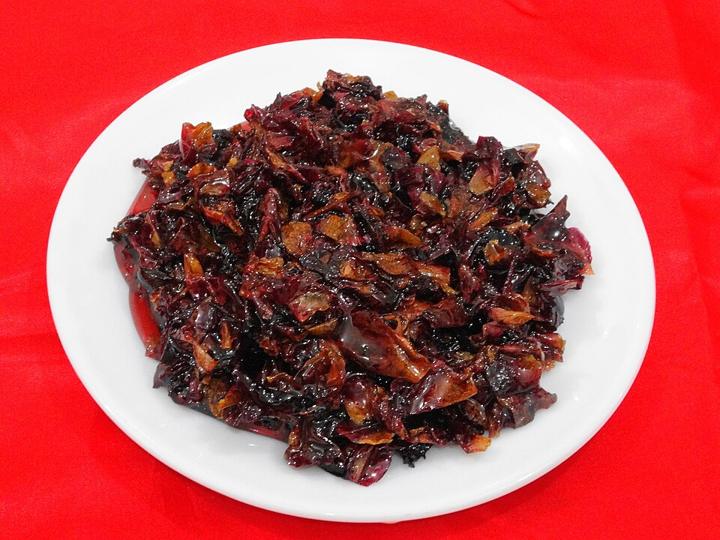 Miansari66 · CC0AsiaGulkand, rose petal preserveRose petals and sugar that ripen together in the sun into a fragrant, sweet paste.Hot daysRose and rose hipA jar of about 300 g · 30 minutes, plus 2–3 weeks ripening
Registry
CautionEurope · Herb · № 72
Foeniculum vulgare
The seed is traditionally used for wind, bloating and cramps. There are some small studies, but evidence is limited.
 Caution
Asia · Herb · № 403
Adiantum philippense
Traditionally attributed effects: antipyretic, diuretic, cleansing, expels worms, cooling; for cough and respiratory complaints, fever, leprosy, erysipelas.
 Caution
Asia · Herb · № 350
Chrysopogon zizanioides
Traditionally attributed effects: supports circulation and weight loss (scrub).
 Caution
Asia · Herb · № 489
Embelia ribes
Traditionally attributed effects: carminative, expels worms, stimulating, cleansing; against intestinal worms, ringworm and skin diseases, headache, sore throat and mouth ulcers, bark paste for pneumonia.
 Caution
Europe · Herb · № 179
Digitalis purpurea
Contains cardiac glycosides that slow the heart rate and strengthen its contractions. They gave rise to the drugs digoxin and digitoxin, still prescribed for certain heart rhythm disorders and heart failure. The margin between an effective and a toxic amount is very small.
 Caution
Asia · Herb · № 446
Butea monosperma
Traditionally attributed effects: leaves astringent, diuretic, tonic, aphrodisiac; seeds expel worms and laxative; flowers tonic; for diarrhoea, heartburn, diabetes (lowers blood sugar), flatulence, haemorrhoids, worms, leucorrhoea, inflamed throat.
 Caution
Europe · Food · № 83
Linum usitatissimum
Ground flaxseed acts as a gentle bulk-forming fibre for constipation. NCCIH reports it may lower cholesterol slightly; evidence for other claims is unclear.
 Caution
Asia · Herb · № 466
Clitoria ternatea
Traditionally attributed effects: root mildly laxative, diuretic, expels worms; seeds strongly laxative; for ascites, enlarged abdominal organs, migraine (flower juice), gonorrhoea, bladder irritation, ulcers, swollen joints.
 Caution
Asia · Food · № 646
Euryale ferox
Traditionally attributed effects: a tonic for long life that according to tradition counters ageing and gives strength.
 Caution
Asia · Herb · № 479
Cuscuta reflexa
Traditionally attributed effects: carminative, expels worms, cleansing, antispasmodic; for stomach ache, constipation, flatulence, liver complaints, bile complaints; externally for itching and skin diseases.
 Caution
Asia · Food · № 435
Benincasa hispida
Traditionally attributed effects: nourishing, tonic, laxative, diuretic; seeds expel worms; juice for coughing up blood and internal bleeding, for insanity, epilepsy and nervous diseases.
 Caution
Central America and the Caribbean · Herb · № 397
Acacia farnesiana
Traditionally attributed effects: astringent, soothing, cleansing; for bleeding gums, gonorrhoea; gum as a substitute for gum arabic.
 Caution
Europe · Herb · № 242
Ruta graveolens
Traditionally attributed effects: antiseptic, stimulating, promotes menstruation, expectorant, antispasmodic, expels worms (children); strengthens capillaries (rutin); for hysteria, flatulence and colic, incipient paralysis, indigestion; oil diuretic and skin-irritant.
 Caution
Asia · Herb · № 517
Lobelia nicotianaefolia
Traditionally attributed effects: antiseptic, antifungal, antispasmodic (in combination with other remedies).
 Caution
Asia · Herb · № 459
Centratherum anthelminticum
Traditionally attributed effects: expels worms (threadworms), tonic, stomachic, diuretic; for skin diseases and scorpion stings.
 Caution
Asia · Herb · № 539
Plumbago zeylanica
Traditionally attributed effects: cleansing, stimulates the stomach, stimulates appetite; externally skin-irritant for rheumatism, paralysis, enlarged glands, leucoderma and skin diseases; tincture antipyretic.
 Caution
Africa · Herb · № 429
Balanites aegyptiaca
Traditionally attributed effects: laxative, expels worms; seeds for cough and colic, oil on burns and freckles, seed extract lowers blood pressure.
 Caution
Africa · Herb · № 547
Ricinus communis
Traditionally attributed effects: oil mildly laxative; leaf juice emetic in poisoning, leaf decoction laxative, promotes milk and menstruation; compress on boils and swellings, for flatulence in children; root decoction for lumbago, rheumatism and sciatica.
 Caution
Asia · Herb · № 478
Curcuma zedoaria
Traditionally attributed effects: stimulating, carminative, expectorant, soothing, diuretic, skin-irritant, purifies the blood.
 Caution
Asia · Herb · № 424
Artemisia maritima
Traditionally attributed effects: antipyretic, mildly laxative, stomachic, tonic, expels worms, stimulates the heart; against worms, compress for inflammation, tumours and foul ulcers.
 Caution
Asia · Herb · № 18
Glycyrrhiza glabra
A root with long use in several traditions; high-quality evidence does not support most health claims.
 Caution
Asia · Herb · № 411
Amomum subulatum
Traditionally attributed effects: stomachic, carminative, stimulates the heart, expectorant; for digestive complaints, liver congestion, tooth and gum complaints, kidney stones (with melon seed), inflamed eyelids; flavouring.
 Caution
Asia · Herb · № 363
Nigella sativa
Traditionally attributed effects: aromatic, diuretic and sudorific, promotes bile, stomachic, stimulating, carminative, expels worms, promotes menstruation and milk flow, antibacterial.
 Caution
Asia · Herb · № 475
Curculigo orchiodes
Traditionally attributed effects: bitter aromatic tonic, soothing, diuretic, aphrodisiac, cleansing; for haemorrhoids, diarrhoea, jaundice, asthma, itching and skin diseases, urinary stones, bronchitis, lumbago, recovery after illness.
 Caution
Europe · Herb · № 554
Solanum nigrum
Traditionally attributed effects: cleansing, calming, induces sweating and urination, expectorant; for oedema, chronically enlarged liver, jaundice, chronic skin diseases, coughing up blood, haemorrhoids, kidney and bladder inflammation, gonorrhoea, eye diseases; pain-relieving wash.
CautionAsia · Herb · № 135
Piper nigrum
Important warming spices in Ayurveda, used for sluggish digestion and colds. Piperine from pepper increases the absorption of some substances, such as curcumin.