 Caution
Asia · Mineral · № 698
Glauber's salt (mang xiao)
Mirabilitum (natriumsulfaat)
Traditionally attributed effects: softens the stool in constipation from heat and dryness.
Chinese medical traditions+1
Tradition in Asia
From the 5th–7th centuries; its own form mainly in the Edo period (1603–1868)
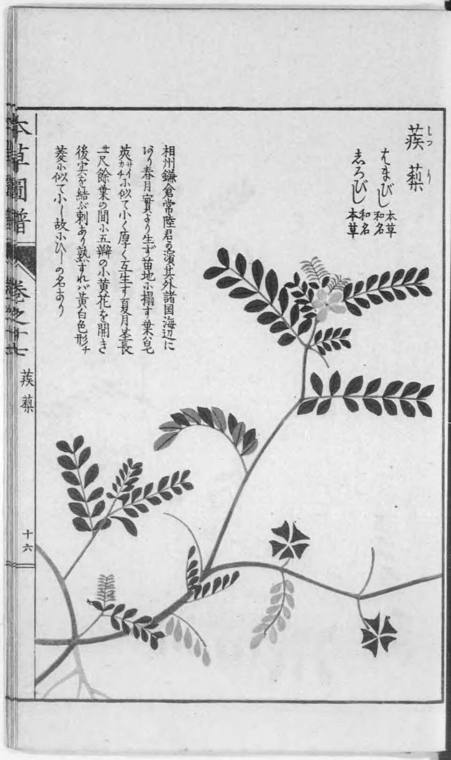
Kampo means “method of the Han” and refers to its Chinese origin. Chinese medicine reached Japan from the fifth and sixth centuries, via Korea and directly from China, together with Buddhism and Chinese writing.
The oldest surviving Japanese medical work is the Ishinpō, compiled in 984 by the court physician Tanba no Yasuyori. In the Edo period (1603–1868) Japanese physicians developed a practical form of their own. The school of “ancient formulas”, with physicians such as Yoshimasu Tōdō, went back to the Shanghan Lun and emphasised what the physician himself observes.
In 1874 the Meiji government decreed that new physicians had to study Western medicine. As a result Kampo was pushed aside. A small group of physicians kept the knowledge alive, and in the twentieth century a revival followed.
Kampo shares the basis of Chinese medicine, but is simpler and more practical. Instead of complicated theory, the “pattern” is central: the combination of signs that belongs to a particular formula.
A distinctive Japanese element is abdominal diagnosis, fukushin. The physician palpates the abdomen to feel tension, tenderness and resistance, and chooses a formula on that basis.
Kampo works with fixed formulas, which are prescribed as a whole and not adjusted for each patient.
In the Edo period Kampo was passed on in families and schools. From the eighteenth century European medicine also came in through the Dutch on Dejima, rangaku, and some physicians combined both.
After the Meiji reform only physicians who were already practising continued to use Kampo. Only after the Second World War did Kampo regain a place in training.
Today many Japanese physicians trained in Western medicine also prescribe Kampo. Since 2001 Kampo has been part of the medical curriculum.
The Ishinpō of 984 is the oldest Japanese medical work. It gathers knowledge from Chinese sources, some of which have otherwise been lost.
For Kampo practice, Zhang Zhongjing’s Shanghan Lun, from around 200 CE, is the most important classical work. Japanese physicians wrote many commentaries on it.
In the Edo period many Japanese works on formulas and abdominal diagnosis appeared.
In Japan Kampo is fully integrated into regular healthcare. In 1976 the first Kampo remedies were included in national health insurance; today 148 formulas are reimbursed.
Most Kampo is sold as standardised granules made by pharmaceutical companies. Many hospital doctors prescribe them, often alongside Western medicines.
There is a great deal of scientific research into Kampo in Japan.
Kampo formulas consist of a fixed combination of plants. A well-known formula is kakkontō, with kudzu, cinnamon, peony, liquorice, ginger, jujube and ephedra, used at the start of a cold.
Other frequently used plants are ginseng and bupleurum. Yokukansan is used in Japan for agitation in older people.
The plants come partly from Japan, but mostly from China.
In Japan Kampo is ordinary medicine. Kampo remedies have side effects too. A well-known example: the formula shōsaikotō, with bupleurum, was linked to pneumonitis, especially in combination with interferon.
Liquorice, present in many formulas, can raise blood pressure with long-term use. Ephedra strains the heart.
From the kitchen
There is no recipe from this tradition on the site yet. These recipes do use herbs it knows.
 Asia · Chinese kitchenSweetcorn soup with astragalusCorn soup on a 'jade windscreen' broth.ImmunityColdsAstragalus (huang qi) · White atractylodes (bai zhu) · Saposhnikovia root (fang feng)4–6 people · Preparation 15 min, cooking 35 min
 Asia · Chinese kitchenLingzhi soup with lean porkLong-simmered soup with lingzhi, Chinese yam, jujubes and goji.Health and long lifeTiredness and strengthLingzhi (reishi) · Chinese yam (shan yao) · Jujube (red date)4–6 people · Preparation 5 min, cooking 2 h 45 min
 Asia · Chinese kitchenFour-herb tonic soupWarming soup with fox nut, Chinese yam, lotus seed, fu ling and Job's tears.Tiredness and strengthRest and sleepFeeling coldFox nut (qian shi) · Chinese yam (shan yao) · Sacred lotus4–6 people · Preparation 10 min (plus overnight soaking), cooking 1 h 10 min
Registry
CautionAsia · Mineral · № 698
Mirabilitum (natriumsulfaat)
Traditionally attributed effects: softens the stool in constipation from heat and dryness.
 Caution
Asia · Food · № 16
Camellia sinensis
A brewed tea. Evidence does not establish most health claims; extracts differ from the ordinary beverage.
 Caution
Europe · Herb · № 62
Arctium lappa
In Europe the root was considered a 'blood-cleansing' herb for skin problems such as eczema and acne; the seed is used in Chinese medicine for sore throats. Clinical evidence is weak.
 Caution
 Caution
Asia · Food · № 764
Prunus mume
Traditionally attributed effects: astringent in chronic cough and diarrhoea, replenishes body fluids and was used against worms.
 Caution
Asia · Herb · № 302
Styphnolobium japonicum (syn. Sophora japonica)
Traditionally attributed effects: stops bleeding, laxative.
 Caution
Asia · Herb · № 127
Lonicera japonica en L. periclymenum
The flower buds (jin yin hua) are an important 'cooling' herb in Chinese medicine for fever, sore throats and colds. There is plenty of laboratory research but few good clinical studies.
 Caution
Asia · Herb · № 322
Cornus officinalis
Traditionally attributed effects: tonic, diuretic, lowers blood pressure, antimicrobial.
 Caution
Asia · Herb · № 723
Eriobotrya japonica
Traditionally attributed effects: cools hot phlegm in the lungs and makes rebellious lung and stomach energy descend.
 Caution
Asia · Herb · № 785
Prunus japonica
Traditionally attributed effects: moistens the bowel in constipation with stagnation and promotes urination in oedema.
 Caution
Asia · Herb · № 546
Rhus succedanea
Traditionally attributed effects: astringent, tonic, expectorant, stimulating, promotes bile; for cough, tuberculosis, asthma, fever, lack of appetite, stomach irritation, diarrhoea (also in teething children); paste for psoriasis.
 Caution
Central America and the Caribbean · Herb · № 514
Ipomoea nil
Traditionally attributed effects: strongly laxative, expels worms; for constipation, substitute for jalap root.
 Caution
Asia · Food · № 645
Coix lacryma-jobi
Traditionally attributed effects: nourishing grain that drives dampness from the body; for arthritis and rheumatism, diuretic, and to relieve a full chest and stomach ulcers.
 Caution
Asia · Herb · № 686
Houttuynia cordata
Traditionally attributed effects: detoxifies and drains pus, especially in lung infections; diuretic.
 Caution
Asia · Other · № 141
Cinnamomum camphora
Used externally in rubs for muscle pain, itching and blocked noses; it gives a cooling, numbing feeling. There is some evidence of short-term relief.
 Caution
Asia · Food · № 38
Cinnamomum verum
A spice made from inner bark. Research on health effects is preliminary; cinnamon is not a treatment.
 Caution
Asia · Herb · № 136
Pueraria montana var. lobata
The root (ge gen) is used in Chinese medicine for fever, stiff neck and thirst. Small studies have looked at kudzu for reducing alcohol use, with mixed results.
 Caution
Asia · Food · № 661
Allium fistulosum
Traditionally attributed effects: diaphoretic at the start of a cold from cold; externally on swellings.
CautionAsia · Mushroom · № 41
Ganoderma lucidum
A bracket fungus used in traditional Chinese medicine; evidence for treatment effects in people is limited.
 Caution
Asia · Herb · № 655
Magnolia biondii (syn. M. liliflora)
Traditionally attributed effects: warms and opens the nose in blocked sinuses and headache from wind-cold.
 Caution
Asia · Herb · № 727
Magnolia officinalis
Traditionally attributed effects: makes qi descend, dries dampness and resolves food stagnation and phlegm.
 Caution
Asia · Mushroom · № 589
Grifola frondosa
Traditionally attributed effects: adaptogen; activates immune cells against cancer (macrophages, NK cells, T cells), reduces stress and strengthens resistance to colds and flu.
 Caution
Asia · Food · № 730
Citrus reticulata
Traditionally attributed effects: the ripe peel (chen pi) moves the qi of spleen and lung and dissolves phlegm; the green peel (qing pi) moves liver qi.
 Caution
Asia · Food · № 792
Saccharum granorum (maltose)
Traditionally attributed effects: strengthens qi and spleen, eases pain from cold in the middle and moistens the lungs.
Asia · Herb · № 658
Notopterygium incisum
Traditionally attributed effects: expels wind, cold and dampness in colds and rheumatic pain in head, neck and shoulders.
 Caution
Asia · Herb · № 674
Lithospermum erythrorhizon (en Arnebia euchroma)
Traditionally attributed effects: cools and moves the blood in dark rashes; externally for burns and eczema.
 Caution
Asia · Herb · № 656
Perilla frutescens
Traditionally attributed effects: warms in colds from cold, helps digestion and soothes cough with phlegm.
 Caution
Asia · Food · № 249
Prunus persica
A juicy summer fruit. In Chinese medicine the kernels (tao ren) are used to move the blood; raw they are poisonous because of amygdalin.
 Caution
Asia · Herb · № 275
Pinellia ternata
Traditionally attributed effects: cough-suppressing, expectorant, against vomiting, anticatarrhal.
 Caution
Asia · Herb · № 132
Paeonia lactiflora en P. suffruticosa
The peeled root (bai shao, white peony) is used in Chinese medicine for cramps, period pain and muscle pain. There are studies of combination formulas but few of peony alone.
 Caution
Asia · Mushroom · № 146
Wolfiporia cocos
One of the most widely used remedies in Chinese medicine, for fluid retention, poor digestion and restless sleep. Clinical research on fu ling alone is scarce.
 Caution
Asia · Herb · № 673
Rehmannia glutinosa
Traditionally attributed effects: raw it cools the blood and nourishes yin; prepared (steamed with wine) it nourishes the blood and the kidney yin.
 Caution
Asia · Herb · № 650
Saposhnikovia divaricata
Traditionally attributed effects: expels wind; for muscle pain, painful diarrhoea, rheumatic complaints and cramps.
 Caution
Asia · Herb · № 592
Schisandra chinensis
Traditionally attributed effects: tonic, astringent, stimulating, adaptogen; supports exhausted adrenals (fatigue), promotes sleep and well-being, protects the liver.
 Caution
Asia · Herb · № 657
Schizonepeta tenuifolia
Traditionally attributed effects: opens the surface in colds (warm or cool, depending on the combination), helps rashes come out and, charred, stops bleeding.
 Caution
Asia · Mushroom · № 145
Lentinula edodes
An edible mushroom. Lentinan from shiitake is researched and used in oncology in Japan; there is little evidence for ordinary shiitake as an 'immune booster'.