Skip to content
Herbs & Cultures

Tradition in Asia

Unani medicine

Roots in Greco-Roman antiquity; developed in the Islamic world from the 9th century

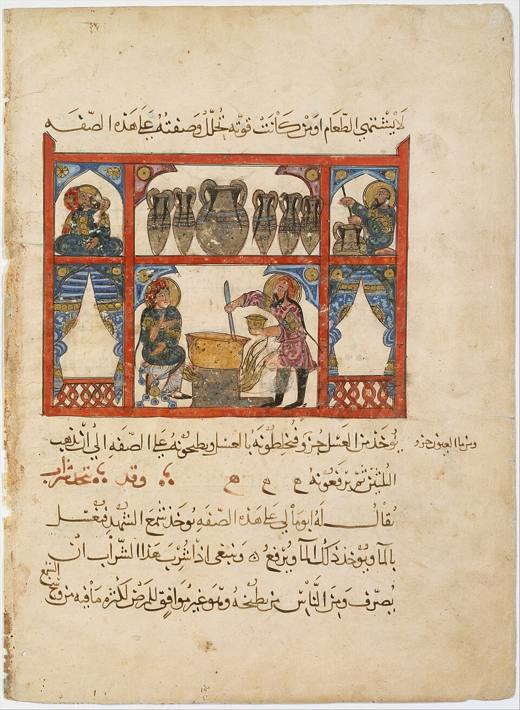
Preparing medicine from honey, from an Arabic translation of Dioscorides (1224).
Preparing medicine from honey, from an Arabic translation of Dioscorides (1224). The Metropolitan Museum of Art · CC0

History

Unani comes from the Arabic and Persian word Yunani, “Greek”. The tradition builds on the Greek medicine of Hippocrates and Galen, which was translated, preserved and greatly expanded in the Islamic world.

From the ninth century scholars in Baghdad translated Greek medical works into Arabic. Persian and Arab physicians such as al-Razi (865–925) and Ibn Sina (980–1037) built a rich system on them. Ibn Sina’s Canon of Medicine was studied for centuries in the Islamic world and in Europe.

From the thirteenth century Unani came to South Asia with the Delhi Sultanate and later the Mughal emperors, where it flourished. After British rule, physicians such as Hakim Ajmal Khan (1868–1927) worked to preserve the tradition. He founded the Tibbia College in Delhi in 1916.

Key ideas

Unani starts from four bodily humours: blood (dam), phlegm (balgham), yellow bile (safra) and black bile (sauda). Their proportion determines a person’s temperament, mizaj, which is hot, cold, dry or moist.

Health is the balance of the humours, and illness is a disturbance of it. The body has its own healing power, tabiyat, which the physician must support.

Six “essential factors” determine health: air, food and drink, movement and rest, sleep and wakefulness, intake and excretion, and emotions. A good way of life is therefore the basis of treatment.

Knowledge and its transmission

A Unani physician is called a hakim. For centuries knowledge passed from master to pupil, often within families of hakims.

A Unani physician treats in four ways: with lifestyle and regimen (ilaj bil tadbeer), such as cupping, bloodletting with leeches, massage and baths; with diet (ilaj bil ghiza); with remedies (ilaj bil dawa); and in exceptional cases with surgery.

Today universities in India train students for the Bachelor of Unani Medicine and Surgery (BUMS). In India Unani falls under the Ministry of AYUSH.

Texts and figures

Ibn Sina’s Canon of Medicine, completed around 1025, is the most important work. It has five books, on principles, remedies, diseases by part of the body, general diseases and compound remedies.

Al-Razi wrote, among other works, the Kitab al-Hawi, a large collection of clinical observations, and a famous treatise on smallpox and measles.

In South Asia hakims wrote their own works in Persian and Urdu.

Today

Unani is practised mainly in India, Pakistan and Bangladesh, with its own hospitals, clinics and pharmacies. In India it is a recognised system of care alongside conventional medicine.

A well-known company is Hamdard, founded in Delhi in 1906 by Hakim Hafiz Abdul Majeed. Among other things it makes the rose syrup Rooh Afza, which is widely drunk in South Asia, especially during Ramadan.

Cupping, hijama, is also experiencing a revival outside South Asia, including among Muslims in Europe.

Nature in the tradition

The Unani pharmacy is rich in plants from the Middle East and South Asia. Black seed (kalonji) is highly valued. Saffron, rose, senna and liquorice are important remedies.

Cinnamon, pomegranate and fenugreek are also widely used. Remedies are often prepared as a syrup (sharbat), a jam (majoon) or a decoction.

According to the teaching every remedy has its own temperament, hot or cold, dry or moist, and is chosen to bring the patient’s temperament into balance.

Approaching it with respect

Unani is a learned tradition that Muslims, Hindus and others in South Asia shaped together. It shows how knowledge travels between cultures.

Some Unani remedies contain metals or minerals. Cupping with incisions (wet cupping) must be done hygienically. Consult a doctor.

From the kitchen

Recipes from this tradition

Registry

Herbs in this tradition

  • Caution

    Asia · Herb · № 442

    Silk cotton tree

    Bombax ceiba

    Traditionally attributed effects: gum astringent and stops bleeding; root and bark soothing, diuretic, aphrodisiac; for abnormal uterine bleeding, diarrhoea, dysentery, coughing up blood, heavy menstruation, bladder and kidney stones, boils, itching.

    Ayurveda+2
  • Caution

    Asia · Herb · № 346

    Red sandalwood

    Pterocarpus santalinus

    Traditionally attributed effects: antipyretic, fever-reducing, aphrodisiac, astringent, bitter, cooling, induces sweating, expels worms; for chronic dysentery, bleeding haemorrhoids, bile complaints, skin diseases.

    Ayurveda+1
  • Caution

    Europe · Herb · № 89

    Rose and rose hip

    Rosa spp.

    Rose hips are rich in vitamin C; a hip powder has been studied for osteoarthritis with modest results. Rose water and oil are used in skin care and as fragrance.

    Avicenna's Canon in European universities+6Folklore
  • Caution

    Asia · Herb · № 426

    Safed musli

    Asparagus adscendens

    Traditionally attributed effects: nourishing, tonic, promotes milk flow, soothing, cooling; for seminal loss, chronic leucorrhoea, diarrhoea, dysentery, general weakness, impotence.

    Ayurveda+1
  • Caution

    Asia · Herb · № 345

    Saffron

    Crocus sativus

    Traditionally attributed effects: stimulating, aphrodisiac, stomachic, pain-relieving, antispasmodic, calming, promotes menstruation; for absent menstruation, fever, hysteria, melancholy, leucorrhoea, haemorrhoids; paste for bruises, nerve and rheumatic pain.

    Ayurveda+4
  • Caution

    Asia · Herb · № 140

    Sandalwood

    Santalum album

    Used in Ayurveda as a 'cooling' remedy for skin irritation and urinary complaints; the oil is used in aromatherapy. Clinical evidence is limited.

    Ayurveda+6Folklore
  • Caution

    Asia · Herb · № 507

    East Indian screw tree

    Helicteres isora

    Traditionally attributed effects: expectorant, soothing, mildly astringent, stomachic; for colic, flatulence, diarrhoea, chronic dysentery, diabetes, ear infection, snake bites.

    Ayurveda+1
  • Caution

    Asia · Herb · № 470

    Sebesten plum

    Cordia myxa

    Traditionally attributed effects: fruit soothing, expectorant, diuretic, mildly laxative; bark mildly astringent and tonic; for cough and chest diseases, bile complaints, abdominal cramps, indigestion, fever, ulcers, snake bites.

    Ayurveda+1
  • Caution

    Africa · Herb · № 117

    Senna

    Senna alexandrina

    Leaves and pods contain sennosides, a stimulant laxative that works for short-term constipation. It is used in modern over-the-counter laxatives.

    Ancient Egyptian medicine+5
  • Caution

    Asia · Herb · № 122

    Shatavari

    Asparagus racemosus

    In Ayurveda an important rejuvenating remedy for women, used for breastfeeding and stomach complaints. Studies are small and of variable quality.

    Ayurveda+1
  • Caution

    Africa · Food · № 560

    Tamarind

    Tamarindus indica

    Traditionally attributed effects: ripe fruit sour, cooling, carminative, laxative, antiscorbutic, promotes bile; for inflamed swellings, bilious vomiting, conjunctivitis (flowers), bleeding haemorrhoids, throat complaints, ulcers, paralysis (bark), gonorrhoea (ash).

    Local African healing traditions+3
  • Caution

    Africa · Herb · № 549

    Toothbrush tree

    Salvadora persica

    Traditionally attributed effects: carminative, diuretic, decongestant; leaves for rheumatism, scurvy, painful tumours, haemorrhoids, asthma and cough; flower oil for flatulence, mucus, worms, leprosy, gonorrhoea, headache and rheumatic pain.

    Local African healing traditions+2
  • Caution

    Asia · Food · № 240

    Onion

    Allium cepa

    Traditionally attributed effects: stimulating, diuretic, expectorant, skin-irritant, aphrodisiac, antiseptic; for cough, haemorrhoids, jaundice, indigestion, insect bites, boils, wounds, chilblains and sore joints.

    Ayurveda+4Folklore
  • Caution

    Asia · Herb · № 515

    Malabar nut

    Justicia adhatoda

    Traditionally attributed effects: expectorant, diuretic, antispasmodic, cleansing, bronchodilator; well-known Ayurvedic remedy for bronchitis, asthma, cough, fever, jaundice and tuberculosis; root for malaria, diphtheria and gonorrhoea.

    Ayurveda+1
  • Caution

    Asia · Herb · № 403

    Maidenhair fern

    Adiantum philippense

    Traditionally attributed effects: antipyretic, diuretic, cleansing, expels worms, cooling; for cough and respiratory complaints, fever, leprosy, erysipelas.

    Ayurveda+1
  • Caution

    Asia · Herb · № 489

    Vidanga

    Embelia ribes

    Traditionally attributed effects: carminative, expels worms, stimulating, cleansing; against intestinal worms, ringworm and skin diseases, headache, sore throat and mouth ulcers, bark paste for pneumonia.

    Ayurveda+1
  • Caution

    Asia · Food · № 801

    Fig

    Ficus carica

    Traditionally attributed effects: dried figs make Chinese soups naturally sweet, such as the watercress and spare-rib soup and the eight-treasure soup; they are regarded as moistening for lung and bowel.

    Chinese medical traditions+3
  • Caution

    Africa · Herb · № 373

    Frankincense

    Boswellia sacra

    The resin is mainly used as incense and fragrance. Extracts of related Boswellia species have been studied for osteoarthritis, with modest and variable results.

    Ancient Egyptian medicine+4Folklore
  • Caution

    Africa · Herb · № 547

    Castor oil plant

    Ricinus communis

    Traditionally attributed effects: oil mildly laxative; leaf juice emetic in poisoning, leaf decoction laxative, promotes milk and menstruation; compress on boils and swellings, for flatulence in children; root decoction for lumbago, rheumatism and sciatica.

    Ancient Egyptian medicine+4
  • Caution

    Asia · Herb · № 478

    Zedoary

    Curcuma zedoaria

    Traditionally attributed effects: stimulating, carminative, expectorant, soothing, diuretic, skin-irritant, purifies the blood.

    Ayurveda+3
  • Caution

    Asia · Herb · № 18

    Licorice root

    Glycyrrhiza glabra

    A root with long use in several traditions; high-quality evidence does not support most health claims.

    Ayurveda+9Folklore
  • Caution

    Asia · Herb · № 411

    Black cardamom

    Amomum subulatum

    Traditionally attributed effects: stomachic, carminative, stimulates the heart, expectorant; for digestive complaints, liver congestion, tooth and gum complaints, kidney stones (with melon seed), inflamed eyelids; flavouring.

    Ayurveda+2
  • Caution

    Asia · Herb · № 363

    Black seed

    Nigella sativa

    Traditionally attributed effects: aromatic, diuretic and sudorific, promotes bile, stomachic, stimulating, carminative, expels worms, promotes menstruation and milk flow, antibacterial.

    Ayurveda+3
  • Caution

    Europe · Herb · № 554

    Black nightshade

    Solanum nigrum

    Traditionally attributed effects: cleansing, calming, induces sweating and urination, expectorant; for oedema, chronically enlarged liver, jaundice, chronic skin diseases, coughing up blood, haemorrhoids, kidney and bladder inflammation, gonorrhoea, eye diseases; pain-relieving wash.

    Greco-Roman medicine+2
  • Caution

    Asia · Herb · № 135

    Black pepper and long pepper

    Piper nigrum

    Important warming spices in Ayurveda, used for sluggish digestion and colds. Piperine from pepper increases the absorption of some substances, such as curcumin.

    Ayurveda+5Folklore