Skip to content
Herbs & Cultures

Earth, kente and baobab

Africa

58 remedies · 5 traditions

Africa has no single, uniform healing tradition. Knowledge of plants, food, and other natural materials differs among peoples and places and is often passed on orally.

Characteristic plants

History and today

Cultures and traditions

Dates refer to surviving sources or written records where possible. Much orally transmitted knowledge predates its first written record.

A plate from Georg Ebers' edition of the Ebers Papyrus (1875), an Egyptian medical scroll from around 1550 BCE.

Nile valley, Egypt

Ancient Egyptian medicine

Written sources from around 1550 BCE

Ancient Egypt left behind one of the oldest written medical traditions in the world. As early as the Old Kingdom, more than 4,500 years ago, physicians are mentioned by name. Around 2600 BCE Hesy-Ra held the title “chief of dentists”, and Peseshet is named as “overseer of the women physicians”. The main sources are medical papyri. The Kahun Papyrus, from around 1800 BCE, deals with women’s medicine. The Edwin Smith Papyrus, from around 1600 BCE and a copy of an even older text, describes injuries from head to torso in a strikingly sober order: examination, diagnosis, and the verdict on whether an injury can be treated. The Ebers Papyrus, from around 1550 BCE, has 110 pages with some 700 to 800 recipes, arranged by organ and complaint. Egyptian medicine impressed its neighbours. The Greek historian Herodotus wrote that Egypt was full of physicians, each specialising in a single ailment. The architect Imhotep, who lived around 2650 BCE, was worshipped centuries later as a god of healing, and the Greeks saw in him their own Asclepius.

Image of Gum arabic (acacia)

Across Africa

Local African healing traditions

Passed down across generations; no single start date

Africa is a continent of more than fifty countries and thousands of peoples and languages. So there is no single African medicine. Many traditions do share a few features, though: knowledge is often oral, tied to a particular area and community, and health is about more than the body alone. The history of this knowledge has largely not been written down, but it is old. Plants people still use today, such as the baobab and the shea tree, have been part of food, trade and care for centuries. Knowledge travelled along trade routes across the Sahara, along the Swahili coast and down the Nile, and mixed with Islamic, Arab and later European influences. There are written traditions too. In Ethiopia there are centuries-old medical manuscripts in Ge’ez, the liturgical language of the Ethiopian Orthodox Church, with recipes and prayers. In West African cities such as Timbuktu, scholars kept manuscripts that also cover medicine. The colonial period put traditional care under pressure. Colonial administrations and missions fought especially its spiritual sides as superstition. After independence many countries looked for a way to let traditional and biomedical care exist side by side.

Image of Buchu

Cederberg and Western Cape, South Africa

Khoi and San knowledge of rooibos

Use predating colonization; knowledge passed across generations

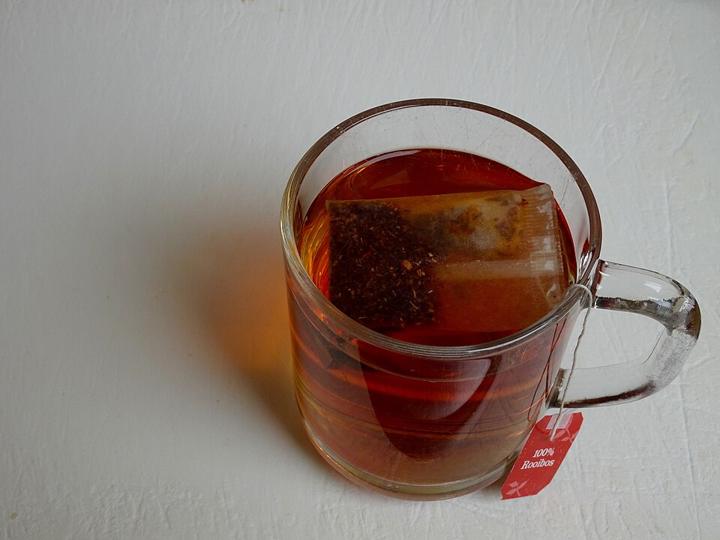
The Khoi and the San, often called the Khoisan together, are among the oldest inhabitants of southern Africa. For centuries the San lived as hunter-gatherers, the Khoi as herders. Their knowledge of the dry, plant-rich landscape of the Cape is deep and old. Rooibos (Aspalathus linearis) grows naturally only in a small area around the Cederberg mountains in the Western Cape. Indigenous inhabitants gathered the needle-like leaves, bruised them, let them ferment and dried them in the sun. That is how the red tea now known worldwide came about. With European colonisation the Khoi and San lost much of their land and way of life. Settlers took over rooibos. In 1904 the merchant Benjamin Ginsberg began selling rooibos, and in the 1930s people succeeded in cultivating the plant. So rooibos grew into a major export product, without the original knowledge holders seeing anything in return. That changed. In November 2019 the rooibos industry and the councils of the Khoi and San signed an agreement, the first of its kind in the world. Since then the communities receive a levy of one and a half percent of the price farmers get for rooibos.

Image of Buchu

Southern Africa

Traditional healers of Southern Africa

An ancient, living practice; varies by people and region

Throughout southern Africa, among the Zulu, Xhosa, Sotho, Tswana, Venda and other peoples, traditional healers have played a major role for centuries. They are consulted in illness, but also in misfortune, conflict and at important moments in life. In colonial times and under apartheid, healers were distrusted and opposed. The Witchcraft Suppression Act of 1957, for instance, banned “practising witchcraft” and divination. Yet people kept going to healers, often alongside a visit to a clinic. After apartheid South Africa chose recognition. In 2007 parliament passed the Traditional Health Practitioners Act. The law recognises diviners and herbalists, among others, as traditional health practitioners and sets up a council that regulates registration, training and conduct.

Image of Bitter kola

West Africa

Kola nut: hospitality and ritual in West Africa

A long history; still in daily use

The kola nut is the seed of the kola tree, which grows in the rainforests of West Africa. There are two important species: Cola nitida, whose nuts split into two parts, and Cola acuminata, whose nuts have three to six parts. The nuts contain caffeine and theobromine, and chewing them drives away tiredness and hunger. Kola nuts have been an important trade product for centuries. They were carried north from the forest zone, including the land of the Asante in present-day Ghana: to the Hausa cities in present-day Nigeria and beyond, across the Sahara. Because Islam forbids alcohol but not kola, the nut became a beloved stimulant in the Sahel and North Africa. The trade was large and well organised. Caravans of porters and donkeys carried the nuts, which had to be kept moist so they would not dry out, over great distances.

Herbs in this tradition (2)

From the kitchen

Recipes from Africa

All recipes (4) →

Registry

Herbs from Africa

Search herbs, spices and other natural ingredients by name, use, or tag. Traditional use is cultural and historical information, not medical advice.

58 results

  • Caution

    Herb · № 510

    Kurchi

    Holarrhena antidysenterica

    Traditionally attributed effects: bitter, stomachic, astringent, strongly antidysenteric, fever-reducing, expels worms; for acute and chronic (amoebic) dysentery and diarrhoea, bile complaints, fever, haemorrhoids, roundworms and threadworms.

    Ayurveda+1
  • Caution

    Food · № 252

    Melon

    Cucumis melo

    A sweet, juicy fruit. In Chinese medicine the dried stalk (gua di) was used to induce vomiting; no medicinal effect is described for the fruit itself.

    Ancient Egyptian medicine+2Folklore
  • Caution

    Other · № 28

    Myrrh

    Commiphora myrrha

    A gum resin with a long history in medicine, ritual, perfume, and incense. Modern treatment claims are not established.

    Ancient Egyptian medicine+6Folklore
  • Caution

    Herb · № 813

    Pepper-bark tree

    Warburgia salutaris

    A tree with a peppery, pungent bark, traditionally used for colds, coughs and mouth complaints.

    Traditional healers of Southern Africa
  • Caution

    Herb · № 502

    Flame lily

    Gloriosa superba

    Traditionally attributed effects: tonic, antipyretic, promotes bile, expels worms, cleansing, laxative; against lice, for gonorrhoea, leprosy, colic, worms; promotes contractions; compress for rheumatism and nerve pain.

    Local African healing traditions+1
  • Caution

    Food · № 11

    Rooibos

    Aspalathus linearis

    A caffeine-free herbal infusion used as a beverage; it is not an established treatment.

    Khoi and San knowledge of rooibos+1
  • Caution

    Food · № 25

    Roselle (hibiscus)

    Hibiscus sabdariffa

    The red calyces make a tart drink. Folk medicine links it to blood pressure; it is not a substitute for treatment.

    Ancient Egyptian medicine+2Folklore
  • Caution

    Herb · № 201

    Rose geranium

    Pelargonium graveolens

    Traditionally attributed effects: antidepressant, pain-relieving, diuretic, calming, tonic.

    Western herbal medicine+1Folklore
  • Caution

    Herb · № 399

    Prickly chaff flower

    Achyranthes aspera

    Traditionally attributed effects: astringent, diuretic, cleansing, antipyretic, laxative; for oedema from the kidneys, bronchial complaints, leprosy, stomach ache, haemorrhoids, boils, incipient diarrhoea; abortifacient in high doses.

    Ayurveda+1
  • Caution

    Herb · № 117

    Senna

    Senna alexandrina

    Leaves and pods contain sennosides, a stimulant laxative that works for short-term constipation. It is used in modern over-the-counter laxatives.

    Ancient Egyptian medicine+5
  • Caution

    Food · № 356

    Sesame

    Sesamum indicum

    Traditionally attributed effects: soothing, softens the skin, diuretic, promotes menstruation and milk flow, laxative; leaves for respiratory complaints, diarrhoea and dysentery in children, bladder catarrh; seeds for bleeding haemorrhoids, absent or painful menstruation.

    Ancient Egyptian medicine+3Folklore
  • Caution

    Other · № 385

    Shea

    Vitellaria paradoxa

    Shea butter softens dry skin and protects hair; it is also an important cooking fat. Medical claims are not well studied.

    Local African healing traditions
  • Caution

    Food · № 560

    Tamarind

    Tamarindus indica

    Traditionally attributed effects: ripe fruit sour, cooling, carminative, laxative, antiscorbutic, promotes bile; for inflamed swellings, bilious vomiting, conjunctivitis (flowers), bleeding haemorrhoids, throat complaints, ulcers, paralysis (bark), gonorrhoea (ash).

    Local African healing traditions+3
  • Caution

    Herb · № 549

    Toothbrush tree

    Salvadora persica

    Traditionally attributed effects: carminative, diuretic, decongestant; leaves for rheumatism, scurvy, painful tumours, haemorrhoids, asthma and cough; flower oil for flatulence, mucus, worms, leprosy, gonorrhoea, headache and rheumatic pain.

    Local African healing traditions+2
  • Caution

    Herb · № 467

    Ivy gourd

    Coccinia indica

    Traditionally attributed effects: cleansing, laxative (bark), antispasmodic and expectorant (leaf and stem), lowers blood sugar; for incipient diabetes, swollen glands, skin diseases, smallpox rash, gonorrhoea, bronchitis.

    Ayurveda
  • Caution

    Herb · № 29

    Umckaloabo (African geranium)

    Pelargonium sidoides

    Root extract is sold for respiratory complaints. A Cochrane review found little to no evidence of benefit for acute bronchitis, colds, or sinusitis.

    Traditional healers of Southern Africa
  • Caution

    Food · № 389

    Watermelon

    Citrullus lanatus

    A very juicy fruit that quenches thirst. Oil from the seeds is used in hair care. In Chinese medicine the fruit is considered cooling and diuretic.

    Ancient Egyptian medicine+2
  • Caution

    Herb · № 373

    Frankincense

    Boswellia sacra

    The resin is mainly used as incense and fragrance. Extracts of related Boswellia species have been studied for osteoarthritis, with modest and variable results.

    Ancient Egyptian medicine+4Folklore
  • Caution

    Herb · № 921

    Wild dagga

    Leonotis leonurus

    A shrub of the mint family, two to three metres tall, with orange, tubular flowers in whorls around the square stems. Contains marrubiin and leonurine, as well as labdane compounds. Considered mildly calming; which substance causes the effect is not yet clear.

    Khoi and San knowledge of rooibos+1
  • Caution

    Herb · № 810

    African wormwood

    Artemisia afra

    A bitter, aromatic herb widely used in southern Africa for coughs, colds, fever and flu.

    Traditional healers of Southern Africa
  • Caution

    Herb · № 429

    Desert date

    Balanites aegyptiaca

    Traditionally attributed effects: laxative, expels worms; seeds for cough and colic, oil on burns and freckles, seed extract lowers blood pressure.

    Ancient Egyptian medicine+2
  • Caution

    Herb · № 547

    Castor oil plant

    Ricinus communis

    Traditionally attributed effects: oil mildly laxative; leaf juice emetic in poisoning, leaf decoction laxative, promotes milk and menstruation; compress on boils and swellings, for flatulence in children; root decoction for lumbago, rheumatism and sciatica.

    Ancient Egyptian medicine+4