 Caution
Europe · Herb · № 79
Elecampane
Inula helenium
The root is traditionally used for productive coughs and bronchitis; it is rich in inulin. Clinical evidence is limited.
Greco-Roman medicine+4
Tradition in Europe
Medieval records; older and continuing local practices
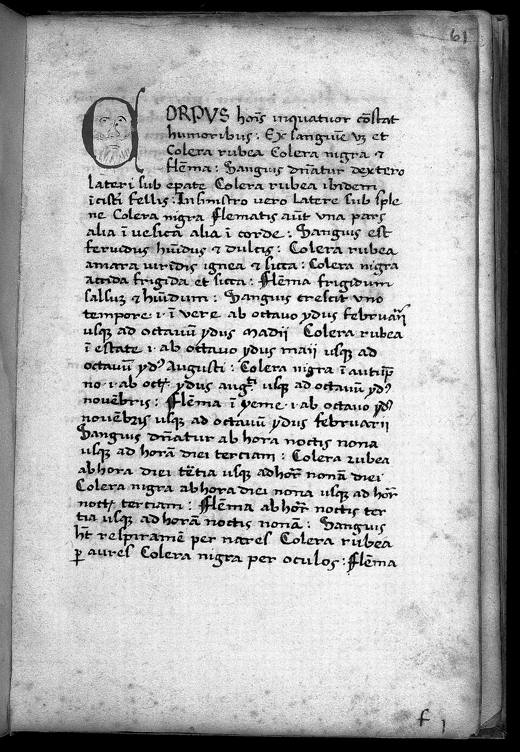
After the fall of the Western Roman Empire, monasteries in Europe became the keepers of learned knowledge, medicine included. Monks and nuns copied Latin and Greek medical texts so that they were preserved.
The Rule of Benedict, from the sixth century, states in chapter 36 that care for the sick comes before everything. Monasteries therefore acquired an infirmary, a pharmacy and a herb garden. The famous Plan of Saint Gall, from around 820, shows a herb garden with sixteen beds next to the infirmary and the physician’s house.
Secular rulers took an interest too. In the Capitulare de villis of around 800, Charlemagne laid down which plants were to grow on his estates: almost a hundred species, including many medicinal herbs. From the tenth century a famous medical school was active in Salerno in Italy. In the twelfth century a woman physician, Trota, also worked there; texts on women’s medicine were later named after her.
Monastic medicine joined the classical doctrine of the humours with the Christian faith. Illness could have a natural cause, but could also be a trial. Healing was therefore care for both body and soul: with herbs, but also with prayer.
Caring for the sick was a Christian duty, a work of mercy. Monasteries cared not only for their own members, but also for the poor, pilgrims and travellers.
Folk knowledge outside the monasteries was more practical. What helped was passed on. It mixed with faith and superstition, such as picking herbs on special days.
In the monastery the infirmarius, the carer of the sick, learned his craft from experienced brothers, from books and in the garden. Manuscripts were copied and exchanged between monasteries.
Outside the monasteries there were herb women, midwives, surgeons and barbers. Their knowledge passed orally from parent to child or from master to apprentice.
In the countryside too, almost everyone knew something about herbs. Home remedies for coughs, stomach ache or wounds were part of ordinary life.
The Lorsch Pharmacopoeia, the Lorscher Arzneibuch, was written around 795 in the monastery of Lorsch. It contains almost five hundred recipes and defends medicine as a Christian duty. Since 2013 it has been on UNESCO’s Memory of the World register.
Around 840 the abbot Walahfrid Strabo wrote the Hortulus, a poem about the plants in his monastery garden on the island of Reichenau. From the school of Salerno comes the Regimen sanitatis Salernitanum, a poem full of rules for health. A well-known line asks: why should a man die who has sage in his garden?
The work of Hildegard of Bingen, in the twelfth century, also belongs to this tradition.
Monastery gardens are being laid out again all over Europe, as historic gardens and places of learning. Some monasteries still make herbal liqueurs, teas and ointments.
Many plants from the monastery garden are now in the pharmacy as standardised remedies. Others have mainly become kitchen herbs.
Folk knowledge lives on in home remedies, in plant names and in customs that still exist in the countryside.
The monastery garden was a place of order: rectangular beds of herbs. There grew sage, rosemary, rue, fennel, lavender, betony, mint and lilies.
Walahfrid Strabo’s Hortulus includes sage, fennel, wormwood and chervil, among others.
Outside the monastery walls people gathered wild plants: nettle, plantain, yarrow, chamomile and elder.
Monastic medicine was an important link in the transmission of knowledge. Appreciate it as history.
Some monastery herbs are poisonous, such as rue, which is dangerous in pregnancy.
From the kitchen
Registry
CautionEurope · Herb · № 79
Inula helenium
The root is traditionally used for productive coughs and bronchitis; it is rich in inulin. Clinical evidence is limited.
 Caution
Europe · Herb · № 63
Artemisia absinthium
One of the most bitter herbs; traditionally used to stimulate appetite and digestion and against intestinal worms. Clinical evidence is limited.
 Caution
Europe · Herb · № 93
Betonica officinalis (syn. Stachys officinalis)
Traditionally used for tension headaches and nervousness. Modern clinical research is lacking.
 Caution
Europe · Food · № 270
Allium schoenoprasum
A mild onion herb with vitamin C and sulphur compounds. A medicinal effect has not been shown.
 Caution
Europe · Food · № 48
Urtica dioica
A food and fiber plant with a long tradition in folk medicine. Medical claims are not established.
 Caution
Europe · Herb · № 85
Melissa officinalis
Traditionally used for restlessness, sleep problems and a nervous stomach; externally for cold sores. Small studies suggest a mild calming effect, but evidence is limited.
 Caution
Europe · Herb · № 105
Viola tricolor
Traditionally used for skin conditions such as eczema and cradle cap, and for coughs. There is little clinical research.
 Caution
Europe · Herb · № 56
Achillea millefolium
Traditionally used to stop bleeding from minor wounds, for fevers and colds, and as a digestive bitter. Clinical evidence is limited.
 Caution
Europe · Herb · № 107
Teucrium chamaedrys
Formerly used as a digestive bitter, for gout and as a slimming aid. The risk of liver damage outweighs any possible benefit.
 Caution
Europe · Food · № 90
Rubus idaeus
The fruit is a nutritious berry. Raspberry leaf has been used in folk medicine in late pregnancy to ease labour; convincing evidence is lacking.
 Caution
Europe · Herb · № 300
Cnicus benedictus
Traditionally attributed effects: bitter digestive stimulant, expectorant, antiseptic, wound-healing.
 Caution
Europe · Herb · № 49
Calendula officinalis
An edible flower historically used as medicine and dye. Its oil is widely used in skin products.
 Caution
Europe · Herb · № 60
Angelica archangelica
An aromatic bitter traditionally used for bloating, poor appetite and colds. Clinical evidence is limited.
 Caution
Europe · Herb · № 87
Primula veris
The root contains saponins and is traditionally used to loosen phlegm in coughs; the flowers as a calming tea. There is some research on combination cough preparations.
 Caution
Europe · Herb · № 112
Glechoma hederacea
Traditionally used for blocked noses, sinus complaints and coughs. There is hardly any clinical research.
 Caution
Europe · Herb · № 77
Humulus lupulus
The cones are traditionally used for restlessness and sleep problems, often with valerian. There are hints of a mild sedative effect, but evidence is limited.
 Caution
Europe · Herb · № 19
Matricaria chamomilla (Duitse kamille)
Flowers are used in teas and topical or oral products. Reliable evidence is insufficient for most claimed conditions.
 Caution
Europe · Food · № 256
Prunus avium
A fruit rich in vitamin C. The dried stalks were used in folk medicine as a diuretic. Sour cherries have been studied for gout and sleep, with preliminary results.
 Caution
Europe · Herb · № 834
Anthriscus cerefolium
A mild, aniseed-like kitchen herb, traditionally used as a cleansing spring herb and for digestive complaints.
 Caution
Europe · Herb · № 75
Galium aparine
Used in Western herbalism as a 'lymphatic' herb for swollen glands and skin conditions. Scientific evidence is lacking.
 Caution
Europe · Herb · № 92
Scrophularia nodosa (en S. ningpoensis)
Used in Western herbalism for skin conditions such as eczema and psoriasis and for swollen glands. There is no good clinical evidence.
 Caution
Europe · Food · № 68
Brassica oleracea
A vegetable rich in vitamin C and fibre. In folk medicine cold cabbage leaves are placed on engorged breasts or painful joints; small studies give mixed results.
 Caution
Europe · Herb · № 44
Lavandula angustifolia
A fragrant plant used in bath products, perfume, and aromatherapy. Evidence for medical effects is preliminary.
 Caution
Europe · Herb · № 47
Crataegus monogyna, C. laevigata (en C. pinnatifida)
Studied for heart failure with conflicting results. For most conditions there is little or no good evidence.
 Caution
Europe · Herb · № 110
Gnaphalium uliginosum
An astringent herb traditionally used as a gargle for sore throats and inflamed upper airways. There is no clinical research.
 Caution
Europe · Herb · № 3
Mentha × piperita
Peppermint oil has been studied in irritable bowel syndrome and may reduce abdominal pain. The tea is used for a full stomach and nausea. With heartburn peppermint can make complaints worse.
 Caution
Europe · Herb · № 2
Salvia rosmarinus (syn. Rosmarinus officinalis)
An aromatic culinary herb with carnosic acid and rosmarinic acid. A few small studies point to a slight effect of the scent on alertness; that it improves memory has not been shown. The leaf is used for digestive complaints.
 Caution
Europe · Herb · № 45
Salvia officinalis
A culinary herb. A few small studies suggest possible effects on memory and blood lipids, but evidence is limited.
 Caution
Europe · Herb · № 95
Symphytum officinale
Topical preparations have been studied for bruises, sprains and back pain and appear to reduce pain. It contains allantoin, which is thought to support tissue repair.
 Caution
Europe · Herb · № 72
Foeniculum vulgare
The seed is traditionally used for wind, bloating and cramps. There are some small studies, but evidence is limited.
 Caution
Europe · Herb · № 179
Digitalis purpurea
Contains cardiac glycosides that slow the heart rate and strengthen its contractions. They gave rise to the drugs digoxin and digitoxin, still prescribed for certain heart rhythm disorders and heart failure. The margin between an effective and a toxic amount is very small.
 Caution
Europe · Food · № 21
Sambucus nigra
Berries have a folk-use history for cold and flu symptoms; clinical evidence remains preliminary.
 Caution
Europe · Herb · № 94
Stellaria media
Traditionally used externally as a cooling ointment or compress for itching, eczema and minor skin irritation. There is hardly any clinical research.
 Caution
Europe · Herb · № 58
Alchemilla xanthochlora
An astringent herb used in folk medicine mainly for heavy periods and diarrhoea. There is little clinical research.
 Caution
Europe · Herb · № 86
Plantago major
The leaf is traditionally bruised and applied to insect bites, small wounds and grazes, and taken as tea for coughs. Clinical evidence is limited.
 Caution
Europe · Herb · № 242
Ruta graveolens
Traditionally attributed effects: antiseptic, stimulating, promotes menstruation, expectorant, antispasmodic, expels worms (children); strengthens capillaries (rutin); for hysteria, flatulence and colic, incipient paralysis, indigestion; oil diuretic and skin-irritant.