Skip to content
Herbs & Cultures

Andes, Amazon and maté

South America

104 remedies · 7 traditions

From the Andes to the Amazon and the subtropical forests along the Paraná. The potato, cinchona bark and yerba mate come from here, and Kallawaya healers have travelled between highlands and lowlands for centuries.

Characteristic plants

History and today

Cultures and traditions

Dates refer to surviving sources or written records where possible. Much orally transmitted knowledge predates its first written record.

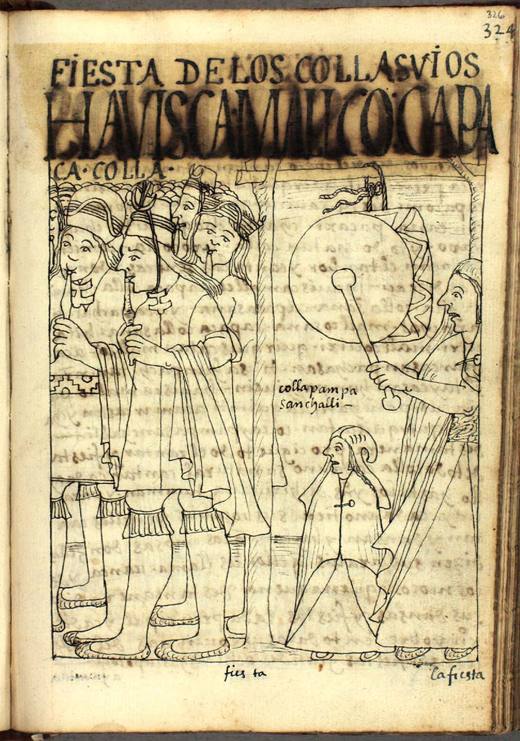
A feast in Collasuyu, the southern part of the Inca empire where the Kallawaya also lived; Guamán Poma de Ayala, c. 1615.

Around Charazani, Bolivia

Kallawaya healing knowledge

Andes; knowledge passed across generations

The Kallawaya live in Bautista Saavedra Province, north of La Paz in Bolivia, in the valleys of the Apolobamba range around the small town of Charazani, at roughly 2,700 to 5,000 metres. Throughout the Andes they are known as travelling healers. According to UNESCO their roots go back to before the Incas, to the Tiwanaku and Mollo cultures. The oldest trace is a tomb at Niño Korin, close to Charazani, from the Tiwanaku period, roughly 600 to 1000 AD. It held snuff trays, tubes interpreted as enema syringes, a mortar and bundles of guayusa leaf that still contained caffeine after all those centuries. That leaf does not grow in the Andes but in the Amazon lowlands. According to the anthropologist Joseph Bastien the tomb also held a skull with three drilled holes around which the bone had grown back: the patient had survived the operation. Under the Incas the Kallawaya held a special place. According to the chronicles they carried the Inca's litter, and the chronicler Guaman Poma drew them doing so at the start of the seventeenth century. The historian Thierry Saignes searched the archives of La Paz, Sucre and Seville for their past. In his view the Kallawaya formed a chiefdom of their own before the Incas, on the eastern flank of the Andes, from the Carabaya and Apolobamba ranges to the warm hills towards the Amazon. Carabaya and Callawaya are two spellings of the same name; the Spaniards later split the area into a Peruvian and a Bolivian half. A Kallawaya chief, Ari Capaquiqui, is said to have found the Inca the way to the lowlands of the 'Chunchos' and was allowed to travel in a litter himself in return. Strikingly, no chronicler mentions the Kallawaya as healers. Only in 1766 did the canon Martín Landaeta describe men from Charazani who crossed the whole viceroyalty with sacks of resins, incense and medicinal herbs. Saignes therefore thinks the travelling healers arose only in colonial times, perhaps not until the eighteenth and nineteenth centuries. In 1889 the department of La Paz sent a list of the plants of the 'Callahuaya' to the World's Fair in Paris. Around 1900 healers from Chajaya and Curva travelled on foot, by train and by boat as far as Argentina, Chile, Ecuador and Peru, and according to tradition some treated workers for malaria and yellow fever during the building of the Panama Canal. The French ethnographer Louis Girault heard that these were seven men from Khanlaya, who travelled through Peru and Ecuador and by steamer along the Colombian coast to Panama and stayed a few months. Stories that Kallawaya healed people in Tokyo, Paris or Rome, even a pope, his informants called inventions, although they did not mind them going round. As doctors and pharmacies spread during the twentieth century, the healers were opposed: some were arrested, others dismissed as witch doctors. In 2003 UNESCO proclaimed the "Andean cosmovision of the Kallawaya" a masterpiece of intangible heritage, and in 2008 it was inscribed on the representative list.

Herbs in this tradition (59)

Image of Yerba mate

Paraguay, northeastern Argentina and southern Brazil

The Guaraní and the mate tradition

An ancient Guaraní drink; shared today across parts of South America

The Guaraní have lived for centuries in the area of present-day Paraguay, north-eastern Argentina, southern Brazil and parts of Bolivia. Their language, Guaraní, is an official language in Paraguay alongside Spanish and is spoken by most of the population. Long before the Europeans arrived, the Guaraní drank an infusion of the leaves of maté (Ilex paraguariensis), ka’a in Guaraní. They used it as a drink, as a remedy and in rituals. In the seventeenth century Jesuits set up mission villages in this region, the reducciones, where Guaraní lived and worked. The Jesuits succeeded in cultivating maté, which until then had only been gathered in the wild, and sold the leaves throughout South America as “Jesuit tea”. In 1767 the Jesuits were expelled, but maté drinking remained.

Herbs in this tradition (3)

Image of Boldo

Southern Chile and Argentina

Mapuche medicine

Centuries-old knowledge; the machi still heals today

The Mapuche, 'people of the land', are the largest Indigenous people of Chile and also live in Argentina. Their land lies between the Pacific Ocean and the Andes, with temperate rainforests, lakes and volcanoes. For a long time the Mapuche lived from a mix of small gardens, livestock, fishing and gathering. They cleared and burned a patch of forest for a garden and moved on when the soil was exhausted. What the forest, the coast and the mountains provided was at least as important as the harvest: fruits, nuts, roots, mushrooms, seaweed and wild grains. Spanish chroniclers often overlooked this gathering, because they paid attention mainly to farming. The Mapuche resisted the Spanish for centuries. After the great uprising of 1598, the land south of the Biobío River remained independent, and the Spanish crown made treaties with them. Only at the end of the nineteenth century did Chile and Argentina conquer their land. The Mapuche were confined to small plots, the reducciones. Moving around was no longer possible, and much of the forest they gathered from disappeared. Their language and medicine were suppressed for a long time. Yet the medicine survived. The machi, the lawentuchefe and the midwives kept working, often in secret and alongside Chilean health care.

Image of Cacao

The Amazon basin

Herbal knowledge of the Amazon

Thousands of years; hundreds of peoples with their own knowledge

The Amazon is the largest tropical rainforest in the world. It stretches across Brazil, Peru, Colombia, Ecuador, Bolivia, Venezuela, Guyana, Suriname and French Guiana. Hundreds of Indigenous peoples live there, each with its own language and its own knowledge of the forest. People have lived here for at least ten thousand years. They also changed the forest: they grew cassava, palms and fruit trees and made fertile black earth, terra preta. In the western Amazon, in present-day Ecuador, cacao was used more than five thousand years ago. After the arrival of the Europeans many people died from disease and violence. Around 1900 the rubber boom again took a heavy toll: in some areas whole peoples were forced into labour and massacred.

Herbs in this tradition (15)

Image of Balsam of Peru

Coast and highlands of northern Peru

Curanderismo of northern Peru

Roots in the Moche culture (100–800); a living tradition

Northern Peru runs from the coastal desert around Trujillo, Chiclayo and Piura through dry forest and mountains into the Amazon. Few regions in the world have such a rich medicinal flora. The Peruvian anthropologist Lupe Camino called the north part of the 'health axis' of the Andes, an area from southern Ecuador to northern Bolivia where healers have long gathered and traded plants. The tradition is old. Archaeologists have found remains of the San Pedro cactus at sites that are thousands of years old. The Moche, who lived on this coast between about 100 and 800, depicted healers on their pottery, as well as the San Pedro and the seeds of cabalonga and of ishpingo. Remains of such plants have been found in the tomb of the Lord of Sipán, a Moche ruler. Moche pottery also shows a mysterious, comma-shaped fruit with a large calyx, which researchers call ulluchu. It hangs from the belts of warriors and messengers and floats around priests and sacrificial scenes, and real fruits have been found in graves. Nobody knows for certain which plant it is. Bussmann and Sharon think of a Guarea, an Amazonian tree whose seeds contain poisonous alkaloids, and suspect that the Moche used them in sacrifices and perhaps as a snuff. That is a hypothesis not yet confirmed by chemical analysis. The name is uncertain too: the archaeologist Rafael Larco Hoyle used it in the 1930s, but it does not appear in the dictionaries of Mochica. After the Spanish conquest, Indigenous medicine blended with Catholicism and with Spanish ideas about illness. In the 1780s Bishop Baltasar Martínez Compañón of Trujillo had everything in his diocese described and painted, including the useful plants. According to the botanist Rainer Bussmann and the anthropologist Douglas Sharon, about 40 per cent of those plants are still sold in the coastal markets. A third is now used only in the Amazon, and the rest fell out of use. At the same time many new plants were added. In their view, healers in Peru could experiment more freely than in Ecuador, where traditional medicine was persecuted for a long time.

Image of Ayahuasca

Sibundoy Valley, southern Colombia

Kamëntšá and Inga medicine

In the Sibundoy valley in southern Colombia for centuries; a living tradition

The Sibundoy valley lies at more than two thousand metres in the Andes of the Putumayo department, in southern Colombia. To the east the mountains drop steeply to the Amazon lowland. Two peoples have lived side by side there for centuries. The Kamëntšá, also called Camsá, speak a language related to no other. The Inga speak Inga Kichwa, a form of Quechua. That language may have come with the Incas or later with the missionaries, and the Inga see themselves as related to the Incas. From the beginning of the twentieth century to the end of the 1960s Capuchin missionaries governed the valley. They took much of the land of the Kamëntšá and Inga, made them work for the mission and fought their customs. Yet the knowledge of the healers survived. The healers of Sibundoy are called taitas. Throughout Colombia they are known as travelling herbalists who sell plants and treat patients in the markets of Bogotá, Pasto and Quito. From the 1940s the botanist Richard Evans Schultes worked in the valley with the Kamëntšá taita Salvador Chindoy. His relative Pedro Chindoy also became known far beyond the valley.

Image of Annatto (achiote)

Vaupés, Colombia and Brazil

Tukano medicine

In the Vaupés in the northwest Amazon; a living tradition

In the northwest Amazon, along the Vaupés, the Apaporis, the Pirá Paraná and their tributaries, on the border of Colombia and Brazil, live the Tukano peoples. They speak related languages of the Tukanoan family: the Tukano themselves, who call themselves ye'pâ-masa, and the Desana, Barasana, Makuna, Wanano, Kubeo and others. A man marries a woman from a group with another language. As a result children grow up with their father's language, their mother's and often more, and several languages are heard in a single maloca, the great communal house. According to their stories the first people came from the Milky Way in a canoe drawn by an anaconda: a man and a woman with three plants, manioc, coca and yajé. On their way upstream they founded the places of the peoples. At the mouth of the Pirá Paraná in the Apaporis, close to the equator, a large rock engraving marks the place where they arrived. From the nineteenth century traders, missionaries and above all rubber seekers came into the region. The German ethnologist Theodor Koch-Grünberg, who lived there from 1903 to 1905, found abandoned villages on his return and wrote about murder and abuse by the rubber barons. Yet much of the Vaupés stayed inhabited by the peoples themselves, protected by waterfalls and rapids.

From the kitchen

Recipes from South America

All recipes (5) →

Registry

Herbs from South America

Search herbs, spices and other natural ingredients by name, use, or tag. Traditional use is cultural and historical information, not medical advice.

104 results

  • Caution

    Herb · № 908

    Epena (virola)

    Virola theiodora (en verwante Virola-soorten)

    A tree of the nutmeg family with blood-red resin in its bark. The resin contains a lot of 5-MeO-DMT and DMT, and also beta-carbolines. As snuff it brings excitement, numb limbs, nausea and visions within minutes.

    Herbal knowledge of the Amazon+1
  • Caution

    Herb · № 1006

    Escorzonera

    Perezia multiflora (en verwante soorten)

    A low, prickly herb with toothed leaves and yellow or white flower heads. Contains phenols, flavonoids and saponins; in the laboratory the leaf inhibits some bacteria. Research in people is limited.

    Kallawaya healing knowledge
  • Caution

    Herb · № 876

    Floripondio (angel's trumpet)

    Brugmansia spp. (o.a. B. arborea, B. sanguinea)

    A shrub or small tree with large hanging trumpet flowers. All parts contain tropane alkaloids such as scopolamine and atropine, which cause confusion and hallucinations.

    Kallawaya healing knowledge+2
  • Caution

    Herb · № 899

    Prickly sow-thistle

    Sonchus asper

    An annual or biennial plant with spiny, blue-green leaves, yellow dandelion-like flowers and milky sap in the stem. The leaves are edible and nutritious.

    Kallawaya healing knowledge
  • Caution

    Herb · № 163

    Guarana

    Paullinia cupana

    The seeds contain about twice as much caffeine as coffee beans. Guarana is used in energy drinks and soft drinks; its stimulating effect comes from caffeine.

    Kallawaya healing knowledge+2
  • Caution

    Herb · № 879

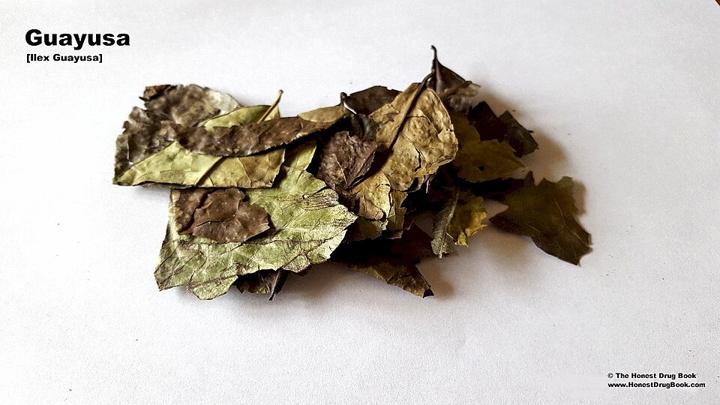
    Guayusa

    Ilex guayusa

    A relative of yerba mate; the leaf contains a lot of caffeine and is stimulating.

    Kallawaya healing knowledge+2
  • Caution

    Herb · № 237

    Heliotrope

    Heliotropium arborescens

    An ornamental plant with strongly vanilla-scented flowers. It contains pyrrolizidine alkaloids and is poisonous if swallowed; it is grown only for its scent.

    Folk magic and herbal magicFolklore
  • Caution

    Herb · № 881

    Hercampuri

    Gentianella alborosea (en G. nitida)

    A small, very bitter herb of the gentian family. It is sold for liver, gallbladder and cholesterol complaints and for weight loss; good research is lacking.

    Curanderismo of northern Peru
  • Caution

    Herb · № 895

    Huacatay (black mint)

    Tagetes minuta

    A tall, strongly scented marigold with small flower heads. Its essential oil is used in perfume and soft drinks.

    Kallawaya healing knowledge
  • Caution

    Herb · № 1010

    Huamanpinta

    Chuquiraga spinosa (en C. rotundifolia)

    A prickly shrub with hard, pointed little leaves and orange-yellow flower heads. Contains phenolic acids, flavonoids, saponins and alkaloids; animal studies point to an anti-inflammatory and antioxidant effect.

    Kallawaya healing knowledge
  • Caution

    Herb · № 887

    Huamanripa

    Laccopetalum giganteum

    A giant buttercup with a rosette of thick leaves and large greenish-yellow flowers. Its compounds and effects have barely been studied.

    Curanderismo of northern Peru
  • Caution

    Herb · № 914

    Huanarpo

    Corynaea crassa

    An unusual parasitic plant without chlorophyll that lives on the roots of trees and shrubs; only a club-shaped flower spike appears above ground. Little is known about its effect in people.

    Curanderismo of northern Peru
  • Caution

    Herb · № 983

    Iochroma

    Iochroma fuchsioides

    A shrub of the nightshade family with clusters of tubular orange-red flowers. Withanolides, substances also found in ashwagandha, have been isolated from it. Why the plant acts as an intoxicant has not been explained.

    Kamëntšá and Inga medicine
  • Caution

    Herb · № 918

    Ishpingo

    Nectandra spp. (en verwante laurierachtigen, o.a. Ocotea en Aiouea)

    Trees of the laurel family with fragrant seeds and bark. Little is known about the substances in the seeds and their effect in people.

    Curanderismo of northern Peru
  • Caution

    Herb · № 925

    Jurema

    Mimosa tenuiflora (syn. Mimosa hostilis)

    A thorny tree or shrub of the pea family with feathery leaves and white, fragrant flower spikes. The root bark contains much DMT. Taken by mouth, DMT normally does not work without an MAO inhibitor; why the jurema drink is still said to work is not clear.

  • Caution

    Herb · № 981

    Justicia pectoralis (tilo)

    Justicia pectoralis (syn. Dianthera pectoralis)

    A low, creeping herb of the acanthus family. The dried leaf smells strongly of hay because of coumarin and umbelliferone. Reports of tryptamines in the plant have not been confirmed.

    Tukano medicine
  • Caution

    Herb · № 1008

    Kanlli

    Margyricarpus pinnatus

    A low, prickly shrublet of the rose family with fine, pinnate leaves and edible white or pink berries ('perlilla'). Root and leaf are regarded as diuretic and astringent; research in people is lacking.

    Kallawaya healing knowledge
  • Caution

    Herb · № 1004

    Kantuta

    Cantua buxifolia

    A much-branched shrub of 2 to 3 metres with clusters of tubular flowers in red, pink, yellow or white, pollinated by hummingbirds and bees. Little is known about its effect in people.

    Kallawaya healing knowledge
  • Caution

    Herb · № 33

    Cat's claw

    Uncaria tomentosa

    There is no conclusive scientific evidence that cat's claw helps any health condition.

    Herbal knowledge of the Amazon+2
  • Caution

    Herb · № 31

    Cinchona bark

    Cinchona spp. (o.a. C. officinalis, C. pubescens)

    The bark contains quinine and other alkaloids. Quinine became an important antimalarial, but using the bark yourself is unsafe and is not malaria treatment.

    Kallawaya healing knowledge+1
  • Caution

    Herb · № 1007

    Kiswara

    Buddleja coriacea (en verwante Andes-soorten)

    A tough shrub or tree with small, leathery leaves, rusty-brown underneath, and fragrant orange-yellow flowers. Little has been studied about its effect in people.

    Kallawaya healing knowledge
  • Caution

    Food · № 32

    Maca

    Lepidium meyenii

    A root crop eaten as food. Claims about fertility and energy are unproven.

    Kallawaya healing knowledge+1
  • Caution

    Herb · № 863

    Maillico

    Caltha sagittata

    A low plant of the buttercup family with arrow-shaped leaves and cream-white flowers. Related to the marsh marigold; its compounds and effects have not been studied.

    Mapuche medicine
  • Caution

    Herb · № 859

    Maitén

    Maytenus boaria

    A graceful tree with drooping twigs and fine leaves that cattle love to eat. Traditionally for fever and skin rash; research is lacking.

    Mapuche medicine
  • Caution

    Herb · № 883

    Manayupa

    Desmodium molliculum

    A low plant of the pea family. Traditionally used for inflammation and wounds; research is limited.

    Curanderismo of northern Peru
  • Caution

    Herb · № 851

    Maqui

    Aristotelia chilensis

    A shrub with dark purple berries rich in anthocyanins. The leaf was traditionally used for wounds and sore throats. Health claims for 'superfood' products are unproven.

    Mapuche medicine
  • Caution

    Herb · № 853

    Matico

    Buddleja globosa

    A shrub with orange, ball-shaped flowers. The leaf contains anti-inflammatory compounds such as verbascoside; clinical research on wound healing is lacking.

    Mapuche medicine
  • Caution

    Herb · № 880

    Mucura (guinea henweed)

    Petiveria alliacea

    A herb with a strong garlic smell. It has been studied for anti-inflammatory and antimicrobial effects; clinical evidence is lacking.

    Curanderismo of northern Peru
  • Caution

    Herb · № 897

    Mullaca

    Muehlenbeckia volcanica

    A low, creeping shrublet with small, round, leathery leaves and blue-black berries. Tannins and flavonoids have been found in the extract; in rats it was anti-inflammatory.

    Kallawaya healing knowledge
  • Caution

    Herb · № 816

    Muña

    Minthostachys mollis

    A mint-like plant used in the Andes for stomach complaints and wind.

    Kallawaya healing knowledge+1
  • Caution

    Herb · № 864

    Murta (Chilean guava)

    Ugni molinae

    A shrub of the myrtle family with fragrant red berries. Mainly a food plant; the leaf was used as an astringent.

    Mapuche medicine
  • Caution

    Herb · № 865

    Nalca (Chilean rhubarb)

    Gunnera tinctoria

    A giant plant with leaves up to two metres across. The peeled stalks are edible; root and stalks are rich in tannins.

    Mapuche medicine
  • Caution

    Herb · № 858

    Natre

    Solanum crispum (incl. S. ligustrinum)

    A shrub of the nightshade family with very bitter leaves. Traditionally a fever remedy; the berries are poisonous.

    Mapuche medicine
  • Caution

    Herb · № 227

    Nasturtium

    Tropaeolum majus

    Leaves and flowers taste sharp because of mustard oil glycosides. In Germany a combination with horseradish is approved as a remedy for bladder and respiratory infections; there is little research on the plant alone.

    Folk magic and herbal magicFolklore
  • Caution

    Herb · № 882

    Palo santo

    Bursera graveolens

    A tree of the frankincense and myrrh family, with strongly scented wood that contains essential oil.

    Curanderismo of northern Peru
  • Caution

    Herb · № 868

    Palqui (green cestrum)

    Cestrum parqui

    A fast-growing, foul-smelling shrub of the nightshade family. All parts are poisonous because of alkaloids.

    Mapuche medicine