Skip to content
Herbs & Cultures

Ink, lotus and rice paper

Asia

435 remedies · 7 traditions

Asia is home to diverse healing traditions that developed over long periods. Ayurveda and Chinese medicine are influential, but do not represent all the continent’s knowledge and cultures.

Characteristic plants

History and today

Cultures and traditions

Dates refer to surviving sources or written records where possible. Much orally transmitted knowledge predates its first written record.

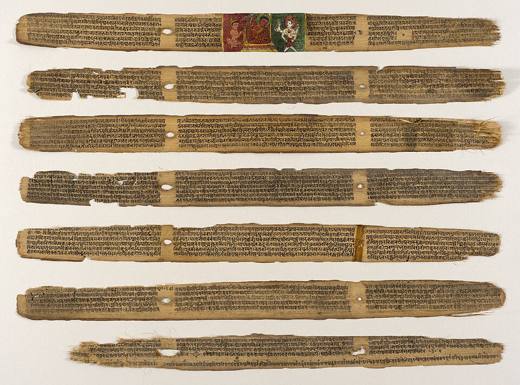
Palm leaves with the Sushruta Samhita, Nepal; text from the 12th–13th century.

Indian subcontinent

Ayurveda

South Asia; classical texts formed over centuries

Ayurveda literally means “knowledge of life”: āyus is life, veda is knowledge. Its roots lie deep in the history of South Asia. The Vedic texts, especially the Atharvaveda, already mention medicinal plants and charms against disease, but a coherent medical system only takes shape later. That system took form in three classical works known together as the Bṛhat Trayī, “the great three”: the Charaka Samhita, on internal medicine, the Sushruta Samhita, on surgery, and Vagbhata’s Ashtanga Hridaya. The first two grew over centuries and reached their present form roughly between a few centuries before and a few centuries after the beginning of the Common Era. Around the seventh century Vagbhata summarised both. Traditional datings are often much earlier; historians keep to these more cautious estimates. Ayurveda never stood alone. It influenced Tibetan Sowa Rigpa and met Unani, the Greco-Arabic medicine that came to India with Muslim rulers. Under British colonial rule Western medicine became the official standard. From the late nineteenth century Indian reformers rebuilt Ayurveda, with their own colleges, pharmacies and standardised remedies. That is why today’s Ayurveda looks different in many ways from classical practice.
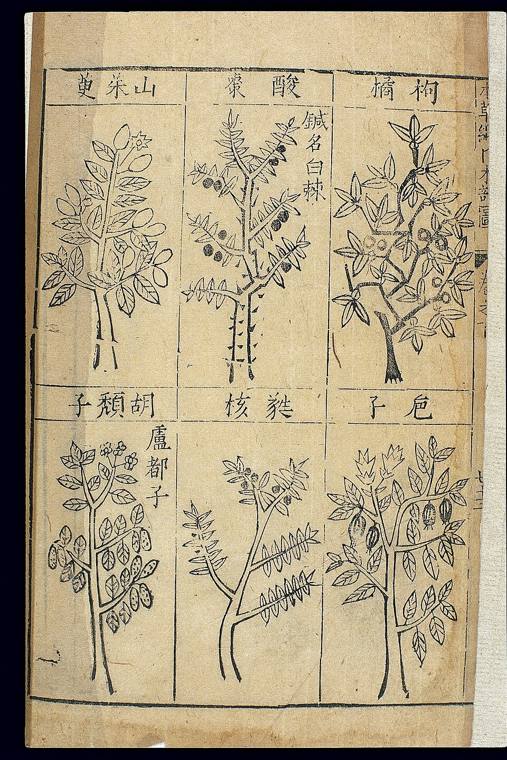
Plants from Li Shizhen's Bencao Gangmu, the great Chinese materia medica of the Ming period.

China

Chinese medical traditions

Classical writings from the early centuries BCE and CE

Chinese medicine is one of the oldest continuous healing traditions in the world. In a tomb at Mawangdui, sealed in 168 BCE, archaeologists found silk manuscripts with recipes against fifty-two ailments. They show how old the knowledge already was. The classical foundation lies in a few great works. The Huangdi Neijing, the “Inner Classic of the Yellow Emperor”, took shape in the last centuries BCE. The Shennong Bencao Jing, the herbal classic of the mythical farmer-emperor Shennong, describes 365 remedies. Around 200 CE Zhang Zhongjing wrote the Shanghan Lun, on febrile diseases, with formulas still in use today. Over the centuries the knowledge kept growing. In 1578 Li Shizhen completed the Bencao Gangmu, a huge encyclopaedia with almost two thousand remedies. In the twentieth century the tradition was reformed and standardised in China into what the West now calls “traditional Chinese medicine”.

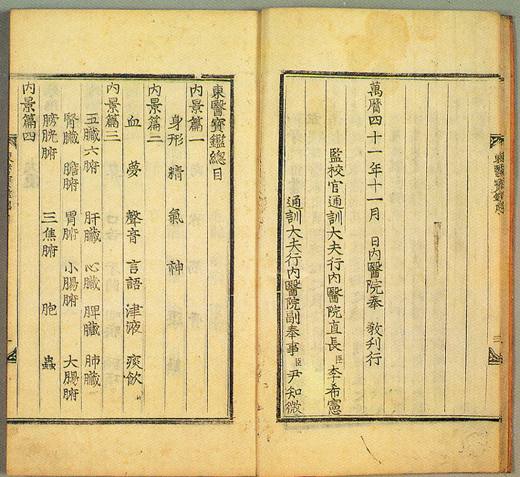
The table of contents of Heo Jun's Donguibogam (1613).

Korea

Korean hanbang and the Donguibogam

Medical compendium compiled in Korea in 1613

Korean medicine, hanbang or hanui, has roots in Chinese medicine, but over the centuries developed into a tradition of its own. As early as the Goryeo period Korea became known for its ginseng, which was exported to China and Japan. In the fifteenth century Korean physicians deliberately looked for their own, native remedies, the hyangyak. In 1433 the Hyangyak Jipseongbang appeared, a large work on remedies from Korea itself. The most important work is the Donguibogam, the “Precious Mirror of Eastern Medicine”. King Seonjo commissioned the court physician Heo Jun (1539–1615) in 1596. After the Japanese invasions and much hardship, Heo Jun completed the work in 1610, and in 1613 it was printed. UNESCO added it to the Memory of the World register in 2009.

Image of Benzoin

Java, Indonesia

Jamu in Indonesia

Roots in the Mataram era (8th–10th century); UNESCO heritage since 2023

Jamu is the traditional herbal medicine of Indonesia, especially of Java and Bali. Its roots go far back. Stone mortars from the site of Liyangan in Central Java, from the Mataram era of the eighth to tenth centuries, and reliefs on Borobudur already point to the preparation of herbs. At the courts of Java, in Surakarta and Yogyakarta, the knowledge was refined. Princesses and ladies of the court used jamu for beauty and health. In the nineteenth century much of that knowledge was written down. In the twentieth century a large jamu industry arose. Well-known brands such as Nyonya Meneer, founded in 1919, and Sido Muncul turned jamu into a mass product. In 2023 UNESCO recognised “jamu wellness culture” as intangible heritage.

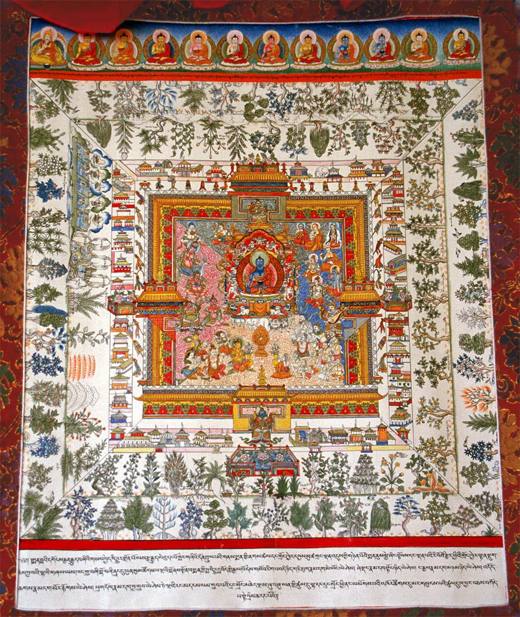
The first of Sangye Gyatso's medical paintings (1653–1705): the palace of the Medicine Buddha, surrounded by medicinal plants.

Tibetan Plateau and the Himalaya

Sowa Rigpa: Tibetan medicine

Developed from the 8th century; the Four Tantras revised in the 12th century

Sowa Rigpa, the “science of healing”, is the traditional medicine of Tibet, the Himalaya and Mongolia. It took shape in the eighth century, when King Trisong Detsen invited physicians from India, China, Persia and other lands to Tibet. According to tradition its founder is Yuthok Yonten Gonpo the Elder, an eighth-century physician. His descendant Yuthok the Younger revised the Gyushi, the “Four Tantras”, the principal work of Tibetan medicine, in the twelfth century. In 1696 the medical college of Chakpori was founded in Lhasa. In the seventeenth century the regent Desi Sangye Gyatso had a series of medical paintings made that explain the teaching in images. After 1959 Chakpori was destroyed. In 1961 the Men-Tsee-Khang was founded in exile in Dharamsala, and it continues the tradition.

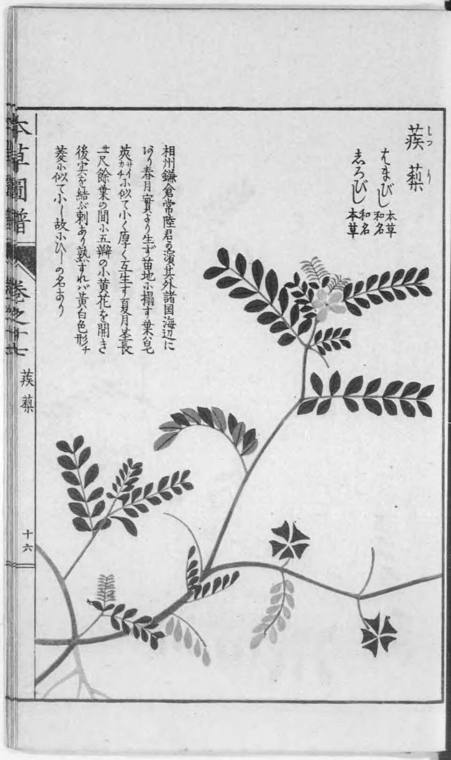
Puncturevine (Tribulus terrestris) from Iwasaki Tsunemasa's Honzō Zufu, a Japanese herbal of the Edo period.

Japan

Kampo: Japanese herbal medicine

From the 5th–7th centuries; its own form mainly in the Edo period (1603–1868)

Kampo means “method of the Han” and refers to its Chinese origin. Chinese medicine reached Japan from the fifth and sixth centuries, via Korea and directly from China, together with Buddhism and Chinese writing. The oldest surviving Japanese medical work is the Ishinpō, compiled in 984 by the court physician Tanba no Yasuyori. In the Edo period (1603–1868) Japanese physicians developed a practical form of their own. The school of “ancient formulas”, with physicians such as Yoshimasu Tōdō, went back to the Shanghan Lun and emphasised what the physician himself observes. In 1874 the Meiji government decreed that new physicians had to study Western medicine. As a result Kampo was pushed aside. A small group of physicians kept the knowledge alive, and in the twentieth century a revival followed.

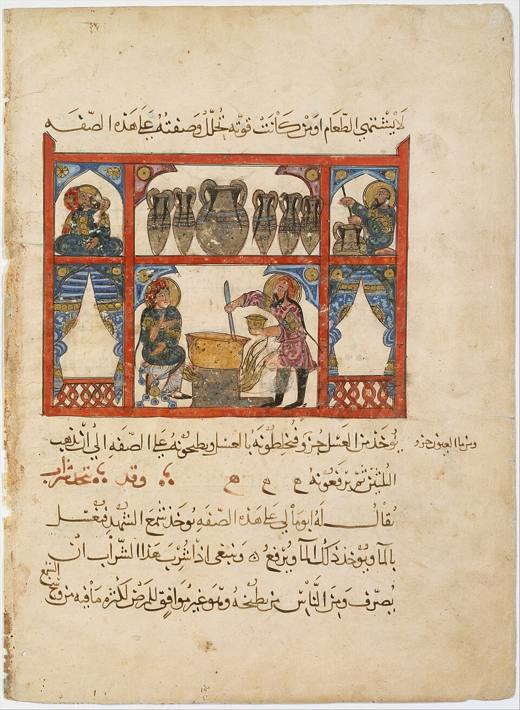
Preparing medicine from honey, from an Arabic translation of Dioscorides (1224).

From Persia to South Asia

Unani medicine

Roots in Greco-Roman antiquity; developed in the Islamic world from the 9th century

Unani comes from the Arabic and Persian word Yunani, “Greek”. The tradition builds on the Greek medicine of Hippocrates and Galen, which was translated, preserved and greatly expanded in the Islamic world. From the ninth century scholars in Baghdad translated Greek medical works into Arabic. Persian and Arab physicians such as al-Razi (865–925) and Ibn Sina (980–1037) built a rich system on them. Ibn Sina’s Canon of Medicine was studied for centuries in the Islamic world and in Europe. From the thirteenth century Unani came to South Asia with the Delhi Sultanate and later the Mughal emperors, where it flourished. After British rule, physicians such as Hakim Ajmal Khan (1868–1927) worked to preserve the tradition. He founded the Tibbia College in Delhi in 1916.

Herbs in this tradition (97)

From the kitchen

Recipes from Asia

All recipes (39) →

Registry

Herbs from Asia

Search herbs, spices and other natural ingredients by name, use, or tag. Traditional use is cultural and historical information, not medical advice.

435 results

  • Caution

    Mineral · № 791

    Pyrite (zi ran tong)

    Pyritum (ijzersulfide)

    Traditionally attributed effects: resolves blood stagnation and helps fractures and ligaments recover.

    Chinese medical traditions
  • Caution

    Food · № 545

    Radish

    Raphanus sativus

    Traditionally attributed effects: seeds and leaves diuretic, laxative, dissolve stones; juice against scurvy; for painful and difficult urination, stones, urinary diseases, haemorrhoids, stomach ache; syrup for hoarseness, whooping cough and chest complaints.

    Ayurveda+2
  • Caution

    Herb · № 775

    Rangoon creeper (shi jun zi)

    Combretum indicum (syn. Quisqualis indica)

    Traditionally attributed effects: was used against roundworms and for poor digestion in children.

    Chinese medical traditions
  • Caution

    Herb · № 410

    Rasamala

    Altingia excelsa

    Traditionally attributed effects: stimulating, expectorant, pain-relieving, carminative, anti-inflammatory, antiseptic; for throat complaints, scabies, leucoderma, colic in children, inflamed testicle.

    Ayurveda+1
  • Caution

    Herb · № 568

    Rasna orchid

    Vanda roxburghii

    Traditionally attributed effects: pain-relieving, carminative, expectorant, strengthens the nerves, lowers blood pressure; oil for rheumatism and nervous diseases; for syphilis, scorpion stings, fever, middle ear infection, indigestion, bronchitis, inflammation, hiccups and trembling.

    Ayurveda
  • Caution

    Herb · № 181

    Indian snakeroot

    Rauvolfia serpentina

    The root contains reserpine, which lowers blood pressure and has a sedative effect. In the 1950s reserpine was one of the first modern antihypertensives and antipsychotics, but it has largely been replaced by drugs with fewer side effects.

    Ayurveda+2
  • Caution

    Mineral · № 799

    Realgar (xiong huang)

    Realgar (arseensulfide)

    Traditionally attributed effects: was used externally against parasites, itching and sores; contains arsenic.

    Chinese medical traditions
  • Caution

    Herb · № 673

    Rehmannia

    Rehmannia glutinosa

    Traditionally attributed effects: raw it cools the blood and nourishes yin; prepared (steamed with wine) it nourishes the blood and the kidney yin.

    Chinese medical traditions+2
  • Caution

    Mushroom · № 690

    Puffball (ma bo)

    Calvatia gigantea (en Lasiosphaera fenzlii)

    Traditionally attributed effects: cools lung fire in sore throat and hoarseness; the spore powder stops bleeding externally.

    Chinese medical traditions
  • Caution

    Food · № 408

    Giant taro

    Alocasia macrorrhiza

    Traditionally attributed effects: aids digestion, laxative, diuretic, promotes milk flow; for colic, constipation, haemorrhoids, oedema, worms, mouth ulcers, scorpion stings.

    Ayurveda
  • Caution

    Herb · № 449

    Crown flower

    Calotropis gigantea

    Traditionally attributed effects: root bark cleansing, tonic, antispasmodic, expectorant, emetic; for dysentery, bronchitis, leprosy, enlarged liver and spleen, oedema, worms; acts on the heart like digitalis.

    Ayurveda+1
  • Caution

    Herb · № 696

    Rhaponticum root (lou lu)

    Rhaponticum uniflorum

    Traditionally attributed effects: reduces hot swellings, especially in the breast, and promotes milk flow.

    Chinese medical traditions
  • Caution

    Herb · № 669

    Reed rhizome (lu gen)

    Phragmites australis (syn. P. communis)

    Traditionally attributed effects: cools heat and moistens in thirst, cough with yellow phlegm, vomiting from stomach heat and painful urination.

    Chinese medical traditions
  • Caution

    Food · № 267

    Rice

    Oryza sativa

    Traditionally attributed effects: easily digestible, the basis of healing food; good for skin and hair.

    Ayurveda+4Folklore
  • Caution

    Herb · № 352

    Soapnut

    Sapindus mukorossi

    Traditionally attributed effects: natural shampoo (soapy), cleanses scalp and hair.

    Ayurveda
  • Caution

    Herb · № 442

    Silk cotton tree

    Bombax ceiba

    Traditionally attributed effects: gum astringent and stops bleeding; root and bark soothing, diuretic, aphrodisiac; for abnormal uterine bleeding, diarrhoea, dysentery, coughing up blood, heavy menstruation, bladder and kidney stones, boils, itching.

    Ayurveda+2
  • Caution

    Herb · № 346

    Red sandalwood

    Pterocarpus santalinus

    Traditionally attributed effects: antipyretic, fever-reducing, aphrodisiac, astringent, bitter, cooling, induces sweating, expels worms; for chronic dysentery, bleeding haemorrhoids, bile complaints, skin diseases.

    Ayurveda+1
  • Caution

    Herb · № 426

    Safed musli

    Asparagus adscendens

    Traditionally attributed effects: nourishing, tonic, promotes milk flow, soothing, cooling; for seminal loss, chronic leucorrhoea, diarrhoea, dysentery, general weakness, impotence.

    Ayurveda+1
  • Caution

    Herb · № 321

    Safflower

    Carthamus tinctorius

    Traditionally attributed effects: laxative, diuretic, anti-inflammatory.

    Ayurveda+3
  • Caution

    Herb · № 345

    Saffron

    Crocus sativus

    Traditionally attributed effects: stimulating, aphrodisiac, stomachic, pain-relieving, antispasmodic, calming, promotes menstruation; for absent menstruation, fever, hysteria, melancholy, leucorrhoea, haemorrhoids; paste for bruises, nerve and rheumatic pain.

    Ayurveda+4
  • Caution

    Herb · № 140

    Sandalwood

    Santalum album

    Used in Ayurveda as a 'cooling' remedy for skin irritation and urinary complaints; the oil is used in aromatherapy. Clinical evidence is limited.

    Ayurveda+6Folklore
  • Caution

    Herb · № 650

    Saposhnikovia root (fang feng)

    Saposhnikovia divaricata

    Traditionally attributed effects: expels wind; for muscle pain, painful diarrhoea, rheumatic complaints and cramps.

    Chinese medical traditions+2
  • Caution

    Herb · № 745

    Sappan wood (su mu)

    Biancaea sappan (syn. Caesalpinia sappan)

    Traditionally attributed effects: lets the blood flow in menstrual pain and injury.

    Chinese medical traditions+1
  • Caution

    Herb · № 719

    Sargassum (hai zao)

    Sargassum pallidum (en S. fusiforme)

    Traditionally attributed effects: softens hardenings from phlegm-fire such as goitre and swollen glands; drains fluid.

    Chinese medical traditions
  • Caution

    Herb · № 666

    Scouring rush (mu zei)

    Equisetum hyemale

    Traditionally attributed effects: expels wind-heat around the eyes, stops bleeding and is diuretic.

    Chinese medical traditions+1
  • Caution

    Herb · № 592

    Schisandra

    Schisandra chinensis

    Traditionally attributed effects: tonic, astringent, stimulating, adaptogen; supports exhausted adrenals (fatigue), promotes sleep and well-being, protects the liver.

    Chinese medical traditions+3
  • Caution

    Herb · № 657

    Schizonepeta (jing jie)

    Schizonepeta tenuifolia

    Traditionally attributed effects: opens the surface in colds (warm or cool, depending on the combination), helps rashes come out and, charred, stops bleeding.

    Chinese medical traditions+1
  • Caution

    Herb · № 507

    East Indian screw tree

    Helicteres isora

    Traditionally attributed effects: expectorant, soothing, mildly astringent, stomachic; for colic, flatulence, diarrhoea, chronic dysentery, diabetes, ear infection, snake bites.

    Ayurveda+1
  • Caution

    Herb · № 535

    Screwpine

    Pandanus tectorius

    Traditionally attributed effects: bitter, laxative, aromatic; leaves for leprosy, smallpox, scabies, syphilis, leucoderma; anthers for earache, headache and blood diseases; oil for headache and rheumatism.

    Ayurveda+1
  • Caution

    Herb · № 470

    Sebesten plum

    Cordia myxa

    Traditionally attributed effects: fruit soothing, expectorant, diuretic, mildly laxative; bark mildly astringent and tonic; for cough and chest diseases, bile complaints, abdominal cramps, indigestion, fever, ulcers, snake bites.

    Ayurveda+1
  • Caution

    Herb · № 494

    Shankhpushpi

    Evolvulus alsinoides

    Traditionally attributed effects: bitter tonic, cleansing, fever-reducing, expels worms, anti-inflammatory; for fever, nervous weakness, memory loss, dysentery, diarrhoea and indigestion (with tulsi), chronic bronchitis and asthma.

    Ayurveda
  • Caution

    Herb · № 122

    Shatavari

    Asparagus racemosus

    In Ayurveda an important rejuvenating remedy for women, used for breastfeeding and stomach complaints. Studies are small and of variable quality.

    Ayurveda+1
  • Caution

    Mushroom · № 145

    Shiitake

    Lentinula edodes

    An edible mushroom. Lentinan from shiitake is researched and used in oncology in Japan; there is little evidence for ordinary shiitake as an 'immune booster'.

    Chinese medical traditions+3
  • Caution

    Herb · № 351

    Shikakai

    Senegalia rugata (syn. Acacia concinna)

    Traditionally attributed effects: natural shampoo, cleanses scalp and hair.

    Ayurveda
  • Caution

    Herb · № 367

    Siberian ginseng

    Eleutherococcus senticosus

    Traditionally attributed effects: adaptogen, increases interferon production; especially for herpes simplex, strengthens the immune system against colds and flu; further for high blood pressure, kidney disease, diabetes, insomnia, arthritis.

    Chinese medical traditions+1
  • Caution

    Herb · № 749

    Siberian Solomon's seal (huang jing)

    Polygonatum sibiricum

    Traditionally attributed effects: strengthens spleen and kidneys, moistens the lungs and replenishes the essence.

    Chinese medical traditions+1