Skip to content
Herbs & Cultures

Tradition in Europe

Western herbal medicine

From medieval herbals to present-day phytotherapy

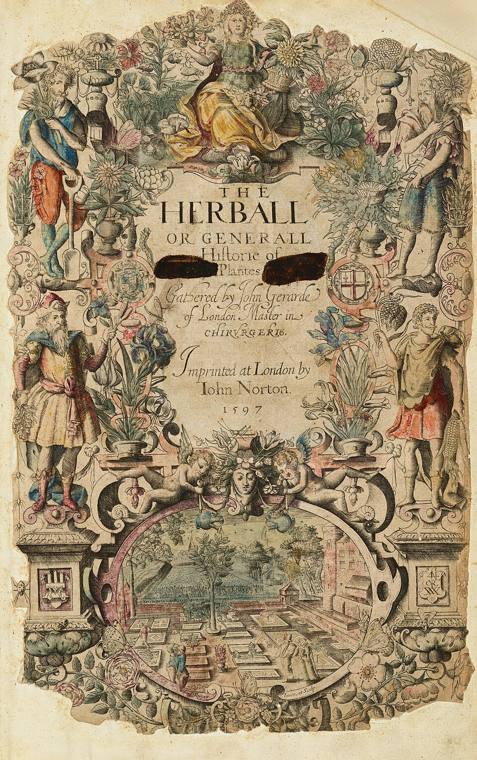
The title page of John Gerard's The Herball (London, 1597).
The title page of John Gerard's The Herball (London, 1597). public domain

History

With the invention of printing, the great herbals arrived in the fifteenth and sixteenth centuries. In 1485 the Gart der Gesundheit appeared in Mainz. In 1542 Leonhart Fuchs published De historia stirpium, with beautiful woodcuts drawn from nature.

The Low Countries played a large role. The Mechelen physician Rembert Dodoens published his Cruydeboeck in Antwerp in 1554, one of the most important herbals of its time, which was translated into many languages. In England John Gerard’s Herball appeared in 1597, and in 1652 The English Physitian by Nicholas Culpeper, who made the knowledge accessible to ordinary people in English.

From the eighteenth century science grew out of herbalism. In 1785 William Withering described how foxglove helped with dropsy caused by heart failure. In the nineteenth century chemists isolated active substances from plants, such as morphine from the opium poppy in 1804. In 1897 Bayer made aspirin, based on a substance also found in willow bark and meadowsweet.
Key ideas

For a long time Western herbalism was based on the doctrine of the humours. Every herb had a temperament, warm or cold, dry or moist.

In the sixteenth century the doctrine of signatures became popular. According to Paracelsus and others, God had placed a sign of a plant’s effect in its shape or colour: a plant with heart-shaped leaves would be good for the heart. Culpeper moreover linked every plant to a planet.

Modern phytotherapy works differently. It looks for active substances, standardised extracts and scientific evidence, though traditional knowledge lives on too.

Knowledge and its transmission

Knowledge spread through books, apothecaries and physicians, and through ordinary people who had herbals at home. Apothecaries made remedies according to pharmacopoeias, official books of recipes.

In the twentieth century the paths parted. Conventional medicine went on with pure substances and synthetic drugs. Herbalists, naturopaths and phytotherapists continued the herbal tradition, often with their own training.

In Germany phytotherapy remained an ordinary part of healthcare, with herbal medicines that doctors prescribe.

Texts and figures

Dodoens’ Cruydeboeck of 1554 describes hundreds of plants with their names, features and uses. It is a pride of Dutch-language science.

Culpeper’s The English Physitian is still in print today. Gerard’s Herball and Fuchs’ De historia stirpium are famous for their illustrations.

In 1785 William Withering wrote An Account of the Foxglove, one of the first careful studies of the effect of a plant in patients.

Today

In the European Union, since Directive 2004/24/EC, traditional herbal remedies may be registered as medicines if they have been in use for at least thirty years, fifteen of them in the EU, and are safe. The European Medicines Agency draws up monographs on many medicinal plants.

Many modern medicines originally come from plants. Herbal teas and herbal supplements are popular.

There is also criticism: some herbal supplements are poorly studied, and quality varies greatly.

Nature in the tradition

Western herbalism uses many native European plants. Chamomile for stomach ache and inflammation, valerian for restlessness and sleeplessness, St John’s wort for low mood, peppermint for bowel complaints.

Calendula is used for the skin, yarrow for wounds, thyme for coughs. Western herbalism also took in plants from other continents, such as echinacea from America.

Foxglove, willow and the opium poppy show how plants lie at the basis of modern medicines.

Approaching it with respect

“Natural” does not automatically mean safe. Foxglove is deadly poisonous. St John’s wort has many interactions with medicines, such as the contraceptive pill, blood thinners and antidepressants.

Consult a doctor or pharmacist before combining herbal remedies with medicines.

From the kitchen

Recipes from this tradition

Registry

Herbs in this tradition

  • Caution

    Europe · Herb · № 591

    Purple loosestrife

    Lythrum salicaria

    Traditionally attributed effects: cleansing, antibiotic, antispasmodic, diuretic, induces sweating, tonic, soothing; for dysentery and bacterial diarrhoea, inflammatory bowel disease (Crohn's), strengthens kidneys and bladder, for the eyes.

    Western herbal medicine
  • Caution

    Europe · Herb · № 62

    Greater burdock

    Arctium lappa

    In Europe the root was considered a 'blood-cleansing' herb for skin problems such as eczema and acne; the seed is used in Chinese medicine for sore throats. Clinical evidence is weak.

    Western herbal medicine+5
  • Caution

    Europe · Herb · № 316

    Parsley piert

    Aphanes arvensis

    Traditionally attributed effects: diuretic, soothing.

    Western herbal medicine
  • Caution

    Europe · Herb · № 339

    Water plantain (ze xie)

    Alisma plantago-aquatica (syn. A. orientale)

    Traditionally attributed effects: diuretic, lowers blood pressure, antibacterial, cleanses the liver.

    Western herbal medicine+1
  • Caution

    South America · Herb · № 163

    Guarana

    Paullinia cupana

    The seeds contain about twice as much caffeine as coffee beans. Guarana is used in energy drinks and soft drinks; its stimulating effect comes from caffeine.

    Kallawaya healing knowledge+2
  • Caution

    Asia · Herb · № 144

    Guduchi (giloy)

    Tinospora cordifolia

    In Ayurveda a rejuvenating remedy (rasayana) for fevers and the immune system. Studies are small; it has no proven effect against infections.

    Ayurveda+2
  • Caution

    Asia · Herb · № 142

    Guggul

    Commiphora wightii (syn. C. mukul)

    The resin is used in Ayurveda for joint complaints, overweight and high cholesterol. A US study found no reduction in cholesterol; LDL even rose slightly.

    Ayurveda+2
  • Caution

    Europe · Herb · № 87

    Cowslip

    Primula veris

    The root contains saponins and is traditionally used to loosen phlegm in coughs; the flowers as a calming tea. There is some research on combination cough preparations.

    Monastic and folk knowledge+1
  • Caution

    Oceania · Herb · № 174

    Gumbi gumbi

    Pittosporum spp.

    Leaves, seeds or wood were steeped in hot water and drunk or used externally, for example for colds, coughs, eczema and cramps. Laboratory research points to antimicrobial compounds; clinical studies are lacking.

    Aboriginal and Torres Strait Islander knowledge+1
  • Caution

    Asia · Herb · № 139

    Haritaki and triphala

    Terminalia chebula

    Haritaki is used in Ayurveda as a rejuvenating remedy and gentle laxative. Triphala, a blend of three fruits, is the best-known Ayurvedic formula for digestion. Clinical research is limited.

    Ayurveda+3
  • Caution

    Europe · Herb · № 82

    Motherwort

    Leonurus cardiaca

    Traditionally used for stress-related palpitations, nervousness and menstrual complaints. Clinical research is scarce.

    Western herbal medicine+1
  • Caution

    Europe · Food · № 66

    Oats

    Avena sativa

    Oat flakes provide beta-glucan, a fibre that according to approved health claims can help maintain normal cholesterol. Oatmeal is also used in baths for dry, itchy skin. Its traditional role as a nerve tonic is unproven.

    Western herbal medicine+1
  • Caution

    Europe · Herb · № 59

    Marshmallow

    Althaea officinalis

    Root and leaf are rich in mucilage that forms a soothing layer; used for dry coughs, throat irritation and an irritated stomach. Evidence is modest.

    Greco-Roman medicine+3Folklore
  • Caution

    Europe · Herb · № 70

    Field horsetail

    Equisetum arvense

    Rich in silica; traditionally used as a diuretic, for urinary infections and for hair, nails and connective tissue. Good clinical evidence is lacking.

    Western herbal medicine+1
  • Caution

    Asia · Herb · № 305

    Hemp seed

    Cannabis sativa

    Traditionally attributed effects: stimulant laxative.

    Chinese medical traditions+2
  • Caution

    Europe · Herb · № 69

    Shepherd's purse

    Capsella bursa-pastoris

    Traditionally used to slow bleeding, such as heavy periods or nosebleeds. Clinical evidence is very limited.

    Western herbal medicine
  • Caution

    Europe · Herb · № 112

    Ground ivy

    Glechoma hederacea

    Traditionally used for blocked noses, sinus complaints and coughs. There is hardly any clinical research.

    Monastic and folk knowledge+2
  • Caution

    Europe · Herb · № 77

    Hops

    Humulus lupulus

    The cones are traditionally used for restlessness and sleep problems, often with valerian. There are hints of a mild sedative effect, but evidence is limited.

    Monastic and folk knowledge+2Folklore
  • Caution

    Europe · Herb · № 78

    Hyssop

    Hyssopus officinalis

    Traditionally used for coughs, colds and congestion. Clinical evidence is lacking.

    Western herbal medicine+2Folklore
  • Caution

    Europe · Other · № 308

    Irish moss

    Chondrus crispus

    Traditionally attributed effects: soothing, expectorant, against vomiting, nourishing.

    Western herbal medicine
  • Caution

    Europe · Herb · № 103

    Vervain

    Verbena officinalis

    Traditionally used for nervousness, exhaustion and as a digestive bitter. Scientific evidence is largely lacking.

    Greco-Roman medicine+3Folklore
  • Caution

    North America · Herb · № 307

    Indian tobacco

    Lobelia inflata

    Traditionally attributed effects: relaxing, expectorant, induces sweating, emetic, antispasmodic, anti-asthmatic.

    Indigenous healing traditions of North America+4
  • Caution

    Central America and the Caribbean · Herb · № 309

    Jamaican dogwood

    Piscidia piscipula

    Traditionally attributed effects: calming, pain-relieving.

    Western herbal medicine
  • Caution

    Asia · Herb · № 302

    Japanese pagoda tree (huai jiao)

    Styphnolobium japonicum (syn. Sophora japonica)

    Traditionally attributed effects: stops bleeding, laxative.

    Chinese medical traditions+2
  • Caution

    Asia · Herb · № 127

    Japanese honeysuckle

    Lonicera japonica en L. periclymenum

    The flower buds (jin yin hua) are an important 'cooling' herb in Chinese medicine for fever, sore throats and colds. There is plenty of laboratory research but few good clinical studies.

    Chinese medical traditions+3
  • Caution

    Asia · Herb · № 322

    Asiatic dogwood fruit (shan zhu yu)

    Cornus officinalis

    Traditionally attributed effects: tonic, diuretic, lowers blood pressure, antimicrobial.

    Chinese medical traditions+3
  • Caution

    Asia · Herb · № 126

    Jasmine

    Jasminum officinale / J. grandiflorum

    Best known as a fragrance and in jasmine tea; jasmine aromatherapy is used for relaxation. Medical claims are unproven.

    Ayurveda+4Folklore
  • Caution

    Asia · Herb · № 130

    Spikenard (jatamansi)

    Nardostachys jatamansi

    Used in Ayurveda as a calming remedy for insomnia and restlessness. There is mostly animal research; clinical evidence is lacking.

    Ayurveda+4
  • Caution

    Europe · Herb · № 81

    Juniper

    Juniperus communis

    The berries are traditionally used as a diuretic, for digestive complaints and externally for joint pain. Clinical evidence is limited.

    Western herbal medicine+5Folklore
  • Caution

    Asia · Herb · № 402

    Sweet flag

    Acorus calamus

    Traditionally attributed effects: carminative, tonic, stimulating; restores throat and voice (singers), improves concentration/clear thinking, for flatulence and heartburn.

    Ayurveda+4
  • Caution

    Asia · Other · № 141

    Camphor

    Cinnamomum camphora

    Used externally in rubs for muscle pain, itching and blocked noses; it gives a cooling, numbing feeling. There is some evidence of short-term relief.

    Ayurveda+3
  • Caution

    Europe · Herb · № 19

    Chamomile

    Matricaria chamomilla (Duitse kamille)

    Flowers are used in teas and topical or oral products. Reliable evidence is insufficient for most claimed conditions.

    Monastic and folk knowledge+7Folklore
  • Caution

    Asia · Food · № 38

    Cinnamon

    Cinnamomum verum

    A spice made from inner bark. Research on health effects is preliminary; cinnamon is not a treatment.

    Ayurveda+8Folklore
  • Caution

    North America · Herb · № 155

    Pokeweed

    Phytolacca americana

    Formerly used for swollen glands, tonsillitis and rheumatism. Because of its toxicity it is not a safe herb; there is no evidence of benefits that outweigh the risks.

    Indigenous healing traditions of North America+5
  • Caution

    South America · Herb · № 33

    Cat's claw

    Uncaria tomentosa

    There is no conclusive scientific evidence that cat's claw helps any health condition.

    Herbal knowledge of the Amazon+2
  • Caution

    Europe · Herb · № 109

    Catnip

    Nepeta cataria

    Traditionally used as a mild tea for colds, fevers, restlessness and colic. Nepetalactone from the plant is being researched as an insect repellent.

    Western herbal medicine+2Folklore