Skip to content
Herbs & Cultures

Tradition in Europe

Western herbal medicine

From medieval herbals to present-day phytotherapy

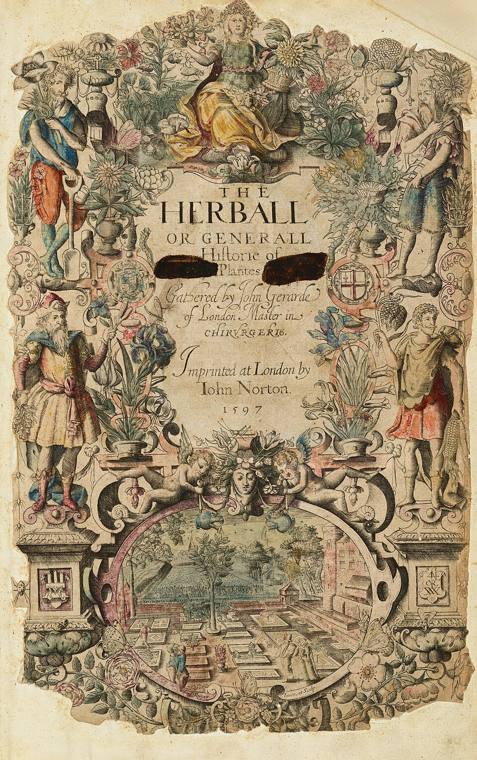
The title page of John Gerard's The Herball (London, 1597).
The title page of John Gerard's The Herball (London, 1597). public domain

History

With the invention of printing, the great herbals arrived in the fifteenth and sixteenth centuries. In 1485 the Gart der Gesundheit appeared in Mainz. In 1542 Leonhart Fuchs published De historia stirpium, with beautiful woodcuts drawn from nature.

The Low Countries played a large role. The Mechelen physician Rembert Dodoens published his Cruydeboeck in Antwerp in 1554, one of the most important herbals of its time, which was translated into many languages. In England John Gerard’s Herball appeared in 1597, and in 1652 The English Physitian by Nicholas Culpeper, who made the knowledge accessible to ordinary people in English.

From the eighteenth century science grew out of herbalism. In 1785 William Withering described how foxglove helped with dropsy caused by heart failure. In the nineteenth century chemists isolated active substances from plants, such as morphine from the opium poppy in 1804. In 1897 Bayer made aspirin, based on a substance also found in willow bark and meadowsweet.
Key ideas

For a long time Western herbalism was based on the doctrine of the humours. Every herb had a temperament, warm or cold, dry or moist.

In the sixteenth century the doctrine of signatures became popular. According to Paracelsus and others, God had placed a sign of a plant’s effect in its shape or colour: a plant with heart-shaped leaves would be good for the heart. Culpeper moreover linked every plant to a planet.

Modern phytotherapy works differently. It looks for active substances, standardised extracts and scientific evidence, though traditional knowledge lives on too.

Knowledge and its transmission

Knowledge spread through books, apothecaries and physicians, and through ordinary people who had herbals at home. Apothecaries made remedies according to pharmacopoeias, official books of recipes.

In the twentieth century the paths parted. Conventional medicine went on with pure substances and synthetic drugs. Herbalists, naturopaths and phytotherapists continued the herbal tradition, often with their own training.

In Germany phytotherapy remained an ordinary part of healthcare, with herbal medicines that doctors prescribe.

Texts and figures

Dodoens’ Cruydeboeck of 1554 describes hundreds of plants with their names, features and uses. It is a pride of Dutch-language science.

Culpeper’s The English Physitian is still in print today. Gerard’s Herball and Fuchs’ De historia stirpium are famous for their illustrations.

In 1785 William Withering wrote An Account of the Foxglove, one of the first careful studies of the effect of a plant in patients.

Today

In the European Union, since Directive 2004/24/EC, traditional herbal remedies may be registered as medicines if they have been in use for at least thirty years, fifteen of them in the EU, and are safe. The European Medicines Agency draws up monographs on many medicinal plants.

Many modern medicines originally come from plants. Herbal teas and herbal supplements are popular.

There is also criticism: some herbal supplements are poorly studied, and quality varies greatly.

Nature in the tradition

Western herbalism uses many native European plants. Chamomile for stomach ache and inflammation, valerian for restlessness and sleeplessness, St John’s wort for low mood, peppermint for bowel complaints.

Calendula is used for the skin, yarrow for wounds, thyme for coughs. Western herbalism also took in plants from other continents, such as echinacea from America.

Foxglove, willow and the opium poppy show how plants lie at the basis of modern medicines.

Approaching it with respect

“Natural” does not automatically mean safe. Foxglove is deadly poisonous. St John’s wort has many interactions with medicines, such as the contraceptive pill, blood thinners and antidepressants.

Consult a doctor or pharmacist before combining herbal remedies with medicines.

From the kitchen

Recipes from this tradition

Registry

Herbs in this tradition

  • Caution

    Asia · Herb · № 243

    Tarragon

    Artemisia dracunculus

    A culinary herb with an aniseed-like taste. The fresh leaf slightly numbs the tongue and was formerly chewed for toothache and used to stimulate the appetite. It contains estragole; large amounts are not recommended.

    Western herbal medicine+1Folklore
  • Caution

    Africa · Herb · № 24

    Devil's claw

    Harpagophytum procumbens

    The tuberous roots are used in folk medicine for pain. Research suggests a possible limited effect on low back pain; the evidence is of moderate quality at best.

    Traditional healers of Southern Africa+1
  • Caution

    Europe · Herb · № 56

    Yarrow

    Achillea millefolium

    Traditionally used to stop bleeding from minor wounds, for fevers and colds, and as a digestive bitter. Clinical evidence is limited.

    Greco-Roman medicine+6Folklore
  • Caution

    North America · Herb · № 14

    Echinacea

    Echinacea purpurea

    Studied for colds and respiratory infections. It may slightly reduce the chance of catching a cold; effects on duration and other conditions are uncertain.

    Indigenous healing traditions of North America+5Folklore
  • Caution

    Europe · Herb · № 289

    Centaury

    Centaurium erythraea

    Traditionally attributed effects: bitter, stimulates the liver.

    Western herbal medicine
  • Caution

    Europe · Herb · № 107

    Wall germander

    Teucrium chamaedrys

    Formerly used as a digestive bitter, for gout and as a slimming aid. The risk of liver damage outweighs any possible benefit.

    Monastic and folk knowledge+1
  • Caution

    Europe · Herb · № 111

    European goldenrod

    Solidago virgaurea

    In Europe it is used to flush the urinary tract in mild complaints and is listed in European herbal monographs as a traditional remedy. Clinical evidence is limited.

    Western herbal medicine
  • Caution

    Europe · Mushroom · № 115

    Penny bun (porcini)

    Boletus edulis, Cantharellus cibarius, Morchella esculenta, Pleurotus ostreatus

    A prized edible mushroom with protein, fibre and minerals. Medicinal claims are unproven.

    Western herbal medicine
  • Caution

    Asia · Herb · № 585

    Horny goat weed

    Epimedium grandiflorum

    Traditionally attributed effects: aphrodisiac, diuretic, tonic; increases libido, helps with erectile problems and fertility, strengthens the bladder sphincter and kidney function.

    Chinese medical traditions+1
  • Caution

    Oceania · Food · № 177

    Emu berry (dysentery bush)

    Grewia retusifolia

    The small fruits are edible; the name dysentery bush refers to its traditional use for diarrhoea. There is no clinical research.

    Aboriginal and Torres Strait Islander knowledge+1
  • Caution

    Oceania · Herb · № 172

    Eucalyptus

    Eucalyptus globulus

    Eucalyptus oil is used for coughs and blocked noses with colds and externally for muscle pain; the European Medicines Agency recognises these as traditional uses. Strong clinical evidence is limited.

    Aboriginal and Torres Strait Islander knowledge+4Folklore
  • Caution

    Asia · Herb · № 336

    Evodia fruit (wu zhu yu)

    Tetradium ruticarpum (syn. Evodia rutaecarpa)

    Traditionally attributed effects: pain-relieving, antibacterial, warming, stimulating.

    Chinese medical traditions+2
  • Caution

    Africa · Herb · № 118

    Fenugreek

    Trigonella foenum-graecum

    The seed has been studied for blood sugar and for increasing breast milk. NCCIH reports there is not enough strong evidence for these uses.

    Ancient Egyptian medicine+5Folklore
  • Caution

    Europe · Food · № 90

    Raspberry

    Rubus idaeus

    The fruit is a nutritious berry. Raspberry leaf has been used in folk medicine in late pregnancy to ease labour; convincing evidence is lacking.

    Monastic and folk knowledge+3Folklore
  • Caution

    Asia · Herb · № 119

    Galangal

    Alpinia galanga

    A relative of ginger traditionally used for nausea, wind and sluggish digestion. Clinical evidence is limited.

    Ayurveda+6
  • Caution

    Europe · Herb · № 297

    Goat's rue

    Galega officinalis

    Traditionally attributed effects: lowers blood sugar, stimulates insulin, promotes milk flow, diuretic.

    Western herbal medicine
  • Caution

    Asia · Herb · № 200

    Gardenia (zhi zi)

    Gardenia jasminoides

    Traditionally attributed effects: fever-reducing, calming, lowers blood pressure, antibacterial, promotes bile.

    Chinese medical traditions+3Folklore
  • Caution

    Europe · Herb · № 104

    Guelder rose

    Viburnum opulus en V. prunifolium

    The bark is traditionally used for muscle cramps and period pain; its English name is cramp bark. Clinical evidence is lacking.

    Western herbal medicine+2
  • Caution

    Europe · Herb · № 76

    Great yellow gentian

    Gentiana lutea

    The root is one of the most bitter substances known and has long been used to stimulate appetite and digestion. Studies are small.

    Greco-Roman medicine+1
  • Caution

    Europe · Herb · № 311

    Melilot

    Melilotus officinalis

    Traditionally attributed effects: soothing, diuretic, antispasmodic, anticoagulant.

    Western herbal medicine
  • Caution

    North America · Herb · № 182

    Yellow jessamine (gelsemium)

    Gelsemium sempervirens

    Contains alkaloids such as gelsemine that act on the nervous system. In the 19th century it was used for nerve pain, migraine and fever, but its toxicity makes any use dangerous. Homeopathic gelsemium is so diluted that it contains no active substance.

    Eclectic medicine+1
  • Caution

    Asia · Herb · № 1

    Ginger

    Zingiber officinale

    Traditionally used for nausea and digestive discomfort; it has a warming flavor.

    Ayurveda+6Folklore
  • Caution

    North America · Herb · № 327

    Fragrant sumac

    Rhus aromatica

    Traditionally attributed effects: astringent, tonic, antidiabetic, diuretic.

    Indigenous healing traditions of North America+1
  • Caution

    North America · Herb · № 274

    American cranesbill

    Geranium maculatum

    Traditionally attributed effects: astringent, stops bleeding, tonic.

    Indigenous healing traditions of North America+4
  • Caution

    Europe · Herb · № 88

    Self-heal

    Prunella vulgaris

    In Europe an old wound herb and gargle for sore throats; in Chinese medicine used for 'heat' and swollen glands. Research is mostly laboratory work.

    Western herbal medicine+2
  • Caution

    Europe · Herb · № 300

    Blessed thistle

    Cnicus benedictus

    Traditionally attributed effects: bitter digestive stimulant, expectorant, antiseptic, wound-healing.

    Monastic and folk knowledge+1
  • Caution

    Europe · Herb · № 333

    Wild lettuce

    Lactuca virosa

    Traditionally attributed effects: calming, lowers blood sugar, sleep-inducing, suppresses libido.

    Western herbal medicine
  • Caution

    Asia · Herb · № 37

    Ginkgo

    Ginkgo biloba

    There is no conclusive evidence that ginkgo helps any health condition. A modest effect on dementia symptoms is possible, but results are inconsistent.

    Chinese medical traditions+1
  • Caution

    North America · Herb · № 596

    Smooth sumac

    Rhus glabra

    Traditionally attributed effects: astringent, cleansing, tonic, wound-healing, antiseptic; strengthens the digestive tract (ulcers, diarrhoea), curbs excessive secretions (urine leakage, night sweats, bleeding), may lower blood sugar, for prolapse.

    Indigenous healing traditions of North America+3
  • Caution

    Asia · Herb · № 315

    Glossy privet (nu zhen zi)

    Ligustrum lucidum

    Traditionally attributed effects: tonic, diuretic, stimulates the immune system.

    Chinese medical traditions+1
  • Caution

    Europe · Herb · № 317

    Pellitory-of-the-wall

    Parietaria judaica (syn. P. diffusa)

    Traditionally attributed effects: diuretic, soothing, calms the urinary tract lining.

    Western herbal medicine
  • Caution

    Europe · Herb · № 49

    Pot marigold (calendula)

    Calendula officinalis

    An edible flower historically used as medicine and dye. Its oil is widely used in skin products.

    Monastic and folk knowledge+2Folklore
  • Caution

    Central America and the Caribbean · Food · № 257

    Grapefruit

    Citrus × paradisi

    A citrus fruit rich in vitamin C. Grapefruit and grapefruit juice inhibit enzymes that break down many medicines. The essential oil is used in skin and hair products, but effects on cellulite or hair growth have not been shown.

    Western herbal medicine
  • Caution

    North America · Herb · № 170

    Gumweed

    Grindelia camporum

    The sticky herb was traditionally used for coughs, asthma and bronchitis, and externally for poison-ivy rashes. Clinical evidence is lacking.

    Indigenous healing traditions of North America+2
  • Caution

    Asia · Food · № 16

    Green tea

    Camellia sinensis

    A brewed tea. Evidence does not establish most health claims; extracts differ from the ordinary beverage.

    Chinese medical traditions+3
  • Caution

    Europe · Herb · № 60

    Garden angelica

    Angelica archangelica

    An aromatic bitter traditionally used for bloating, poor appetite and colds. Clinical evidence is limited.

    Monastic and folk knowledge+2Folklore