Skip to content
Herbs & Cultures

Ink, lotus and rice paper

Asia

435 remedies · 7 traditions

Asia is home to diverse healing traditions that developed over long periods. Ayurveda and Chinese medicine are influential, but do not represent all the continent’s knowledge and cultures.

Characteristic plants

History and today

Cultures and traditions

Dates refer to surviving sources or written records where possible. Much orally transmitted knowledge predates its first written record.

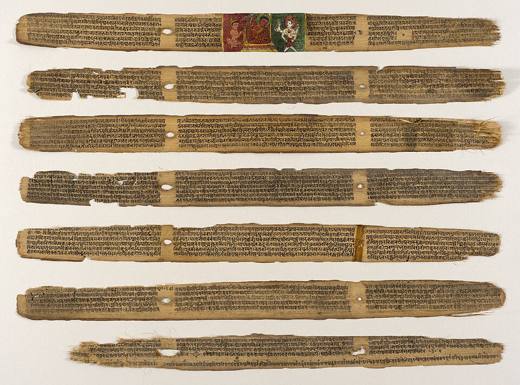
Palm leaves with the Sushruta Samhita, Nepal; text from the 12th–13th century.

Indian subcontinent

Ayurveda

South Asia; classical texts formed over centuries

Ayurveda literally means “knowledge of life”: āyus is life, veda is knowledge. Its roots lie deep in the history of South Asia. The Vedic texts, especially the Atharvaveda, already mention medicinal plants and charms against disease, but a coherent medical system only takes shape later. That system took form in three classical works known together as the Bṛhat Trayī, “the great three”: the Charaka Samhita, on internal medicine, the Sushruta Samhita, on surgery, and Vagbhata’s Ashtanga Hridaya. The first two grew over centuries and reached their present form roughly between a few centuries before and a few centuries after the beginning of the Common Era. Around the seventh century Vagbhata summarised both. Traditional datings are often much earlier; historians keep to these more cautious estimates. Ayurveda never stood alone. It influenced Tibetan Sowa Rigpa and met Unani, the Greco-Arabic medicine that came to India with Muslim rulers. Under British colonial rule Western medicine became the official standard. From the late nineteenth century Indian reformers rebuilt Ayurveda, with their own colleges, pharmacies and standardised remedies. That is why today’s Ayurveda looks different in many ways from classical practice.
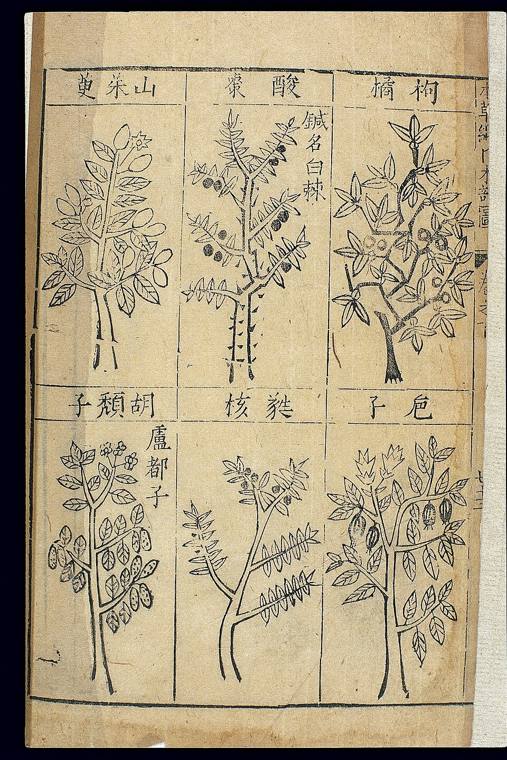
Plants from Li Shizhen's Bencao Gangmu, the great Chinese materia medica of the Ming period.

China

Chinese medical traditions

Classical writings from the early centuries BCE and CE

Chinese medicine is one of the oldest continuous healing traditions in the world. In a tomb at Mawangdui, sealed in 168 BCE, archaeologists found silk manuscripts with recipes against fifty-two ailments. They show how old the knowledge already was. The classical foundation lies in a few great works. The Huangdi Neijing, the “Inner Classic of the Yellow Emperor”, took shape in the last centuries BCE. The Shennong Bencao Jing, the herbal classic of the mythical farmer-emperor Shennong, describes 365 remedies. Around 200 CE Zhang Zhongjing wrote the Shanghan Lun, on febrile diseases, with formulas still in use today. Over the centuries the knowledge kept growing. In 1578 Li Shizhen completed the Bencao Gangmu, a huge encyclopaedia with almost two thousand remedies. In the twentieth century the tradition was reformed and standardised in China into what the West now calls “traditional Chinese medicine”.

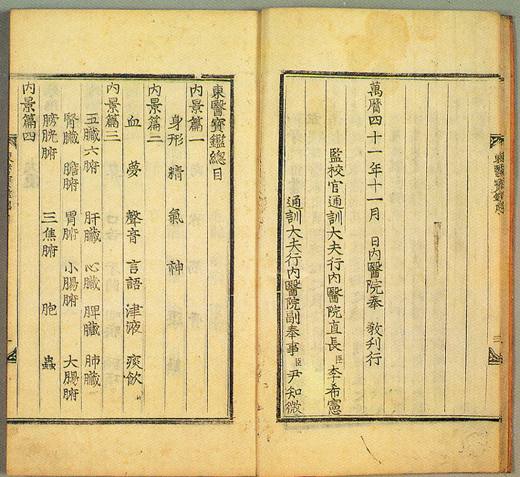
The table of contents of Heo Jun's Donguibogam (1613).

Korea

Korean hanbang and the Donguibogam

Medical compendium compiled in Korea in 1613

Korean medicine, hanbang or hanui, has roots in Chinese medicine, but over the centuries developed into a tradition of its own. As early as the Goryeo period Korea became known for its ginseng, which was exported to China and Japan. In the fifteenth century Korean physicians deliberately looked for their own, native remedies, the hyangyak. In 1433 the Hyangyak Jipseongbang appeared, a large work on remedies from Korea itself. The most important work is the Donguibogam, the “Precious Mirror of Eastern Medicine”. King Seonjo commissioned the court physician Heo Jun (1539–1615) in 1596. After the Japanese invasions and much hardship, Heo Jun completed the work in 1610, and in 1613 it was printed. UNESCO added it to the Memory of the World register in 2009.

Image of Benzoin

Java, Indonesia

Jamu in Indonesia

Roots in the Mataram era (8th–10th century); UNESCO heritage since 2023

Jamu is the traditional herbal medicine of Indonesia, especially of Java and Bali. Its roots go far back. Stone mortars from the site of Liyangan in Central Java, from the Mataram era of the eighth to tenth centuries, and reliefs on Borobudur already point to the preparation of herbs. At the courts of Java, in Surakarta and Yogyakarta, the knowledge was refined. Princesses and ladies of the court used jamu for beauty and health. In the nineteenth century much of that knowledge was written down. In the twentieth century a large jamu industry arose. Well-known brands such as Nyonya Meneer, founded in 1919, and Sido Muncul turned jamu into a mass product. In 2023 UNESCO recognised “jamu wellness culture” as intangible heritage.

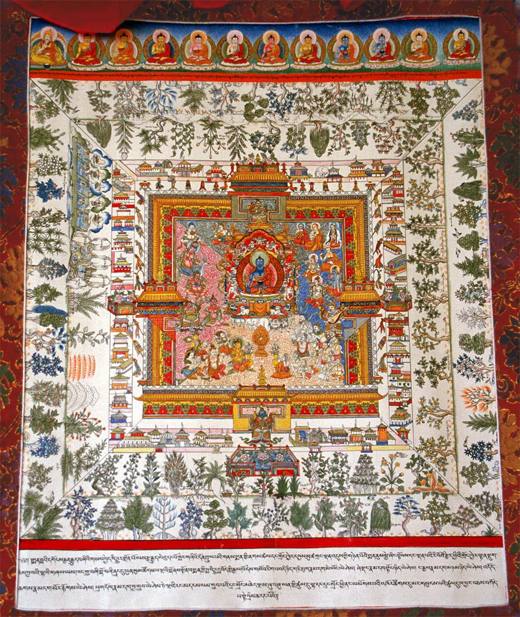
The first of Sangye Gyatso's medical paintings (1653–1705): the palace of the Medicine Buddha, surrounded by medicinal plants.

Tibetan Plateau and the Himalaya

Sowa Rigpa: Tibetan medicine

Developed from the 8th century; the Four Tantras revised in the 12th century

Sowa Rigpa, the “science of healing”, is the traditional medicine of Tibet, the Himalaya and Mongolia. It took shape in the eighth century, when King Trisong Detsen invited physicians from India, China, Persia and other lands to Tibet. According to tradition its founder is Yuthok Yonten Gonpo the Elder, an eighth-century physician. His descendant Yuthok the Younger revised the Gyushi, the “Four Tantras”, the principal work of Tibetan medicine, in the twelfth century. In 1696 the medical college of Chakpori was founded in Lhasa. In the seventeenth century the regent Desi Sangye Gyatso had a series of medical paintings made that explain the teaching in images. After 1959 Chakpori was destroyed. In 1961 the Men-Tsee-Khang was founded in exile in Dharamsala, and it continues the tradition.

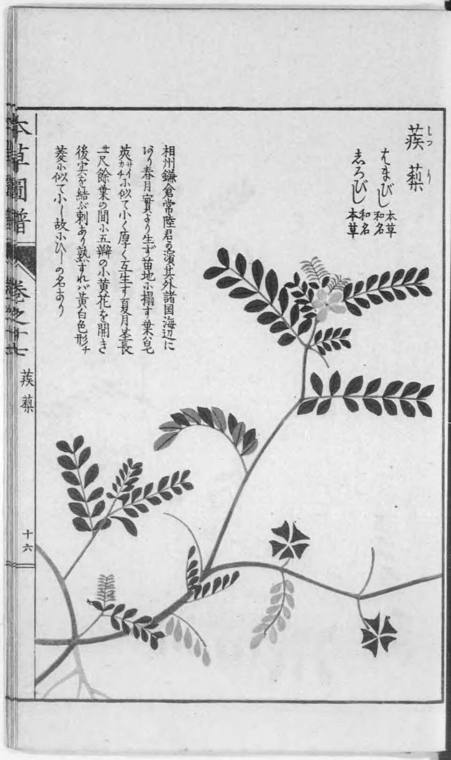
Puncturevine (Tribulus terrestris) from Iwasaki Tsunemasa's Honzō Zufu, a Japanese herbal of the Edo period.

Japan

Kampo: Japanese herbal medicine

From the 5th–7th centuries; its own form mainly in the Edo period (1603–1868)

Kampo means “method of the Han” and refers to its Chinese origin. Chinese medicine reached Japan from the fifth and sixth centuries, via Korea and directly from China, together with Buddhism and Chinese writing. The oldest surviving Japanese medical work is the Ishinpō, compiled in 984 by the court physician Tanba no Yasuyori. In the Edo period (1603–1868) Japanese physicians developed a practical form of their own. The school of “ancient formulas”, with physicians such as Yoshimasu Tōdō, went back to the Shanghan Lun and emphasised what the physician himself observes. In 1874 the Meiji government decreed that new physicians had to study Western medicine. As a result Kampo was pushed aside. A small group of physicians kept the knowledge alive, and in the twentieth century a revival followed.

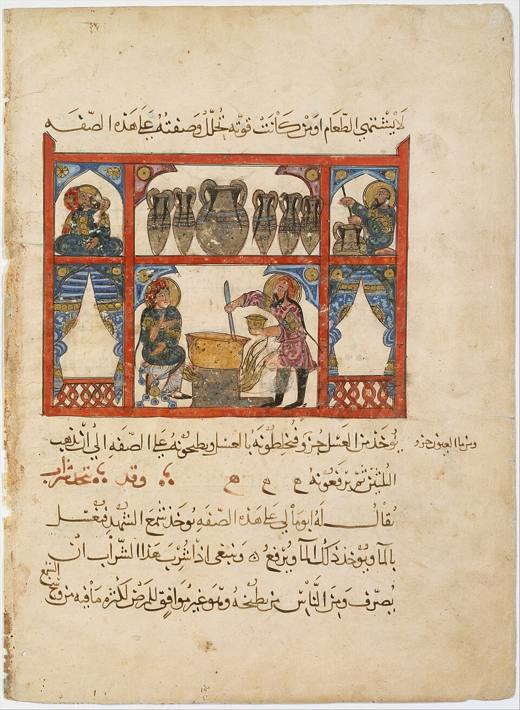
Preparing medicine from honey, from an Arabic translation of Dioscorides (1224).

From Persia to South Asia

Unani medicine

Roots in Greco-Roman antiquity; developed in the Islamic world from the 9th century

Unani comes from the Arabic and Persian word Yunani, “Greek”. The tradition builds on the Greek medicine of Hippocrates and Galen, which was translated, preserved and greatly expanded in the Islamic world. From the ninth century scholars in Baghdad translated Greek medical works into Arabic. Persian and Arab physicians such as al-Razi (865–925) and Ibn Sina (980–1037) built a rich system on them. Ibn Sina’s Canon of Medicine was studied for centuries in the Islamic world and in Europe. From the thirteenth century Unani came to South Asia with the Delhi Sultanate and later the Mughal emperors, where it flourished. After British rule, physicians such as Hakim Ajmal Khan (1868–1927) worked to preserve the tradition. He founded the Tibbia College in Delhi in 1916.

Herbs in this tradition (97)

From the kitchen

Recipes from Asia

All recipes (39) →

Registry

Herbs from Asia

Search herbs, spices and other natural ingredients by name, use, or tag. Traditional use is cultural and historical information, not medical advice.

435 results

  • Caution

    Herb · № 777

    Cnidium seed (she chuang zi)

    Cnidium monnieri

    Traditionally attributed effects: externally for itching and fungus around the genitals; internally a kidney yang tonic.

    Chinese medical traditions
  • Caution

    Herb · № 720

    Arisaema rhizome (tian nan xing)

    Arisaema heterophyllum (en A. erubescens)

    Traditionally attributed effects: dries phlegm and expels wind and phlegm from the meridians in convulsions and paralysis.

    Chinese medical traditions
  • Caution

    Herb · № 639

    Codonopsis (dang shen)

    Codonopsis pilosula

    Traditionally attributed effects: reduces fatigue, supports the production of blood cells and strengthens spleen, stomach and lungs.

    Chinese medical traditions+1
  • Caution

    Mushroom · № 147

    Caterpillar fungus (cordyceps)

    Ophiocordyceps sinensis (syn. Cordyceps sinensis)

    A fungus that parasitises caterpillars. Used in Tibetan and Chinese medicine for fatigue, lung complaints and low libido. Studies are small and there is no convincing evidence.

    Chinese medical traditions+2
  • Caution

    Herb · № 731

    Costus root (mu xiang)

    Dolomiaea costus (syn. Saussurea lappa, Aucklandia lappa)

    Traditionally attributed effects: moves the qi in spleen, stomach, intestine, liver and gallbladder; helps digest tonics.

    Ayurveda+3
  • Caution

    Herb · № 779

    Cremastra (shan ci gu)

    Cremastra appendiculata (ook Pleione en Tulipa edulis)

    Traditionally attributed effects: externally for swollen glands, lumps, sores and abscesses.

    Chinese medical traditions
  • Caution

    Herb · № 471

    Crepe ginger

    Costus speciosus

    Traditionally attributed effects: bitter, astringent, stimulating, aids digestion, expels worms, cleansing, aphrodisiac, anti-inflammatory; for fever with catarrh, cough, indigestion, worms, skin diseases, snake bites.

    Ayurveda+1
  • Caution

    Herb · № 473

    Croton

    Croton oblongifolius

    Traditionally attributed effects: bark and root cleansing and promote bile; seeds laxative; bark for sprains and liver diseases, poultices on swellings, for snake bites.

    Ayurveda
  • Caution

    Herb · № 474

    Purging croton

    Croton tiglium

    Traditionally attributed effects: drastically laxative, irritant, skin-irritant; for stroke, insanity, convulsions, stubborn constipation, worms, ascites, oedema, colic, gout; wood in small doses induces sweating.

    Ayurveda+1
  • Caution

    Herb · № 759

    Cynomorium (suo yang)

    Cynomorium songaricum

    Traditionally attributed effects: strengthens kidney yang, nourishes the blood and moistens the bowel.

    Chinese medical traditions
  • Caution

    Herb · № 659

    Dahurian angelica (bai zhi)

    Angelica dahurica

    Traditionally attributed effects: expels wind-cold, opens the nose and relieves headache and toothache; helps drain pus.

    Chinese medical traditions+2
  • Caution

    Herb · № 430

    Danti

    Baliospermum montanum

    Traditionally attributed effects: seeds strongly laxative, externally stimulating and skin-irritant; root for oedema and jaundice, leaves for asthma, oil for rheumatism, antiseptic, for snake bites.

    Ayurveda
  • Caution

    Herb · № 761

    Dendrobium (shi hu)

    Dendrobium nobile (en verwante soorten)

    Traditionally attributed effects: nourishes the yin of lung and stomach, replenishes body fluids and cools heat from deficiency.

    Chinese medical traditions
  • Caution

    Herb · № 215

    Dill

    Anethum graveolens

    Traditionally attributed effects: carminative.

    Ayurveda+4Folklore
  • Caution

    Herb · № 243

    Tarragon

    Artemisia dracunculus

    A culinary herb with an aniseed-like taste. The fresh leaf slightly numbs the tongue and was formerly chewed for toothache and used to stimulate the appetite. It contains estragole; large amounts are not recommended.

    Western herbal medicine+1Folklore
  • Caution

    Other · № 744

    Dragon's blood (xue jie)

    Daemonorops draco (ook Dracaena cochinchinensis)

    Traditionally attributed effects: stops bleeding, resolves blood stagnation and promotes wound healing.

    Chinese medical traditions
  • Caution

    Herb · № 756

    Drynaria (gu sui bu)

    Drynaria roosii (syn. D. fortunei)

    Traditionally attributed effects: strengthens kidney yang, lets the blood flow and helps fractures and tendon injuries heal.

    Chinese medical traditions
  • Caution

    Herb · № 409

    Dita bark

    Alstonia scholaris

    Traditionally attributed effects: stimulating, bitter tonic, astringent, expectorant, fever-reducing, antipyretic; quinine substitute for intermittent fever, for indigestion, weakness, skin diseases, liver complaints, chronic diarrhoea; promotes milk flow, expels worms.

    Ayurveda
  • Caution

    Herb · № 495

    Asafoetida

    Ferula foetida

    Traditionally attributed effects: stimulating, carminative, antispasmodic, expectorant, mildly laxative, expels worms, promotes menstruation, stimulates nerves and lungs.

    Ayurveda+3
  • Caution

    Herb · № 394

    Devil's cotton

    Abroma augusta

    Traditionally attributed effects: leaves and stem soothing, root bark promotes menstruation; for painful menstruation, regulates menstruation, uterine tonic, for gonorrhoea; can cause skin irritation.

    Ayurveda
  • Caution

    Mushroom · № 701

    Umbrella polypore (zhu ling)

    Polyporus umbellatus

    Traditionally attributed effects: drains fluid via the urine in oedema and difficult urination.

    Chinese medical traditions+1
  • Caution

    Herb · № 585

    Horny goat weed

    Epimedium grandiflorum

    Traditionally attributed effects: aphrodisiac, diuretic, tonic; increases libido, helps with erectile problems and fertility, strengthens the bladder sphincter and kidney function.

    Chinese medical traditions+1
  • Caution

    Herb · № 662

    Elsholtzia (xiang ru)

    Elsholtzia splendens

    Traditionally attributed effects: for summer colds from cold and dampness, and for oedema.

    Chinese medical traditions
  • Caution

    Herb · № 675

    Swallow-wort root (bai wei)

    Cynanchum atratum

    Traditionally attributed effects: cools the blood in fever from deficiency, including after childbirth, and in painful urination.

    Chinese medical traditions
  • Caution

    Food · № 260

    Peas

    Pisum sativum

    A legume rich in protein and fibre. In Chinese medicine (wan dou) the pea is regarded as a mild remedy for the spleen and for mild diarrhoea.

    Folk magic and herbal magicFolklore
  • Caution

    Herb · № 751

    Eucommia bark (du zhong)

    Eucommia ulmoides

    Traditionally attributed effects: strengthens liver and kidneys, tendons and bones; calms rising liver yang and a restless foetus.

    Chinese medical traditions+1
  • Caution

    Herb · № 336

    Evodia fruit (wu zhu yu)

    Tetradium ruticarpum (syn. Evodia rutaecarpa)

    Traditionally attributed effects: pain-relieving, antibacterial, warming, stimulating.

    Chinese medical traditions+2
  • Caution

    Herb · № 528

    Velvet bean

    Mucuna pruriens

    Traditionally attributed effects: seeds astringent, expel worms, strengthen the nerves, aphrodisiac; root tonic, stimulating, diuretic, laxative; for nervous diseases (paralysis), kidney diseases, oedema, elephantiasis, leucorrhoea, heavy menstruation, seminal loss.

    Ayurveda
  • Caution

    Herb · № 778

    Gac seed (mu bie zi)

    Momordica cochinchinensis

    Traditionally attributed effects: externally for inflamed sores, breast abscesses and bruises.

    Chinese medical traditions
  • Caution

    Herb · № 119

    Galangal

    Alpinia galanga

    A relative of ginger traditionally used for nausea, wind and sluggish digestion. Clinical evidence is limited.

    Ayurveda+6
  • Caution

    Herb · № 503

    Gmelina

    Gmelina arborea

    Traditionally attributed effects: soothing, stomachic, bitter tonic, cooling, laxative, promotes milk flow; fruit in cooling decoctions for fever and bile complaints, headache, fever and indigestion; to prevent miscarriage.

    Ayurveda
  • Caution

    Herb · № 200

    Gardenia (zhi zi)

    Gardenia jasminoides

    Traditionally attributed effects: fever-reducing, calming, lowers blood pressure, antibacterial, promotes bile.

    Chinese medical traditions+3Folklore
  • Caution

    Herb · № 774

    Gastrodia (tian ma)

    Gastrodia elata

    Traditionally attributed effects: calms liver wind and relieves headache, dizziness and cramps.

    Chinese medical traditions+1
  • Caution

    Herb · № 692

    Barbat skullcap (ban zhi lian)

    Scutellaria barbata

    Traditionally attributed effects: cools the blood, moves blood stagnation and reduces swellings; for hepatitis.

    Chinese medical traditions
  • Caution

    Other · № 789

    Medicated leaven (shen qu)

    Massa medicata fermentata

    Traditionally attributed effects: helps with food stagnation and poor digestion.

    Chinese medical traditions
  • Caution

    Herb · № 468

    Golden colchicum

    Colchicum luteum

    Traditionally attributed effects: cleansing, carminative, laxative, aphrodisiac; for gout, rheumatism, liver and spleen diseases; externally against inflammation and pain.

    Ayurveda+1