Skip to content
Herbs & Cultures

Ink, lotus and rice paper

Asia

435 remedies · 7 traditions

Asia is home to diverse healing traditions that developed over long periods. Ayurveda and Chinese medicine are influential, but do not represent all the continent’s knowledge and cultures.

Characteristic plants

History and today

Cultures and traditions

Dates refer to surviving sources or written records where possible. Much orally transmitted knowledge predates its first written record.

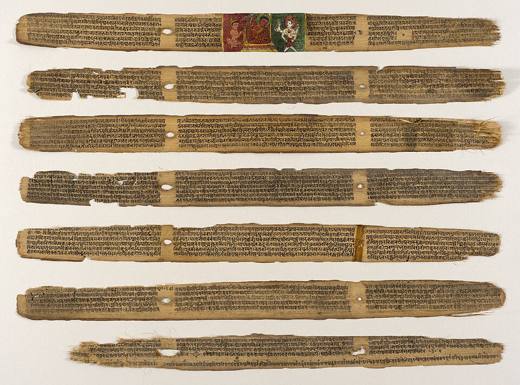
Palm leaves with the Sushruta Samhita, Nepal; text from the 12th–13th century.

Indian subcontinent

Ayurveda

South Asia; classical texts formed over centuries

Ayurveda literally means “knowledge of life”: āyus is life, veda is knowledge. Its roots lie deep in the history of South Asia. The Vedic texts, especially the Atharvaveda, already mention medicinal plants and charms against disease, but a coherent medical system only takes shape later. That system took form in three classical works known together as the Bṛhat Trayī, “the great three”: the Charaka Samhita, on internal medicine, the Sushruta Samhita, on surgery, and Vagbhata’s Ashtanga Hridaya. The first two grew over centuries and reached their present form roughly between a few centuries before and a few centuries after the beginning of the Common Era. Around the seventh century Vagbhata summarised both. Traditional datings are often much earlier; historians keep to these more cautious estimates. Ayurveda never stood alone. It influenced Tibetan Sowa Rigpa and met Unani, the Greco-Arabic medicine that came to India with Muslim rulers. Under British colonial rule Western medicine became the official standard. From the late nineteenth century Indian reformers rebuilt Ayurveda, with their own colleges, pharmacies and standardised remedies. That is why today’s Ayurveda looks different in many ways from classical practice.
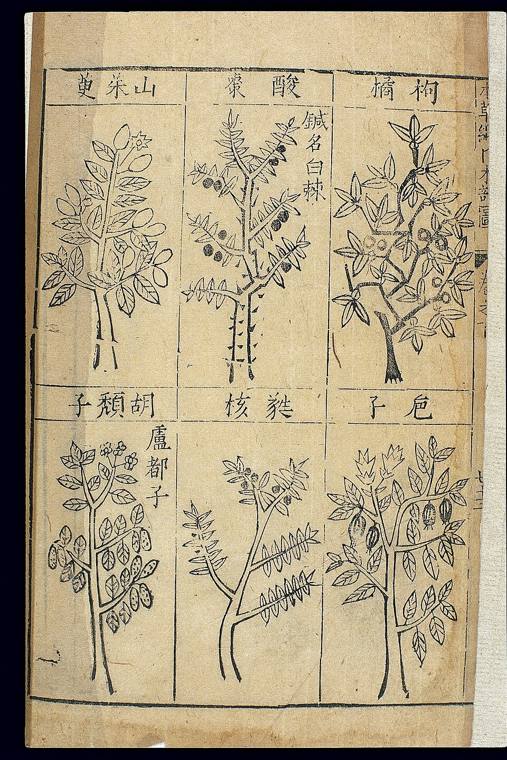
Plants from Li Shizhen's Bencao Gangmu, the great Chinese materia medica of the Ming period.

China

Chinese medical traditions

Classical writings from the early centuries BCE and CE

Chinese medicine is one of the oldest continuous healing traditions in the world. In a tomb at Mawangdui, sealed in 168 BCE, archaeologists found silk manuscripts with recipes against fifty-two ailments. They show how old the knowledge already was. The classical foundation lies in a few great works. The Huangdi Neijing, the “Inner Classic of the Yellow Emperor”, took shape in the last centuries BCE. The Shennong Bencao Jing, the herbal classic of the mythical farmer-emperor Shennong, describes 365 remedies. Around 200 CE Zhang Zhongjing wrote the Shanghan Lun, on febrile diseases, with formulas still in use today. Over the centuries the knowledge kept growing. In 1578 Li Shizhen completed the Bencao Gangmu, a huge encyclopaedia with almost two thousand remedies. In the twentieth century the tradition was reformed and standardised in China into what the West now calls “traditional Chinese medicine”.

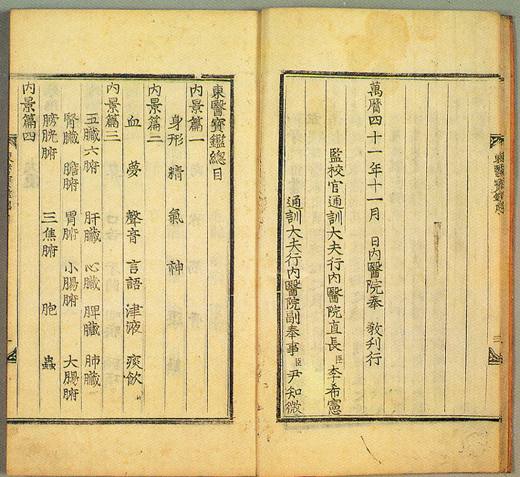
The table of contents of Heo Jun's Donguibogam (1613).

Korea

Korean hanbang and the Donguibogam

Medical compendium compiled in Korea in 1613

Korean medicine, hanbang or hanui, has roots in Chinese medicine, but over the centuries developed into a tradition of its own. As early as the Goryeo period Korea became known for its ginseng, which was exported to China and Japan. In the fifteenth century Korean physicians deliberately looked for their own, native remedies, the hyangyak. In 1433 the Hyangyak Jipseongbang appeared, a large work on remedies from Korea itself. The most important work is the Donguibogam, the “Precious Mirror of Eastern Medicine”. King Seonjo commissioned the court physician Heo Jun (1539–1615) in 1596. After the Japanese invasions and much hardship, Heo Jun completed the work in 1610, and in 1613 it was printed. UNESCO added it to the Memory of the World register in 2009.

Image of Benzoin

Java, Indonesia

Jamu in Indonesia

Roots in the Mataram era (8th–10th century); UNESCO heritage since 2023

Jamu is the traditional herbal medicine of Indonesia, especially of Java and Bali. Its roots go far back. Stone mortars from the site of Liyangan in Central Java, from the Mataram era of the eighth to tenth centuries, and reliefs on Borobudur already point to the preparation of herbs. At the courts of Java, in Surakarta and Yogyakarta, the knowledge was refined. Princesses and ladies of the court used jamu for beauty and health. In the nineteenth century much of that knowledge was written down. In the twentieth century a large jamu industry arose. Well-known brands such as Nyonya Meneer, founded in 1919, and Sido Muncul turned jamu into a mass product. In 2023 UNESCO recognised “jamu wellness culture” as intangible heritage.

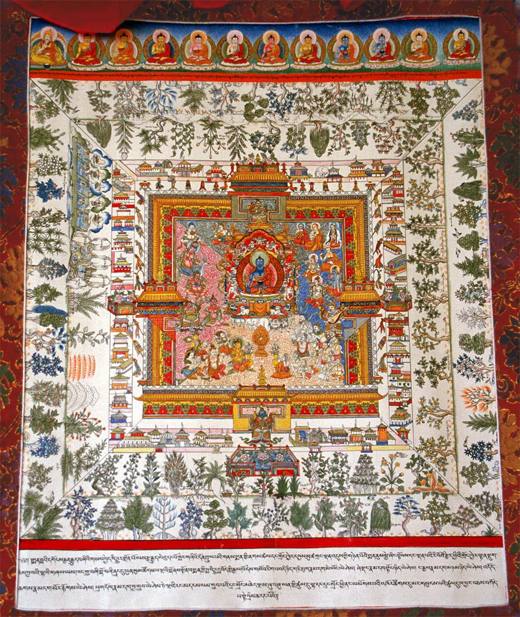
The first of Sangye Gyatso's medical paintings (1653–1705): the palace of the Medicine Buddha, surrounded by medicinal plants.

Tibetan Plateau and the Himalaya

Sowa Rigpa: Tibetan medicine

Developed from the 8th century; the Four Tantras revised in the 12th century

Sowa Rigpa, the “science of healing”, is the traditional medicine of Tibet, the Himalaya and Mongolia. It took shape in the eighth century, when King Trisong Detsen invited physicians from India, China, Persia and other lands to Tibet. According to tradition its founder is Yuthok Yonten Gonpo the Elder, an eighth-century physician. His descendant Yuthok the Younger revised the Gyushi, the “Four Tantras”, the principal work of Tibetan medicine, in the twelfth century. In 1696 the medical college of Chakpori was founded in Lhasa. In the seventeenth century the regent Desi Sangye Gyatso had a series of medical paintings made that explain the teaching in images. After 1959 Chakpori was destroyed. In 1961 the Men-Tsee-Khang was founded in exile in Dharamsala, and it continues the tradition.

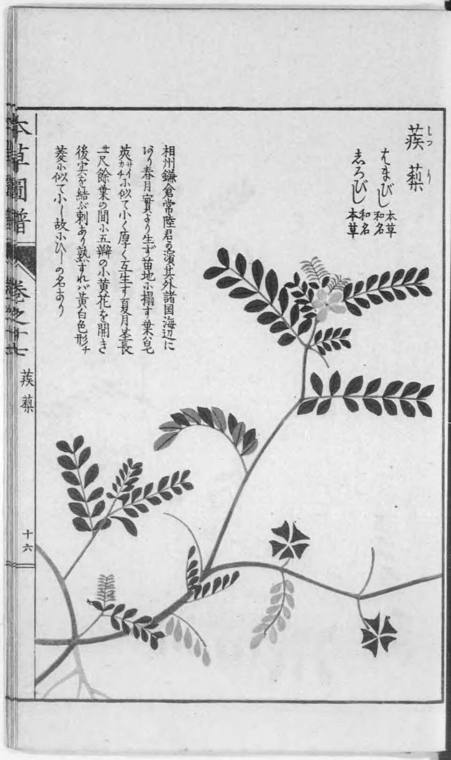
Puncturevine (Tribulus terrestris) from Iwasaki Tsunemasa's Honzō Zufu, a Japanese herbal of the Edo period.

Japan

Kampo: Japanese herbal medicine

From the 5th–7th centuries; its own form mainly in the Edo period (1603–1868)

Kampo means “method of the Han” and refers to its Chinese origin. Chinese medicine reached Japan from the fifth and sixth centuries, via Korea and directly from China, together with Buddhism and Chinese writing. The oldest surviving Japanese medical work is the Ishinpō, compiled in 984 by the court physician Tanba no Yasuyori. In the Edo period (1603–1868) Japanese physicians developed a practical form of their own. The school of “ancient formulas”, with physicians such as Yoshimasu Tōdō, went back to the Shanghan Lun and emphasised what the physician himself observes. In 1874 the Meiji government decreed that new physicians had to study Western medicine. As a result Kampo was pushed aside. A small group of physicians kept the knowledge alive, and in the twentieth century a revival followed.

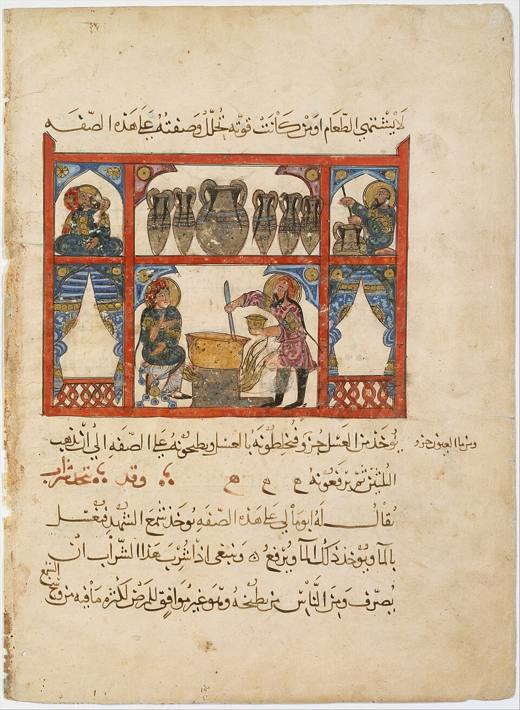
Preparing medicine from honey, from an Arabic translation of Dioscorides (1224).

From Persia to South Asia

Unani medicine

Roots in Greco-Roman antiquity; developed in the Islamic world from the 9th century

Unani comes from the Arabic and Persian word Yunani, “Greek”. The tradition builds on the Greek medicine of Hippocrates and Galen, which was translated, preserved and greatly expanded in the Islamic world. From the ninth century scholars in Baghdad translated Greek medical works into Arabic. Persian and Arab physicians such as al-Razi (865–925) and Ibn Sina (980–1037) built a rich system on them. Ibn Sina’s Canon of Medicine was studied for centuries in the Islamic world and in Europe. From the thirteenth century Unani came to South Asia with the Delhi Sultanate and later the Mughal emperors, where it flourished. After British rule, physicians such as Hakim Ajmal Khan (1868–1927) worked to preserve the tradition. He founded the Tibbia College in Delhi in 1916.

Herbs in this tradition (97)

From the kitchen

Recipes from Asia

All recipes (39) →

Registry

Herbs from Asia

Search herbs, spices and other natural ingredients by name, use, or tag. Traditional use is cultural and historical information, not medical advice.

435 results

  • Caution

    Herb · № 641

    Chinese dodder (tu si zi)

    Cuscuta chinensis

    Traditionally attributed effects: a remedy for male infertility and urinary complaints; a tonic that strengthens bones and tendons, soothes lower back pain and balances the female reproductive system.

    Chinese medical traditions
  • Caution

    Herb · № 683

    Chinese pulsatilla (bai tou weng)

    Pulsatilla chinensis

    Traditionally attributed effects: for hot, bloody dysentery, amoebae and vaginal trichomonas.

    Chinese medical traditions
  • Caution

    Herb · № 790

    Diverse wormwood (liu ji nu)

    Artemisia anomala

    Traditionally attributed effects: lets the blood flow, promotes menstruation and relieves pain from injury.

    Chinese medical traditions
  • Caution

    Herb · № 642

    Chinese asparagus root (tian men dong)

    Asparagus cochinchinensis

    Traditionally attributed effects: moistening; for recovery after illness or surgery, chronically dry skin and for the production of sex hormones.

    Chinese medical traditions
  • Caution

    Herb · № 738

    Chinese mugwort (ai ye)

    Artemisia argyi

    Traditionally attributed effects: warms the meridians and uterus, stops bleeding from cold and relieves pain; the herb of moxa.

    Chinese medical traditions+2
  • Caution

    Herb · № 714

    Chinese clematis root (wei ling xian)

    Clematis chinensis

    Traditionally attributed effects: expels wind and dampness and moves the qi in pain anywhere in the body.

    Chinese medical traditions
  • Caution

    Food · № 636

    Jujube (red date)

    Ziziphus jujuba

    Traditionally attributed effects: sweet and strengthening in fatigue, anaemia and low energy; builds strength and blood and softens herbal dishes.

    Chinese medical traditions+2
  • Caution

    Herb · № 125

    Chinese ephedra (ma huang)

    Ephedra sinica

    Contains ephedrine, which widens the airways and stimulates the nervous system and heart. It is the origin of modern ephedrine and pseudoephedrine medicines. As a supplement it has proved dangerous.

    Chinese medical traditions+2
  • Caution

    Herb · № 120

    Dong quai (dang gui)

    Angelica sinensis

    In Chinese medicine one of the most important herbs to 'nourish the blood', especially for menstrual complaints. Western studies found no clear effect on menopausal symptoms.

    Chinese medical traditions+2
  • Caution

    Herb · № 681

    Korean ash bark (qin pi)

    Fraxinus chinensis subsp. rhynchophylla

    Traditionally attributed effects: for diarrhoea and dysentery from damp heat, red eyes and cough with heat.

    Chinese medical traditions
  • Caution

    Herb · № 643

    Chinese raspberry (fu pen zi)

    Rubus chingii

    Traditionally attributed effects: strengthens kidneys and liver; for poor vision, frequent urination and impotence.

    Chinese medical traditions+1
  • Caution

    Herb · № 679

    Chinese gentian (long dan cao)

    Gentiana scabra

    Traditionally attributed effects: drains damp heat and fire from liver and gallbladder.

    Chinese medical traditions+1
  • Caution

    Herb · № 304

    Chinese goldthread (huang lian)

    Coptis chinensis

    Traditionally attributed effects: promotes bile, antibacterial, pain-relieving, calming, anti-inflammatory.

    Chinese medical traditions+3
  • Caution

    Herb · № 663

    Chinese wild ginger (xi xin)

    Asarum sieboldii (en A. heterotropoides)

    Traditionally attributed effects: warms in wind-cold, relieves pain from cold and loosens cold phlegm in the lungs.

    Chinese medical traditions+1
  • Caution

    Herb · № 740

    Corydalis (yan hu suo)

    Corydalis yanhusuo

    Traditionally attributed effects: moves blood and qi and is an important pain-relieving herb.

    Chinese medical traditions
  • Caution

    Food · № 572

    Chinese jujube

    Zizyphus vulgaris

    Traditionally attributed effects: diuretic, lowers blood sugar, soothing, soothing to the chest.

    Ayurveda+3
  • Caution

    Herb · № 729

    Chinese cardamom (sha ren)

    Amomum villosum (en A. kravanh)

    Traditionally attributed effects: warms the spleen, transforms dampness, calms a restless foetus and prevents tonics from lying heavy on the stomach.

    Chinese medical traditions+1
  • Caution

    Food · № 802

    Chinese chestnut

    Castanea mollissima

    Traditionally attributed effects: dried, peeled chestnuts give sweet soups such as the eight-treasure soup their sweetness; in Chinese food therapy they strengthen spleen and kidneys.

    Chinese medical traditions
  • Caution

    Herb · № 660

    Chinese lovage root (gao ben)

    Ligusticum sinense

    Traditionally attributed effects: expels wind-cold and relieves above all headache at the crown, toothache and rheumatic pain.

    Chinese medical traditions
  • Caution

    Herb · № 708

    Chinese lobelia (ban bian lian)

    Lobelia chinensis

    Traditionally attributed effects: diuretic and detoxifying in oedema, inflamed ulcers and snakebites.

    Chinese medical traditions
  • Caution

    Herb · № 137

    Chinese rhubarb

    Rheum palmatum

    The root (da huang) contains anthraquinones, making it a strong laxative. In small amounts its tannins have the opposite, binding effect. Its mechanism is well understood.

    Chinese medical traditions+4
  • Caution

    Herb · № 355

    Chinese hibiscus

    Hibiscus rosa-sinensis

    Traditionally attributed effects: cares for the hair, promotes circulation in the scalp and reduces stress.

    Ayurveda+1
  • Caution

    Herb · № 138

    Red sage root (dan shen)

    Salvia miltiorrhiza

    The red root is used in Chinese medicine to 'promote blood circulation', especially for heart and vascular complaints. There are many studies in China, often of limited quality.

    Chinese medical traditions
  • Caution

    Herb · № 768

    Polygala root (yuan zhi)

    Polygala tenuifolia

    Traditionally attributed effects: calms the mind and clears phlegm from 'the openings of the heart' and from the lungs.

    Chinese medical traditions+1
  • Caution

    Herb · № 703

    Gold coin grass (jin qian cao)

    Lysimachia christinae (ook Desmodium styracifolium)

    Traditionally attributed effects: helps pass kidney and gallstones and drains damp heat from the liver.

    Chinese medical traditions
  • Caution

    Herb · № 741

    Chinese bugleweed (ze lan)

    Lycopus lucidus

    Traditionally attributed effects: moves the blood and regulates menstruation; diuretic.

    Chinese medical traditions
  • Caution

    Food · № 635

    Chinese yam (shan yao)

    Dioscorea polystachya (syn. D. opposita)

    Traditionally attributed effects: strengthens spleen, stomach and lungs, helps regulate the hormone system in women and is said to lower blood sugar.

    Chinese medical traditions+2
  • Caution

    Herb · № 665

    Chinese black cohosh (sheng ma)

    Actaea cimicifuga (syn. Cimicifuga foetida)

    Traditionally attributed effects: expels wind-heat, helps rashes come out and lifts the energy in prolapse.

    Chinese medical traditions+1
  • Caution

    Herb · № 558

    Chiretta

    Swertia chirata

    Traditionally attributed effects: bitter tonic, stomachic, expels worms, laxative, cleansing, antidiarrhoeal, antipyretic; for intermittent fever, skin diseases, intestinal worms, asthma, hiccups and vomiting, gout; scorpion stings.

    Ayurveda+2
  • Caution

    Food · № 445

    Chironji

    Buchanania lanzan

    Traditionally attributed effects: soothing, cleansing, laxative, diuretic; seeds nutritious, gum for diarrhoea, ointment for itching and skin blemishes, oil for swollen neck glands, substitute for almond oil.

    Ayurveda
  • Caution

    Herb · № 124

    Chrysanthemum (ju hua)

    Chrysanthemum × morifolium

    The flowers (ju hua) are used in Chinese medicine as a 'cooling' remedy for colds with fever, headaches and tired, red eyes. Clinical evidence is limited.

    Chinese medical traditions+3
  • Caution

    Herb · № 755

    Cibotium (gou ji)

    Cibotium barometz

    Traditionally attributed effects: strengthens kidney yang, bones and tendons in a stiff, painful lower back and knees.

    Chinese medical traditions
  • Caution

    Mineral · № 797

    Cinnabar (zhu sha)

    Cinnabaris (kwiksulfide)

    Traditionally attributed effects: was used to calm the mind and stop convulsions; contains mercury.

    Chinese medical traditions
  • Caution

    Herb · № 760

    Cistanche (rou cong rong)

    Cistanche deserticola

    Traditionally attributed effects: strengthens kidney yang, moistens the bowel and warms the uterus.

    Chinese medical traditions
  • Caution

    Food · № 221

    Lemon

    Citrus limon

    Traditionally attributed effects: anti-inflammatory, antihistamine, diuretic, strengthens the veins.

    Ayurveda+3Folklore
  • Caution

    Herb · № 381

    Lemongrass

    Cymbopogon citratus

    Traditionally attributed effects: for oily hair.

    Ayurveda+3