 Caution
Africa · Herb · № 118
Fenugreek
Trigonella foenum-graecum
The seed has been studied for blood sugar and for increasing breast milk. NCCIH reports there is not enough strong evidence for these uses.
Ancient Egyptian medicine+5Folklore
Tradition in Asia
Classical writings from the early centuries BCE and CE
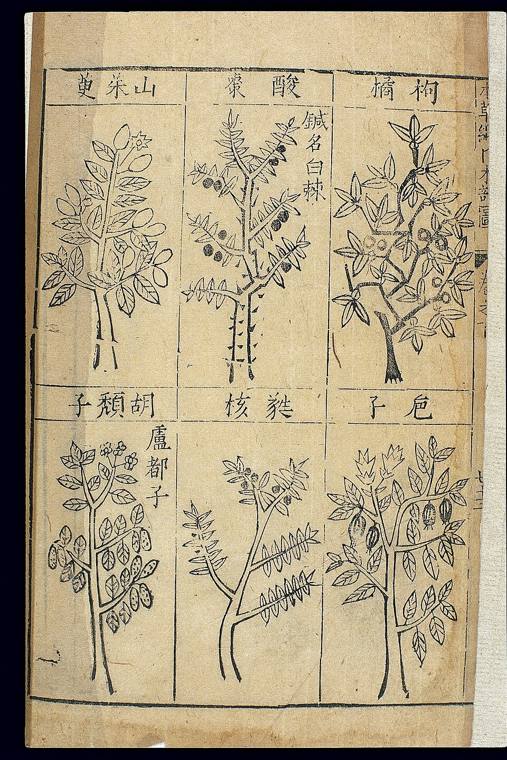
Chinese medicine is one of the oldest continuous healing traditions in the world. In a tomb at Mawangdui, sealed in 168 BCE, archaeologists found silk manuscripts with recipes against fifty-two ailments. They show how old the knowledge already was.
The classical foundation lies in a few great works. The Huangdi Neijing, the “Inner Classic of the Yellow Emperor”, took shape in the last centuries BCE. The Shennong Bencao Jing, the herbal classic of the mythical farmer-emperor Shennong, describes 365 remedies. Around 200 CE Zhang Zhongjing wrote the Shanghan Lun, on febrile diseases, with formulas still in use today.
Over the centuries the knowledge kept growing. In 1578 Li Shizhen completed the Bencao Gangmu, a huge encyclopaedia with almost two thousand remedies. In the twentieth century the tradition was reformed and standardised in China into what the West now calls “traditional Chinese medicine”.
Chinese medicine sees the body as a coherent whole, connected with nature and the seasons. Central are yin and yang, two opposing but complementary forces, such as cold and warm, rest and movement. Health is their balance.
Qi is the life energy that flows through the body, along pathways called meridians. The five phases, wood, fire, earth, metal and water, describe how organs, seasons, tastes and emotions influence one another.
A physician diagnoses not only a disease, but above all a pattern: a picture of what is out of balance in the whole body. To do so he looks at the tongue, feels the pulse and asks many questions. Two people with the same complaint can thus receive very different treatment.
For a long time knowledge was passed on within families or from teacher to pupil. Physicians studied the classics, wrote commentaries and collected their own recipes.
There were also imperial medical institutes, from the Tang dynasty onwards, with examinations and training. Alongside the learned physicians there was broad folk knowledge of herbs, as well as itinerant healers and herb sellers.
Today universities of Chinese medicine in China train physicians in a programme of five years or longer, with Western medicine also on the curriculum.
The Huangdi Neijing and the Bencao Gangmu have been on UNESCO’s Memory of the World register since 2011. The Shennong Bencao Jing and the Shanghan Lun are the other great classics.
A remarkable story belongs to a fourth-century book by the scholar Ge Hong. He described how to soak sweet wormwood in cold water against fever. In the 1970s the Chinese researcher Tu Youyou read that text and so discovered artemisinin, a drug against malaria. In 2015 she received the Nobel Prize for it.
In 2010 UNESCO recognised acupuncture and moxibustion as intangible heritage.
In China traditional medicine works alongside Western medicine, with its own hospitals, pharmacies and training. It is also important in Taiwan, Hong Kong and Singapore, and there are practitioners worldwide.
Since 2019 the WHO’s International Classification of Diseases, ICD-11, has had a separate chapter with diagnoses from the traditional medicine of China, Japan and Korea.
The scientific support differs greatly by use. Some remedies are well researched; for many others evidence is lacking.
Chinese remedies are almost always combined in formulas. Every formula has a principal remedy and helpers. Well-known herbs are ginseng, astragalus, dang gui, liquorice, which brings many formulas into balance, ginger, cinnamon and Chinese dates.
Goji, rehmannia, peony root and the mushroom poria also belong to the basics.
According to the tradition every remedy has its own nature (warm or cold), a taste and a direction in the body. Besides plants, minerals and animal products are also used.
Some Chinese remedies can be harmful. Herbs containing aristolochic acid caused serious kidney damage in Belgium in the 1990s among users of a slimming regimen. Ephedra can strain the heart. Buy only controlled products and consult a doctor.
Do not use remedies from endangered animals, such as the pangolin or the tiger. That trade threatens these species with extinction.
From the kitchen
 AsiaSweating tea with elder, yarrow and mintA classic hot tea for the start of a cold with fever and little sweating.ColdsSore throatElderberry · Yarrow · MintAbout 4 cups · Steep 15–30 minutes
 AsiaCooling sun teaHerbs that steep in the sun for a few hours: a refreshing drink for warm days.Hot daysBorage · Lemon balm · Bitter orange3 litres · 4–6 hours in the sun
 AsiaWhite radish soup with Chinese asparagusClear soup with tian men dong and white radish: moistening and cooling.Cough and lungsRecovery after illness or childbirthChinese asparagus root (tian men dong) · Radish4 people · Preparation 5 min, cooking 25 min
 AsiaPoached egg with mushrooms in clear brothChicken broth with pine nuts, shiitake and a poached egg.Tiredness and strengthPine · Shiitake5 people · Preparation 20 min (plus 30 min soaking), cooking 1 h 20 min
 AsiaLingzhi soup with lean porkLong-simmered soup with lingzhi, Chinese yam, jujubes and goji.Health and long lifeTiredness and strengthLingzhi (reishi) · Chinese yam (shan yao) · Jujube (red date)4–6 people · Preparation 5 min, cooking 2 h 45 min
 AsiaBrown rice with bamboo shoots and Chinese dodderRice cooked together with tu si zi seeds.Lower back and kidneysMenstruation and fertilityChinese dodder (tu si zi)4 people · Preparation 5 min, cooking 50 min
 AsiaFish ball soup with spinach and niu xiHomemade fish balls, prawns and spinach in an 'ox knee' broth.Menstruation and fertilityLower back and kidneysAchyranthes root (huai niu xi)4 people · Preparation 30 min, cooking 25 min
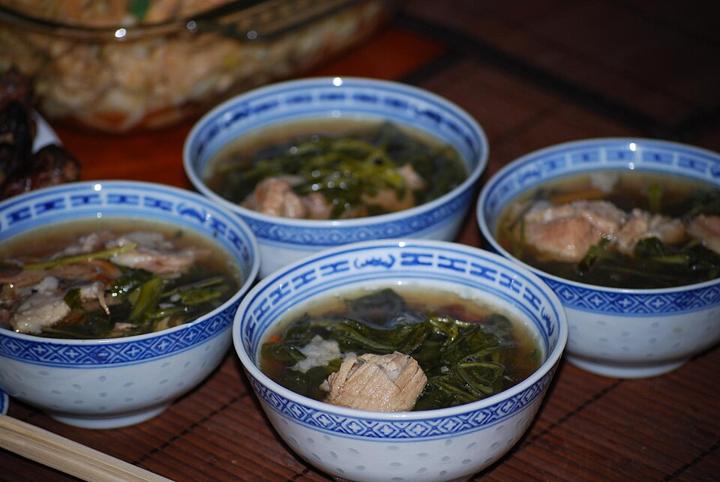 Alpha from Melbourne, Australia · CC BY-SA 2.0AsiaWatercress and spare rib soup with dried figsA cooling family soup with watercress, figs and apricot kernels.Hot daysCough and lungsWatercress · Apricot · Fig4 people · Preparation 10 min (plus 1 hour soaking), cooking 2 h 30 min
 AsiaFish and vegetable soup with celosia seedLight soup with white fish, kelp and qing xiang zi seeds.Eyes and blood pressureCelosia seed (qing xiang zi) · Kelp4 people · Preparation 15 min (plus 30 min soaking), cooking 1 h 15 minAsiaMiso fish soup with daikon and Chinese yamQuick miso soup with white fish and mashed yam.DigestionChinese yam (shan yao) · Radish · Kelp4 people · Preparation 30 min, cooking 15 min
 AsiaPigeon stew with Chinese yam and gojiOne of the classic strengthening dishes of Chinese herbal cooking.Tiredness and strengthImmunityChinese yam (shan yao) · Goji (Chinese wolfberry)4 people · Preparation 10 min, cooking 2 h 5 min
 AsiaCurry rice with Chinese cinnamonBrown rice with vegetable curry on a cinnamon bark broth.Feeling coldRecovery after illness or childbirthCinnamon6 people · Preparation 30 min, cooking 50 min
 AsiaShellfish soup with chuanxiongWarming winter soup with clams, ginger and chuanxiong.Menstruation and fertilityRecovery after illness or childbirthBlood and circulationSzechuan lovage (chuan xiong)4–6 people · Preparation 30 min, cooking 1 h 10 min
 AsiaFish soup with papaya and tofuSimple, protein-rich soup for young and old.EverydayPapaya · Soy · Ginger4 people · Preparation 15 min, cooking 30 min
 AsiaPork soup with water chestnuts and jujubesSweetish soup with carrot, water chestnut and red jujubes.Tiredness and strengthCough and lungsJujube (red date) · Water chestnut · Carrot4 people · Preparation 30 min, cooking 2 h 30 min
 AsiaChicken soup with tian qiClear chicken soup with notoginseng and ginger.Blood and circulationTiredness and strengthNotoginseng (san qi)4–6 people · Preparation 10 min, cooking 2 h 30 min
 AsiaPork soup with cordyceps and fish mawRich, strengthening soup with cordyceps, Chinese yam and fish maw.Tiredness and strengthImmunityCaterpillar fungus (cordyceps) · Chinese yam (shan yao)4–6 people · Preparation 10 min (plus 3 hours soaking), cooking 2 h 30 min
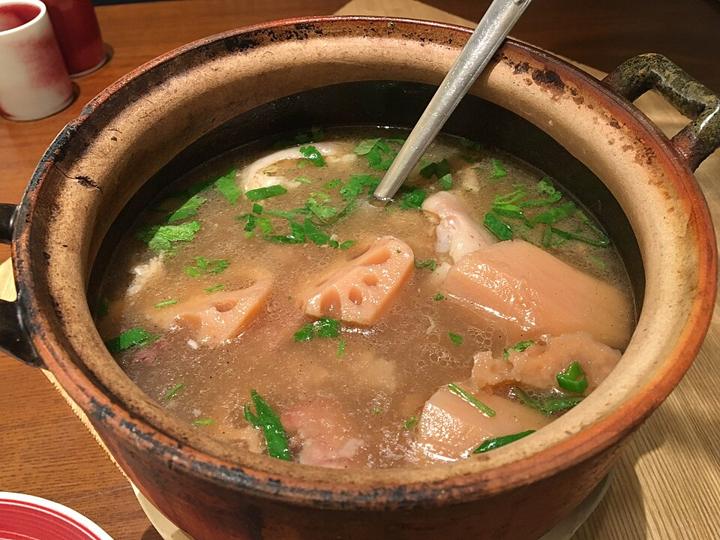 Zheng Zhou · CC BY-SA 4.0AsiaSpare rib soup with lotus root and four herbsSoup with dang shen, yu zhu, sha shen and lily bulb for recovery after cough and colds.Recovery after illness or childbirthCough and lungsCodonopsis (dang shen) · Fragrant Solomon's seal (yu zhu) · Glehnia root (sha shen)4 people · Preparation 15 min, cooking 2 h 30 min
 AsiaBrown rice with shiitake, peas and fu lingRice cooked with finely mashed fu ling and shiitake.Rest and sleepImmunityPoria (fu ling) · Shiitake4 people · Preparation 15 min (plus 1 hour soaking), cooking 50 min
 AsiaChicken stewed with Job's tearsStew with chicken, mushrooms, ginger and the nutty grain of Job's tears.Joints and musclesJob's tears (coix seed) · Ginger6 people · Preparation 20 min (plus overnight soaking), cooking 2 h 10 min
 AsiaLongan chicken soup with three seedsSweet broth with privet fruit, Chinese raspberry, goji and longan.Menstruation and fertilityBlood and circulationGlossy privet (nu zhen zi) · Chinese raspberry (fu pen zi) · Goji (Chinese wolfberry)4–6 people · Preparation 5 min, cooking 2 hours
 AsiaFour-herb tonic soupWarming soup with fox nut, Chinese yam, lotus seed, fu ling and Job's tears.Tiredness and strengthRest and sleepFeeling coldFox nut (qian shi) · Chinese yam (shan yao) · Sacred lotus4–6 people · Preparation 10 min (plus overnight soaking), cooking 1 h 10 minAsiaSteamed egg with shiitake and fox nutSoft egg custard with prawns and mushrooms on a fox nut broth.Health and long lifeTiredness and strengthFox nut (qian shi) · Shiitake4 people · Preparation 15 min, cooking 1 hour
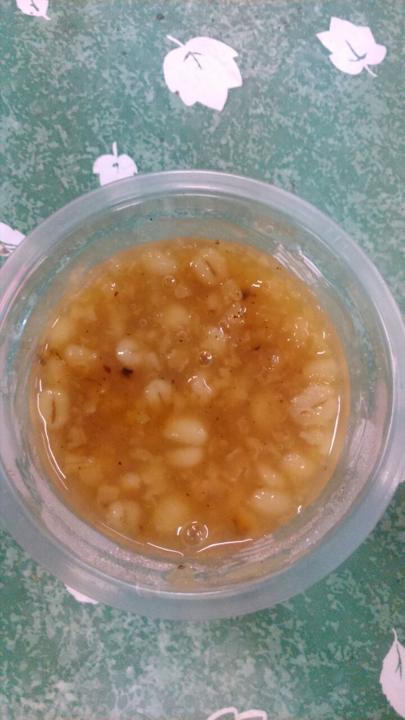 Kembangraps · CC BY-SA 4.0AsiaCongee with Job's tears and brown riceRice porridge for breakfast, savoury or sweet.Joints and musclesDigestionTiredness and strengthJob's tears (coix seed)4 people · Preparation 5 min (plus overnight soaking), cooking 1 hour
 AsiaSweetcorn soup with astragalusCorn soup on a 'jade windscreen' broth.ImmunityColdsAstragalus (huang qi) · White atractylodes (bai zhu) · Saposhnikovia root (fang feng)4–6 people · Preparation 15 min, cooking 35 min
 AsiaSteamed black chicken with jujubes and longanThe traditional recovery dish after childbirth.Recovery after illness or childbirthBlood and circulationJujube (red date) · Longan · Sesame4 people · Preparation 20 min (plus 30 min marinating), steaming 1 hour
 AsiaPigeon egg soup with white fungusA quick soup to regain strength.Recovery after illness or childbirthSnow fungus (bai mu er)4–6 people · Preparation 10 min (plus 10 min soaking), cooking 5 min
 AsiaBraised sesame beef with fennelBeef in a crust of toasted sesame, seasoned with fennel seed.DigestionFeeling coldSesame · Fennel4 people · Preparation 20 min (plus 2 hours standing), cooking 40 min
 AsiaVegetarian eight-treasure soupSweet herbal soup with chestnuts, ginkgo nuts, jujubes and white fungus; warm or cold.EverydaySnow fungus (bai mu er) · Ginkgo · Jujube (red date)6–8 people · Preparation 30 min, cooking 2 h 15 minAsiaSweet soup with white fungus, lotus root and jujubesStrengthening dessert soup with rock sugar.Tiredness and strengthBlood and circulationSnow fungus (bai mu er) · Sacred lotus · Jujube (red date)4–6 people · Preparation 15 min (plus 15 min soaking), cooking 1 h 5 min
 AsiaSteamed pears with bei muWarm dessert for dry, congested lungs.Cough and lungsFritillaria bulb (bei mu) · Pear · Cinnamon4–6 people · Preparation 5 min, steaming 1 hour
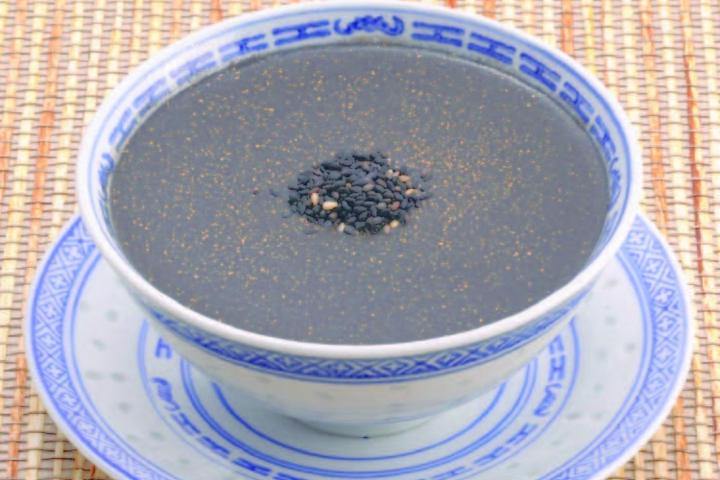 2225Group8 · CC BY-SA 3.0AsiaBlack sesame drinkA warm drink in five minutes.Blood and circulationHair and scalpSkin careSesame1 glass · 5 minutes
Registry
CautionAfrica · Herb · № 118
Trigonella foenum-graecum
The seed has been studied for blood sugar and for increasing breast milk. NCCIH reports there is not enough strong evidence for these uses.
 Caution
Africa · Food · № 360
Lagenaria siceraria
Young fruits are eaten as a mild, easily digestible vegetable. Medical claims, for example about the heart or peace of mind, have not been studied.
 Caution
Asia · Herb · № 778
Momordica cochinchinensis
Traditionally attributed effects: externally for inflamed sores, breast abscesses and bruises.
 Caution
Asia · Herb · № 119
Alpinia galanga
A relative of ginger traditionally used for nausea, wind and sluggish digestion. Clinical evidence is limited.
 Caution
Asia · Herb · № 200
Gardenia jasminoides
Traditionally attributed effects: fever-reducing, calming, lowers blood pressure, antibacterial, promotes bile.
 Caution
Asia · Herb · № 774
Gastrodia elata
Traditionally attributed effects: calms liver wind and relieves headache, dizziness and cramps.
 Caution
Asia · Herb · № 692
Scutellaria barbata
Traditionally attributed effects: cools the blood, moves blood stagnation and reduces swellings; for hepatitis.
Asia · Other · № 789
Massa medicata fermentata
Traditionally attributed effects: helps with food stagnation and poor digestion.
 Caution
Asia · Herb · № 1
Zingiber officinale
Traditionally used for nausea and digestive discomfort; it has a warming flavor.
 Caution
Asia · Herb · № 700
Daphne genkwa
Traditionally attributed effects: was used as a strong fluid-draining remedy in chronic fluid accumulation in chest and abdomen.
 Caution
Asia · Food · № 269
Hordeum vulgare
Traditionally attributed effects: astringent, light; good for skin and hair.
 Caution
Europe · Herb · № 88
Prunella vulgaris
In Europe an old wound herb and gargle for sore throats; in Chinese medicine used for 'heat' and swollen glands. Research is mostly laboratory work.
 Caution
Asia · Herb · № 37
Ginkgo biloba
There is no conclusive evidence that ginkgo helps any health condition. A modest effect on dementia symptoms is possible, but results are inconsistent.
 Caution
Asia · Mineral · № 668
Gypsum fibrosum (calciumsulfaat)
Traditionally attributed effects: strongly cooling in high fever with thirst and sweating, lung heat and stomach fire.
CautionAsia · Herb · № 315
Ligustrum lucidum
Traditionally attributed effects: tonic, diuretic, stimulates the immune system.
 Caution
Asia · Mineral · № 698
Mirabilitum (natriumsulfaat)
Traditionally attributed effects: softens the stool in constipation from heat and dryness.
 Caution
Asia · Herb · № 649
Glehnia littoralis
Traditionally attributed effects: nourishes the lungs and is good for the stomach; for persistent dry cough and to dissolve phlegm.
 Caution
Asia · Food · № 637
Lycium barbarum, L. chinense
Traditionally attributed effects: sweet tonic that according to tradition strengthens the yang energy, strength and stamina and supports the hormone system.
 Caution
Asia · Food · № 343
Punica granatum
Traditionally attributed effects: root and stem bark astringent and strongly expel tapeworm; flowers and peel astringent and stomachic; juice cooling.
 Caution
Asia · Herb · № 772
Acorus tatarinowii (syn. A. gramineus)
Traditionally attributed effects: opens the sense orifices, clears the mind and expels dampness and phlegm.
 Caution
Asia · Food · № 16
Camellia sinensis
A brewed tea. Evidence does not establish most health claims; extracts differ from the ordinary beverage.
 Caution
Asia · Herb · № 713
Gentiana macrophylla
Traditionally attributed effects: expels wind and dampness in cold and hot joint pain and cools heat from yin deficiency.
 Caution
Europe · Herb · № 62
Arctium lappa
In Europe the root was considered a 'blood-cleansing' herb for skin problems such as eczema and acne; the seed is used in Chinese medicine for sore throats. Clinical evidence is weak.
 Caution
Asia · Herb · № 736
Sanguisorba officinalis
Traditionally attributed effects: cools the blood and stops bleeding in the lower abdomen; externally for burns.
 Caution
Europe · Herb · № 339
Alisma plantago-aquatica (syn. A. orientale)
Traditionally attributed effects: diuretic, lowers blood pressure, antibacterial, cleanses the liver.
 Caution
Asia · Herb · № 139
Terminalia chebula
Haritaki is used in Ayurveda as a rejuvenating remedy and gentle laxative. Triphala, a blend of three fruits, is the best-known Ayurvedic formula for digestion. Clinical research is limited.
 Caution
Europe · Herb · № 82
Leonurus cardiaca
Traditionally used for stress-related palpitations, nervousness and menstrual complaints. Clinical research is scarce.
 Caution
Asia · Mineral · № 796
Haematitum (ijzeroxide)
Traditionally attributed effects: anchors rising liver yang, makes rebellious qi descend and cools the blood in bleeding.
 Caution
Asia · Herb · № 765
Ailanthus altissima
Traditionally attributed effects: cools heat, dries dampness and curbs diarrhoea, discharge and bleeding.
 Caution
 Caution
Asia · Food · № 697
Lablab purpureus (syn. Dolichos lablab)
Traditionally attributed effects: strengthens the spleen and drains dampness in summer heat with diarrhoea and vomiting.
 Caution
Europe · Herb · № 103
Verbena officinalis
Traditionally used for nervousness, exhaustion and as a digestive bitter. Scientific evidence is largely lacking.
 Caution
Asia · Herb · № 548
Rubia cordifolia
Traditionally attributed effects: promotes menstruation, astringent, diuretic, cleansing, decongestant, tonic; for paralysis, jaundice, urinary tract obstruction, menstrual disorders, mastitis, too little lochia.
 Caution
Asia · Food · № 764
Prunus mume
Traditionally attributed effects: astringent in chronic cough and diarrhoea, replenishes body fluids and was used against worms.
 Caution
Asia · Herb · № 788
Inula japonica
Traditionally attributed effects: moves stuck phlegm in the lungs and makes rebellious energy of lung and stomach descend.
 Caution
Asia · Herb · № 302
Styphnolobium japonicum (syn. Sophora japonica)
Traditionally attributed effects: stops bleeding, laxative.