Skip to content
Herbs & Cultures

Cloister garden and manuscript

Europe

174 remedies · 7 traditions

European healing knowledge grew from several layers: classical texts, monastery gardens, and local traditions. Written records capture only part of what people learned from their surroundings.

Characteristic plants

History and today

Cultures and traditions

Dates refer to surviving sources or written records where possible. Much orally transmitted knowledge predates its first written record.

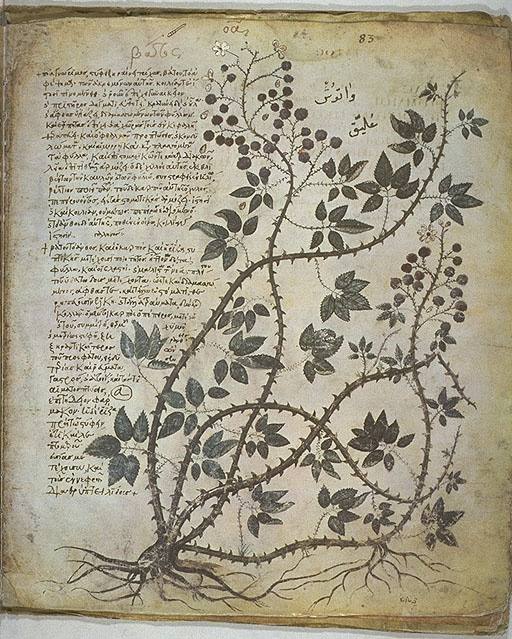
A plant from the Vienna Dioscurides, a copy of De materia medica from around 512.

Greece and the Roman Empire

Greco-Roman medicine

Written works from the 5th century BCE

Greek medicine began not with physicians but with gods. In sanctuaries of Asclepius, such as at Epidaurus and on the island of Kos, the sick slept a night in the temple, hoping the god would heal them or give advice in a dream. In the fifth century BCE a different approach arose on Kos, associated with the name of Hippocrates (c. 460–370 BCE). The so-called Hippocratic writings, some sixty texts by different authors, seek the cause of illness not with the gods, but in the body, diet, climate and way of life. Others later built on this. In the fourth century BCE Theophrastus wrote the first great work on plants. In the first century CE the Greek army physician Dioscorides described some six hundred plants and their uses in De materia medica. Galen (129–c. 216), a physician from Pergamon who worked in Rome, brought everything together in a vast body of work that would shape European and Islamic medicine for more than fifteen hundred years.

Herbs in this tradition (43)

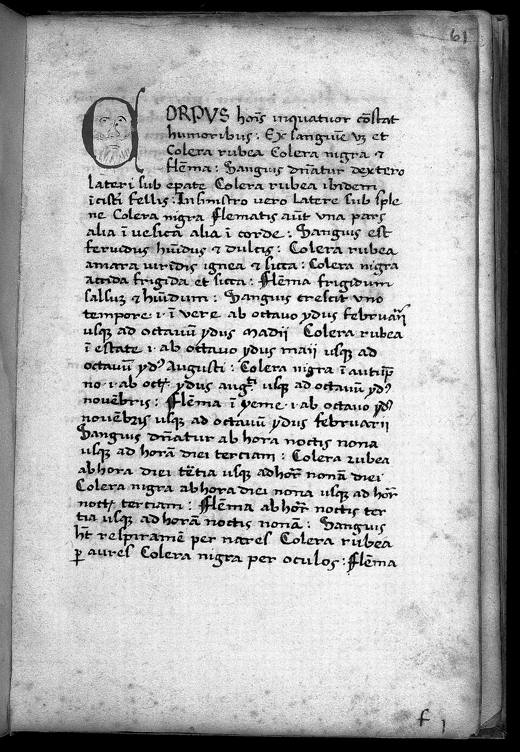
A page from Macer Floridus' De viribus herbarum, a herbal poem widely copied in medieval monasteries.

Monasteries of Western and Central Europe

Monastic and folk knowledge

Medieval records; older and continuing local practices

After the fall of the Western Roman Empire, monasteries in Europe became the keepers of learned knowledge, medicine included. Monks and nuns copied Latin and Greek medical texts so that they were preserved. The Rule of Benedict, from the sixth century, states in chapter 36 that care for the sick comes before everything. Monasteries therefore acquired an infirmary, a pharmacy and a herb garden. The famous Plan of Saint Gall, from around 820, shows a herb garden with sixteen beds next to the infirmary and the physician’s house. Secular rulers took an interest too. In the Capitulare de villis of around 800, Charlemagne laid down which plants were to grow on his estates: almost a hundred species, including many medicinal herbs. From the tenth century a famous medical school was active in Salerno in Italy. In the twelfth century a woman physician, Trota, also worked there; texts on women’s medicine were later named after her.

Hildegard receives an inspiration and passes it on to her scribe; miniature from the Rupertsberg codex of the Scivias.

Bingen am Rhein, Germany

Hildegard of Bingen

12th century (c. 1098–1179); the Physica was written between 1151 and 1158

Hildegard was born in 1098 in Bermersheim near Alzey, into a noble family. At the age of eight she was entrusted to the Benedictine monastery on the Disibodenberg, where she grew up in the care of Jutta of Sponheim. In 1115 she took her vows. After Jutta’s death, around 1136, she became magistra: the leader of the community of sisters. From 1141 she wrote down her visions in the Scivias. Around 1150 she founded her own convent with about twenty sisters on the Rupertsberg near Bingen, and in 1165 a second one in Eibingen, across the Rhine. She wrote theology, composed music, corresponded with popes and emperors and made preaching tours. For a woman in the twelfth century that was exceptional. In the same years her writings on nature and medicine came into being. Hildegard died on 17 September 1179. For centuries she was venerated as a saint without formal canonisation. That only followed in 2012, and on 7 October of that year Pope Benedict XVI proclaimed her a Doctor of the Church.

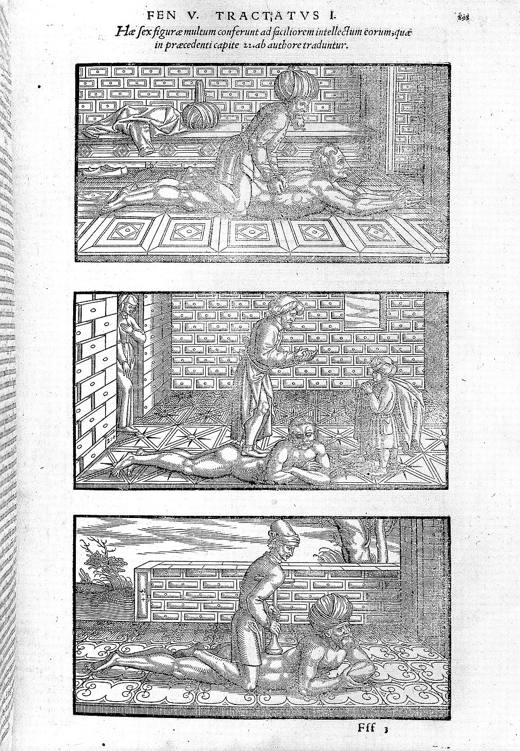
Woodcuts from a printed Latin edition of Avicenna's Canon, the textbook of Europe's medical faculties.

Universities of Paris, Montpellier, Padua and Bologna

Avicenna's Canon in European universities

Completed in 1025; used in Europe into the 18th century

Ibn Sina, known in Europe as Avicenna, was born in 980 near Bukhara, in present-day Uzbekistan. He was a prodigy: as a young man he was already working as a physician at court. He wrote on philosophy, mathematics, astronomy and medicine, and died in 1037 in Hamadan, in present-day Iran. Around 1025 he completed the Canon of Medicine, al-Qanun fi al-Tibb. In five books he brought together the Greek medicine of Hippocrates and Galen with Persian, Arab and Indian knowledge and with his own observations. In the twelfth century Gerard of Cremona translated the Canon into Latin in Toledo. From the thirteenth century European scholars used the work, and from the fourteenth century it was on the curriculum of universities. In 1472 the first printed Latin edition appeared, and in Padua the Canon was still taught in 1715.

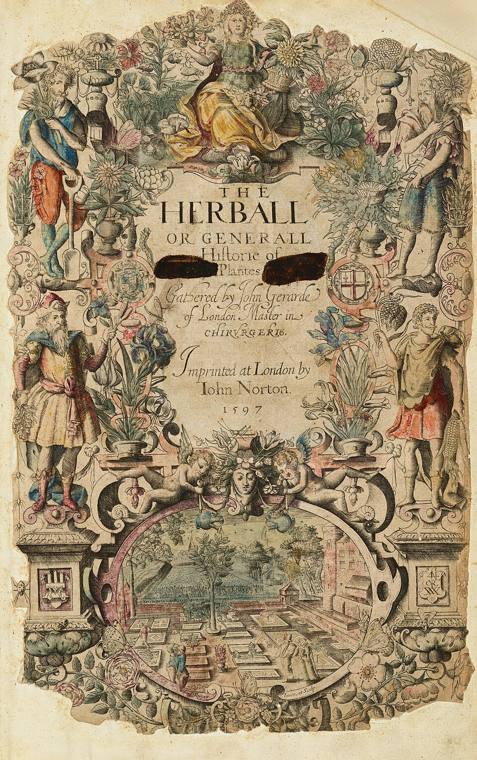
The title page of John Gerard's The Herball (London, 1597).

Across Europe and beyond

Western herbal medicine

From medieval herbals to present-day phytotherapy

With the invention of printing, the great herbals arrived in the fifteenth and sixteenth centuries. In 1485 the Gart der Gesundheit appeared in Mainz. In 1542 Leonhart Fuchs published De historia stirpium, with beautiful woodcuts drawn from nature. The Low Countries played a large role. The Mechelen physician Rembert Dodoens published his Cruydeboeck in Antwerp in 1554, one of the most important herbals of its time, which was translated into many languages. In England John Gerard’s Herball appeared in 1597, and in 1652 The English Physitian by Nicholas Culpeper, who made the knowledge accessible to ordinary people in English. From the eighteenth century science grew out of herbalism. In 1785 William Withering described how foxglove helped with dropsy caused by heart failure. In the nineteenth century chemists isolated active substances from plants, such as morphine from the opium poppy in 1804. In 1897 Bayer made aspirin, based on a substance also found in willow bark and meadowsweet.

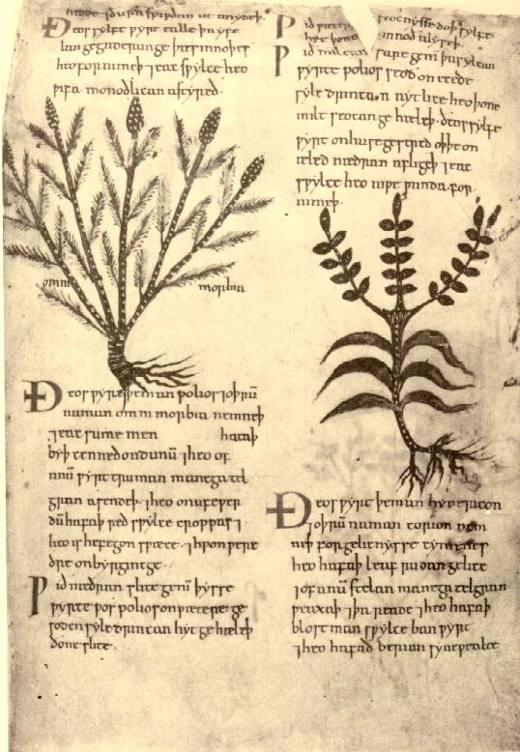
A page from the Old English Herbarium (Cotton Vitellius C.iii), 11th century.

England

Anglo-Saxon medicine

England, c. 900–1100

From Anglo-Saxon England, roughly from the fifth century to the Norman Conquest in 1066, a remarkable number of medical texts survive in the vernacular: Old English. That is exceptional in Europe, where learned texts were usually in Latin. The best-known work is Bald’s Leechbook, the “physician’s book of Bald”, from the middle of the tenth century. A note at the end says that Bald was the owner and that a scribe, Cild, wrote the book for him. It is kept in the British Library. Other sources are the Lacnunga, a collection of remedies and charms, and the Old English Herbarium, a translation of a late Latin herbal. Together they give a rich picture of care in early medieval England.

Herbs in this tradition (13)

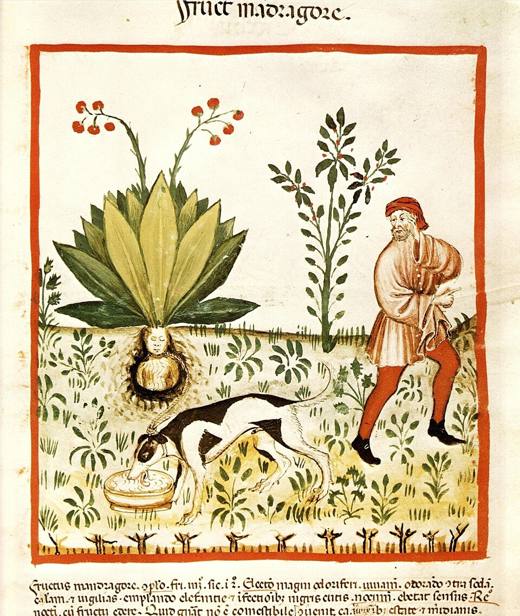
The mandrake is pulled from the ground by a dog, as legend required; Tacuinum sanitatis, c. 1390.

Across Europe

Folk magic and herbal magic

Centuries-old folk customs; present-day herbal magic mainly since the 20th century

All over Europe, folk belief gave plants special powers. They protected house and livestock, brought love, warded off thunderstorms and evil forces. These customs are often very old and were later linked to Christian feasts. A fine example from the Low Countries is the kruidwis, the herb bundle. On the Feast of the Assumption, 15 August, bundles of herbs and grains are blessed in Dutch and Belgian Limburg. The bundle, with mugwort and wormwood among other things, was kept at home and thrown on the fire during thunderstorms, as protection against lightning. Midsummer night, St John’s Eve on 24 June, was also a time for herbs. St John’s wort was picked and hung above the door against misfortune. In the nineteenth century folklorists collected such customs, and in the twentieth century a modern herbal magic arose, especially in pagan movements.

Herbs in this tradition (161)

From the kitchen

Recipes from Europe

All recipes (3) →

Registry

Herbs from Europe

Search herbs, spices and other natural ingredients by name, use, or tag. Traditional use is cultural and historical information, not medical advice.

174 results

  • Caution

    Other · № 308

    Irish moss

    Chondrus crispus

    Traditionally attributed effects: soothing, expectorant, against vomiting, nourishing.

    Western herbal medicine
  • Caution

    Herb · № 103

    Vervain

    Verbena officinalis

    Traditionally used for nervousness, exhaustion and as a digestive bitter. Scientific evidence is largely lacking.

    Greco-Roman medicine+3Folklore
  • Caution

    Herb · № 499

    Indian fumitory

    Fumaria indica

    Traditionally attributed effects: expels worms, mildly laxative, cooling, induces sweating and urination, fever-reducing, lowers blood pressure; for syphilis, scrofula, leprosy, constipation, indigestion from a sluggish liver, fever, jaundice, skin diseases.

    Ayurveda
  • Caution

    Herb · № 203

    Orris root

    Iris florentina (I. germanica 'Florentina')

    The dried root (orris root) smells of violets and is a fixative in perfume and potpourri. Medicinally it was used for coughs and for teething children; it can cause allergies.

    Greco-Roman medicine+1Folklore
  • Caution

    Herb · № 81

    Juniper

    Juniperus communis

    The berries are traditionally used as a diuretic, for digestive complaints and externally for joint pain. Clinical evidence is limited.

    Western herbal medicine+5Folklore
  • Caution

    Herb · № 19

    Chamomile

    Matricaria chamomilla (Duitse kamille)

    Flowers are used in teas and topical or oral products. Reliable evidence is insufficient for most claimed conditions.

    Monastic and folk knowledge+7Folklore
  • Caution

    Herb · № 214

    Caraway

    Carum carvi

    Traditionally attributed effects: carminative, aromatic, stomachic, stimulating, promotes milk flow; for flatulence and intestinal cramps, corrects nausea-inducing medicines, scabies.

    Folk magic and herbal magic+1Folklore
  • Caution

    Herb · № 109

    Catnip

    Nepeta cataria

    Traditionally used as a mild tea for colds, fevers, restlessness and colic. Nepetalactone from the plant is being researched as an insect repellent.

    Western herbal medicine+2Folklore
  • Caution

    Other · № 382

    Kelp

    Laminaria spp. / Ascophyllum nodosum

    Brown seaweeds are rich in iodine and alginate. They are used in scrubs and as food supplements; too much iodine can disrupt the thyroid.

    Chinese medical traditions
  • Caution

    Food · № 256

    Cherry

    Prunus avium

    A fruit rich in vitamin C. The dried stalks were used in folk medicine as a diuretic. Sour cherries have been studied for gout and sleep, with preliminary results.

    Monastic and folk knowledge
  • Caution

    Herb · № 834

    Chervil

    Anthriscus cerefolium

    A mild, aniseed-like kitchen herb, traditionally used as a cleansing spring herb and for digestive complaints.

    Monastic and folk knowledge+1
  • Caution

    Herb · № 207

    Corn poppy

    Papaver rhoeas

    Traditionally attributed effects: mildly narcotic in large amounts; Papaver somniferum (source of opium) is poisonous.

    Folk magic and herbal magicFolklore
  • Caution

    Herb · № 75

    Cleavers

    Galium aparine

    Used in Western herbalism as a 'lymphatic' herb for swollen glands and skin conditions. Scientific evidence is lacking.

    Monastic and folk knowledge+2
  • Caution

    Herb · № 100

    Coltsfoot

    Tussilago farfara

    One of the oldest cough herbs; the leaf contains soothing mucilage. Because of its toxic alkaloids it is now advised against.

    Greco-Roman medicine+3
  • Caution

    Herb · № 565

    Puncture vine

    Tribulus terrestris

    Traditionally attributed effects: cooling, soothing, diuretic, tonic, aphrodisiac.

    Ayurveda+2
  • Caution

    Herb · № 312

    Lesser periwinkle

    Vinca minor

    Traditionally attributed effects: astringent, promotes circulation, improves blood flow to the brain.

    Western herbal medicine
  • Caution

    Herb · № 92

    Figwort

    Scrophularia nodosa (en S. ningpoensis)

    Used in Western herbalism for skin conditions such as eczema and psoriasis and for swollen glands. There is no good clinical evidence.

    Monastic and folk knowledge+2
  • Caution

    Herb · № 271

    Hemp agrimony

    Eupatorium cannabinum

    Traditionally attributed effects: hemp agrimony fever-reducing, diuretic, laxative, promotes bile, expectorant, stimulates the immune system; boneset induces sweating, antispasmodic; gravel root soothing diuretic, antirheumatic, promotes menstruation.

    Western herbal medicine
  • Caution

    Herb · № 102

    Great mullein

    Verbascum thapsus

    Leaves and flowers contain mucilage and are traditionally used for irritating coughs and bronchitis; the flower oil for earache. Clinical evidence is limited.

    Greco-Roman medicine+4
  • Caution

    Food · № 68

    Cabbage

    Brassica oleracea

    A vegetable rich in vitamin C and fibre. In folk medicine cold cabbage leaves are placed on engorged breasts or painful joints; small studies give mixed results.

    Monastic and folk knowledge+2Folklore
  • Caution

    Herb · № 292

    Cornflower

    Centaurea cyanus

    Traditionally attributed effects: tonic, stimulating, anti-inflammatory.

    Western herbal medicine
  • Caution

    Herb · № 231

    Coriander

    Coriandrum sativum

    Traditionally attributed effects: aromatic, stimulating, carminative, stomachic, cooling, tonic, diuretic; for flatulence, colic, rheumatism, nerve pain, sore throat, indigestion, vomiting, colds, bile complaints.

    Greco-Roman medicine+5Folklore
  • Caution

    Herb · № 338

    Yellow dock

    Rumex crispus

    Traditionally attributed effects: strongly laxative, promotes bile, cleansing.

    Western herbal medicine+1
  • Caution

    Herb · № 580

    Couch grass

    Elymus repens

    Traditionally attributed effects: diuretic, soothing, astringent; for kidney and bladder complaints (kidney stones, interstitial cystitis), helps regulate blood sugar.

    Western herbal medicine
  • Caution

    Herb · № 213

    Bay laurel

    Laurus nobilis

    Bay leaf is a culinary herb containing cineole and eugenol. The oil of the berries was used externally for muscle pain; a medicinal effect has hardly been studied.

    Greco-Roman medicine+1Folklore
  • Caution

    Herb · № 6

    Lovage

    Levisticum officinale

    The leaf tastes of stock and celery. In folk medicine the root was used as a diuretic and for bloating; research is lacking.

    Western herbal medicine
  • Caution

    Herb · № 44

    Lavender

    Lavandula angustifolia

    A fragrant plant used in bath products, perfume, and aromatherapy. Evidence for medical effects is preliminary.

    Greco-Roman medicine+4Folklore
  • Caution

    Herb · № 208

    Snapdragon

    Antirrhinum majus

    An ornamental plant. In folk medicine leaves were laid as a poultice on sores and haemorrhoids; a medicinal effect has not been studied.

    Folk magic and herbal magicFolklore
  • Caution

    Herb · № 206

    Lily of the valley

    Convallaria majalis

    Traditionally attributed effects: heart tonic, diuretic, laxative, emetic.

    Western herbal medicine+1Folklore
  • Caution

    Herb · № 191

    Rowan

    Sorbus aucuparia

    The orange berries are rich in vitamin C and are eaten cooked; raw they contain parasorbic acid, which irritates the stomach and bowel. A medicinal effect has hardly been studied.

    Folk magic and herbal magicFolklore
  • Caution

    Herb · № 226

    Linden

    Tilia × europaea

    Traditionally attributed effects: calming nerve remedy, induces sweating, vasodilating, restores the vessel walls, lowers blood pressure.

    Western herbal medicine
  • Caution

    Other · № 588

    Lungwort lichen

    Lobaria pulmonaria

    Traditionally attributed effects: antioxidant, expectorant; reduces inflammation in the airways and intestines, supports the lungs and helps with sinusitis.

    Western herbal medicine
  • Caution

    Herb · № 211

    Sweet violet

    Viola odorata

    Traditionally attributed effects: V. odorata anti-inflammatory, expectorant, diuretic, antitumour; V. tricolor expectorant, anti-inflammatory, diuretic, antirheumatic, laxative, strengthens capillaries.

    Western herbal medicine+3Folklore
  • Caution

    Herb · № 113

    White horehound

    Marrubium vulgare

    A bitter herb traditionally used for coughs with sticky phlegm and bronchitis. In Europe it is recognised as a traditional herbal medicine; clinical evidence is limited.

    Greco-Roman medicine+3Folklore
  • Caution

    Herb · № 239

    Mistletoe

    Viscum album

    Traditionally attributed effects: slows the heart rate, lowers blood pressure, antitumour.

    Western herbal medicine+1Folklore
  • Caution

    Herb · № 199

    Ox-eye daisy

    Leucanthemum vulgare

    Young leaves are edible. In folk medicine a tea of the flowers was used for coughs and as a wash; a medicinal effect has not been studied.

    Folk magic and herbal magicFolklore