Skip to content
Herbs & Cultures

Cloister garden and manuscript

Europe

174 remedies · 7 traditions

European healing knowledge grew from several layers: classical texts, monastery gardens, and local traditions. Written records capture only part of what people learned from their surroundings.

Characteristic plants

History and today

Cultures and traditions

Dates refer to surviving sources or written records where possible. Much orally transmitted knowledge predates its first written record.

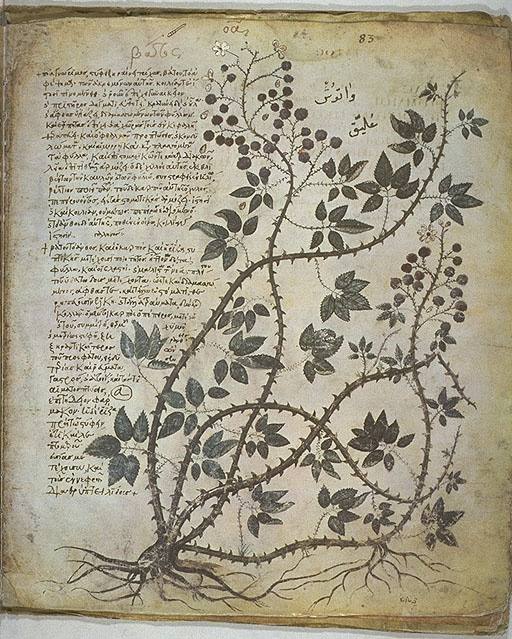
A plant from the Vienna Dioscurides, a copy of De materia medica from around 512.

Greece and the Roman Empire

Greco-Roman medicine

Written works from the 5th century BCE

Greek medicine began not with physicians but with gods. In sanctuaries of Asclepius, such as at Epidaurus and on the island of Kos, the sick slept a night in the temple, hoping the god would heal them or give advice in a dream. In the fifth century BCE a different approach arose on Kos, associated with the name of Hippocrates (c. 460–370 BCE). The so-called Hippocratic writings, some sixty texts by different authors, seek the cause of illness not with the gods, but in the body, diet, climate and way of life. Others later built on this. In the fourth century BCE Theophrastus wrote the first great work on plants. In the first century CE the Greek army physician Dioscorides described some six hundred plants and their uses in De materia medica. Galen (129–c. 216), a physician from Pergamon who worked in Rome, brought everything together in a vast body of work that would shape European and Islamic medicine for more than fifteen hundred years.

Herbs in this tradition (43)

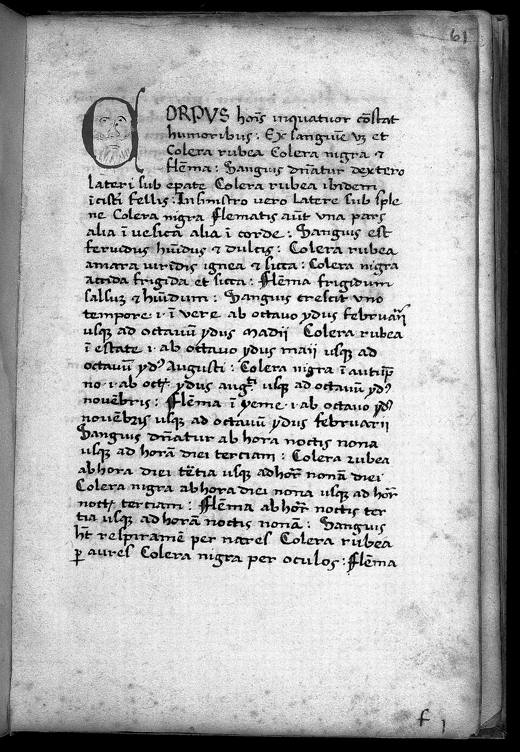
A page from Macer Floridus' De viribus herbarum, a herbal poem widely copied in medieval monasteries.

Monasteries of Western and Central Europe

Monastic and folk knowledge

Medieval records; older and continuing local practices

After the fall of the Western Roman Empire, monasteries in Europe became the keepers of learned knowledge, medicine included. Monks and nuns copied Latin and Greek medical texts so that they were preserved. The Rule of Benedict, from the sixth century, states in chapter 36 that care for the sick comes before everything. Monasteries therefore acquired an infirmary, a pharmacy and a herb garden. The famous Plan of Saint Gall, from around 820, shows a herb garden with sixteen beds next to the infirmary and the physician’s house. Secular rulers took an interest too. In the Capitulare de villis of around 800, Charlemagne laid down which plants were to grow on his estates: almost a hundred species, including many medicinal herbs. From the tenth century a famous medical school was active in Salerno in Italy. In the twelfth century a woman physician, Trota, also worked there; texts on women’s medicine were later named after her.

Hildegard receives an inspiration and passes it on to her scribe; miniature from the Rupertsberg codex of the Scivias.

Bingen am Rhein, Germany

Hildegard of Bingen

12th century (c. 1098–1179); the Physica was written between 1151 and 1158

Hildegard was born in 1098 in Bermersheim near Alzey, into a noble family. At the age of eight she was entrusted to the Benedictine monastery on the Disibodenberg, where she grew up in the care of Jutta of Sponheim. In 1115 she took her vows. After Jutta’s death, around 1136, she became magistra: the leader of the community of sisters. From 1141 she wrote down her visions in the Scivias. Around 1150 she founded her own convent with about twenty sisters on the Rupertsberg near Bingen, and in 1165 a second one in Eibingen, across the Rhine. She wrote theology, composed music, corresponded with popes and emperors and made preaching tours. For a woman in the twelfth century that was exceptional. In the same years her writings on nature and medicine came into being. Hildegard died on 17 September 1179. For centuries she was venerated as a saint without formal canonisation. That only followed in 2012, and on 7 October of that year Pope Benedict XVI proclaimed her a Doctor of the Church.

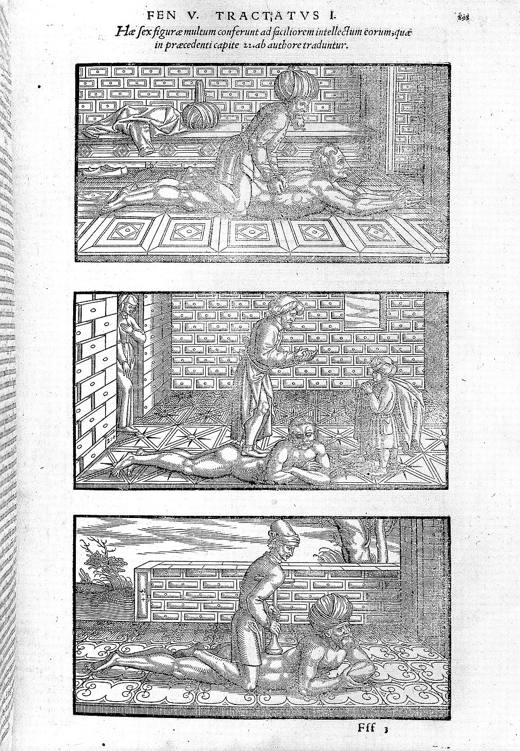
Woodcuts from a printed Latin edition of Avicenna's Canon, the textbook of Europe's medical faculties.

Universities of Paris, Montpellier, Padua and Bologna

Avicenna's Canon in European universities

Completed in 1025; used in Europe into the 18th century

Ibn Sina, known in Europe as Avicenna, was born in 980 near Bukhara, in present-day Uzbekistan. He was a prodigy: as a young man he was already working as a physician at court. He wrote on philosophy, mathematics, astronomy and medicine, and died in 1037 in Hamadan, in present-day Iran. Around 1025 he completed the Canon of Medicine, al-Qanun fi al-Tibb. In five books he brought together the Greek medicine of Hippocrates and Galen with Persian, Arab and Indian knowledge and with his own observations. In the twelfth century Gerard of Cremona translated the Canon into Latin in Toledo. From the thirteenth century European scholars used the work, and from the fourteenth century it was on the curriculum of universities. In 1472 the first printed Latin edition appeared, and in Padua the Canon was still taught in 1715.

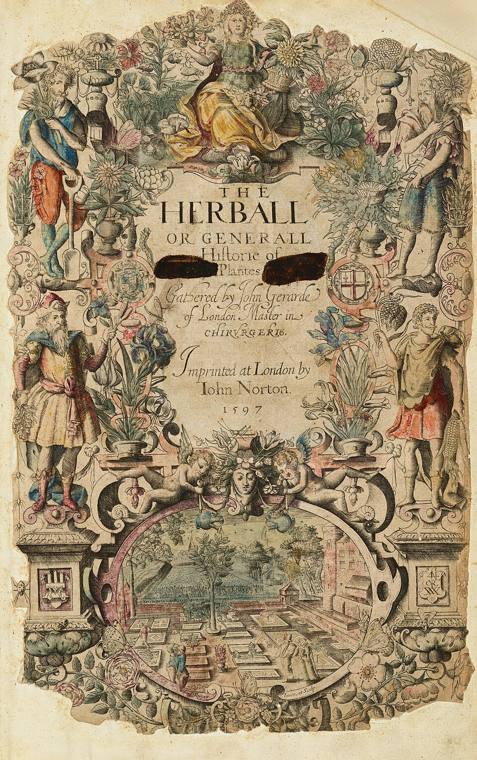
The title page of John Gerard's The Herball (London, 1597).

Across Europe and beyond

Western herbal medicine

From medieval herbals to present-day phytotherapy

With the invention of printing, the great herbals arrived in the fifteenth and sixteenth centuries. In 1485 the Gart der Gesundheit appeared in Mainz. In 1542 Leonhart Fuchs published De historia stirpium, with beautiful woodcuts drawn from nature. The Low Countries played a large role. The Mechelen physician Rembert Dodoens published his Cruydeboeck in Antwerp in 1554, one of the most important herbals of its time, which was translated into many languages. In England John Gerard’s Herball appeared in 1597, and in 1652 The English Physitian by Nicholas Culpeper, who made the knowledge accessible to ordinary people in English. From the eighteenth century science grew out of herbalism. In 1785 William Withering described how foxglove helped with dropsy caused by heart failure. In the nineteenth century chemists isolated active substances from plants, such as morphine from the opium poppy in 1804. In 1897 Bayer made aspirin, based on a substance also found in willow bark and meadowsweet.

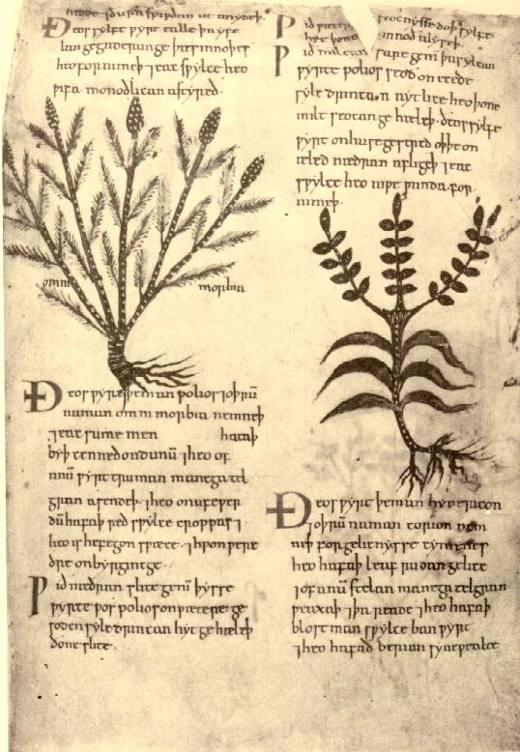
A page from the Old English Herbarium (Cotton Vitellius C.iii), 11th century.

England

Anglo-Saxon medicine

England, c. 900–1100

From Anglo-Saxon England, roughly from the fifth century to the Norman Conquest in 1066, a remarkable number of medical texts survive in the vernacular: Old English. That is exceptional in Europe, where learned texts were usually in Latin. The best-known work is Bald’s Leechbook, the “physician’s book of Bald”, from the middle of the tenth century. A note at the end says that Bald was the owner and that a scribe, Cild, wrote the book for him. It is kept in the British Library. Other sources are the Lacnunga, a collection of remedies and charms, and the Old English Herbarium, a translation of a late Latin herbal. Together they give a rich picture of care in early medieval England.

Herbs in this tradition (13)

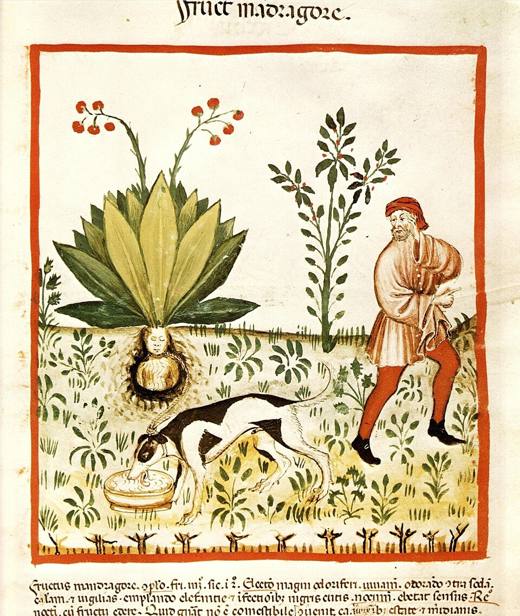
The mandrake is pulled from the ground by a dog, as legend required; Tacuinum sanitatis, c. 1390.

Across Europe

Folk magic and herbal magic

Centuries-old folk customs; present-day herbal magic mainly since the 20th century

All over Europe, folk belief gave plants special powers. They protected house and livestock, brought love, warded off thunderstorms and evil forces. These customs are often very old and were later linked to Christian feasts. A fine example from the Low Countries is the kruidwis, the herb bundle. On the Feast of the Assumption, 15 August, bundles of herbs and grains are blessed in Dutch and Belgian Limburg. The bundle, with mugwort and wormwood among other things, was kept at home and thrown on the fire during thunderstorms, as protection against lightning. Midsummer night, St John’s Eve on 24 June, was also a time for herbs. St John’s wort was picked and hung above the door against misfortune. In the nineteenth century folklorists collected such customs, and in the twentieth century a modern herbal magic arose, especially in pagan movements.

Herbs in this tradition (161)

From the kitchen

Recipes from Europe

All recipes (3) →

Registry

Herbs from Europe

Search herbs, spices and other natural ingredients by name, use, or tag. Traditional use is cultural and historical information, not medical advice.

174 results

  • Caution

    Herb · № 56

    Yarrow

    Achillea millefolium

    Traditionally used to stop bleeding from minor wounds, for fevers and colds, and as a digestive bitter. Clinical evidence is limited.

    Greco-Roman medicine+6Folklore
  • Caution

    Other · № 377

    Dulse

    Palmaria palmata

    A red seaweed with protein, iodine and minerals. It is eaten as food and worked into scrubs; a medicinal effect has not been shown.

    Folk magic and herbal magicFolklore
  • Caution

    Herb · № 289

    Centaury

    Centaurium erythraea

    Traditionally attributed effects: bitter, stimulates the liver.

    Western herbal medicine
  • Caution

    Herb · № 107

    Wall germander

    Teucrium chamaedrys

    Formerly used as a digestive bitter, for gout and as a slimming aid. The risk of liver damage outweighs any possible benefit.

    Monastic and folk knowledge+1
  • Caution

    Herb · № 111

    European goldenrod

    Solidago virgaurea

    In Europe it is used to flush the urinary tract in mild complaints and is listed in European herbal monographs as a traditional remedy. Clinical evidence is limited.

    Western herbal medicine
  • Caution

    Mushroom · № 115

    Penny bun (porcini)

    Boletus edulis, Cantharellus cibarius, Morchella esculenta, Pleurotus ostreatus

    A prized edible mushroom with protein, fibre and minerals. Medicinal claims are unproven.

    Western herbal medicine
  • Caution

    Herb · № 193

    Ash

    Fraxinus excelsior

    The leaf was used as a mild diuretic and laxative and for gout. There is little research; a medicinal effect has not been shown.

    Folk magic and herbal magicFolklore
  • Caution

    Food · № 90

    Raspberry

    Rubus idaeus

    The fruit is a nutritious berry. Raspberry leaf has been used in folk medicine in late pregnancy to ease labour; convincing evidence is lacking.

    Monastic and folk knowledge+3Folklore
  • Caution

    Herb · № 297

    Goat's rue

    Galega officinalis

    Traditionally attributed effects: lowers blood sugar, stimulates insulin, promotes milk flow, diuretic.

    Western herbal medicine
  • Caution

    Herb · № 104

    Guelder rose

    Viburnum opulus en V. prunifolium

    The bark is traditionally used for muscle cramps and period pain; its English name is cramp bark. Clinical evidence is lacking.

    Western herbal medicine+2
  • Caution

    Herb · № 76

    Great yellow gentian

    Gentiana lutea

    The root is one of the most bitter substances known and has long been used to stimulate appetite and digestion. Studies are small.

    Greco-Roman medicine+1
  • Caution

    Herb · № 311

    Melilot

    Melilotus officinalis

    Traditionally attributed effects: soothing, diuretic, antispasmodic, anticoagulant.

    Western herbal medicine
  • Caution

    Herb · № 836

    Poison hemlock

    Conium maculatum

    A deadly poisonous member of the carrot family. Its poison, coniine, paralyses the muscles, including those used for breathing.

    Greco-Roman medicine
  • Caution

    Herb · № 88

    Self-heal

    Prunella vulgaris

    In Europe an old wound herb and gargle for sore throats; in Chinese medicine used for 'heat' and swollen glands. Research is mostly laboratory work.

    Western herbal medicine+2
  • Caution

    Herb · № 300

    Blessed thistle

    Cnicus benedictus

    Traditionally attributed effects: bitter digestive stimulant, expectorant, antiseptic, wound-healing.

    Monastic and folk knowledge+1
  • Caution

    Herb · № 333

    Wild lettuce

    Lactuca virosa

    Traditionally attributed effects: calming, lowers blood sugar, sleep-inducing, suppresses libido.

    Western herbal medicine
  • Caution

    Herb · № 317

    Pellitory-of-the-wall

    Parietaria judaica (syn. P. diffusa)

    Traditionally attributed effects: diuretic, soothing, calms the urinary tract lining.

    Western herbal medicine
  • Caution

    Herb · № 49

    Pot marigold (calendula)

    Calendula officinalis

    An edible flower historically used as medicine and dye. Its oil is widely used in skin products.

    Monastic and folk knowledge+2Folklore
  • Caution

    Herb · № 218

    Spearmint

    Mentha spicata

    The classic culinary mint, with the milder carvone instead of menthol. It is drunk as tea for a full stomach and nausea; studies on concentration are small and inconclusive.

    Folk magic and herbal magic+1Folklore
  • Caution

    Herb · № 60

    Garden angelica

    Angelica archangelica

    An aromatic bitter traditionally used for bloating, poor appetite and colds. Clinical evidence is limited.

    Monastic and folk knowledge+2Folklore
  • Caution

    Herb · № 591

    Purple loosestrife

    Lythrum salicaria

    Traditionally attributed effects: cleansing, antibiotic, antispasmodic, diuretic, induces sweating, tonic, soothing; for dysentery and bacterial diarrhoea, inflammatory bowel disease (Crohn's), strengthens kidneys and bladder, for the eyes.

    Western herbal medicine
  • Caution

    Herb · № 62

    Greater burdock

    Arctium lappa

    In Europe the root was considered a 'blood-cleansing' herb for skin problems such as eczema and acne; the seed is used in Chinese medicine for sore throats. Clinical evidence is weak.

    Western herbal medicine+5
  • Caution

    Herb · № 316

    Parsley piert

    Aphanes arvensis

    Traditionally attributed effects: diuretic, soothing.

    Western herbal medicine
  • Caution

    Herb · № 339

    Water plantain (ze xie)

    Alisma plantago-aquatica (syn. A. orientale)

    Traditionally attributed effects: diuretic, lowers blood pressure, antibacterial, cleanses the liver.

    Western herbal medicine+1
  • Caution

    Herb · № 87

    Cowslip

    Primula veris

    The root contains saponins and is traditionally used to loosen phlegm in coughs; the flowers as a calming tea. There is some research on combination cough preparations.

    Monastic and folk knowledge+1
  • Caution

    Herb · № 82

    Motherwort

    Leonurus cardiaca

    Traditionally used for stress-related palpitations, nervousness and menstrual complaints. Clinical research is scarce.

    Western herbal medicine+1
  • Caution

    Food · № 66

    Oats

    Avena sativa

    Oat flakes provide beta-glucan, a fibre that according to approved health claims can help maintain normal cholesterol. Oatmeal is also used in baths for dry, itchy skin. Its traditional role as a nerve tonic is unproven.

    Western herbal medicine+1
  • Caution

    Food · № 196

    Hazel

    Corylus avellana

    The nuts are nourishing and rich in unsaturated fats and vitamin E. Hazelnut oil is a light oil for the skin; a medicinal effect has not been shown.

    Folk magic and herbal magicFolklore
  • Caution

    Herb · № 59

    Marshmallow

    Althaea officinalis

    Root and leaf are rich in mucilage that forms a soothing layer; used for dry coughs, throat irritation and an irritated stomach. Evidence is modest.

    Greco-Roman medicine+3Folklore
  • Caution

    Herb · № 70

    Field horsetail

    Equisetum arvense

    Rich in silica; traditionally used as a diuretic, for urinary infections and for hair, nails and connective tissue. Good clinical evidence is lacking.

    Western herbal medicine+1
  • Caution

    Herb · № 69

    Shepherd's purse

    Capsella bursa-pastoris

    Traditionally used to slow bleeding, such as heavy periods or nosebleeds. Clinical evidence is very limited.

    Western herbal medicine
  • Caution

    Herb · № 112

    Ground ivy

    Glechoma hederacea

    Traditionally used for blocked noses, sinus complaints and coughs. There is hardly any clinical research.

    Monastic and folk knowledge+2
  • Caution

    Herb · № 77

    Hops

    Humulus lupulus

    The cones are traditionally used for restlessness and sleep problems, often with valerian. There are hints of a mild sedative effect, but evidence is limited.

    Monastic and folk knowledge+2Folklore
  • Caution

    Herb · № 202

    Grape hyacinth and bluebell

    Muscari racemosum, Hyacinthoides non-scripta

    Hyacinths and grape hyacinths are ornamental plants. The bulbs are poisonous and can cause itching on contact ('hyacinth itch' among bulb peelers).

    Folk magic and herbal magicFolklore
  • Caution

    Herb · № 78

    Hyssop

    Hyssopus officinalis

    Traditionally used for coughs, colds and congestion. Clinical evidence is lacking.

    Western herbal medicine+2Folklore
  • Caution

    Herb · № 234

    Elm

    Ulmus spp.

    The inner bark of the European elm is, like that of the American slippery elm, mucilaginous and was used for skin complaints and diarrhoea. There is little research.

    Folk magic and herbal magic+1Folklore