Europe · Food · № 244
Pear
Pyrus communis
A fibre-rich fruit with sorbitol, which is mildly laxative. In Chinese medicine pear (li) is cooked with rock sugar for a dry cough; no effect is described for other uses.
Tradition in Europe
Centuries-old folk customs; present-day herbal magic mainly since the 20th century

All over Europe, folk belief gave plants special powers. They protected house and livestock, brought love, warded off thunderstorms and evil forces. These customs are often very old and were later linked to Christian feasts.
A fine example from the Low Countries is the kruidwis, the herb bundle. On the Feast of the Assumption, 15 August, bundles of herbs and grains are blessed in Dutch and Belgian Limburg. The bundle, with mugwort and wormwood among other things, was kept at home and thrown on the fire during thunderstorms, as protection against lightning.
Midsummer night, St John’s Eve on 24 June, was also a time for herbs. St John’s wort was picked and hung above the door against misfortune. In the nineteenth century folklorists collected such customs, and in the twentieth century a modern herbal magic arose, especially in pagan movements.
In folk belief plants have a power of their own, which you can use if you know how. What matters is the moment of picking, such as on a holy day or at full moon, the right words, and the purpose.
Plants protect: rowan above the stable door against witches, garlic against evil, mistletoe as a bringer of luck. They can also bring love or foretell the future.
There is a thin line between folk medicine and folk magic. The same herb could help against coughs and against witches.
The knowledge was passed on orally, in families, by elders and by people known for their knowledge: herb women, wise women and men, and sometimes the village priest.
A persistent image is that the witch hunts of the fifteenth to seventeenth centuries mainly burned herb women. Historians see it more subtly: most of the accused were ordinary people, often poor or living alone, and not healers.
Today herbal magic lives on in modern pagan and Wiccan traditions, and in a broad interest in folklore.
Nineteenth-century folklorists such as Jacob Grimm, in his Deutsche Mythologie of 1835, collected much folk belief about plants.
In the Netherlands the physician M.A. van Andel described folk medicine in the Netherlands in 1909, with many examples of magical and practical customs.
As early as the first century, Pliny the Elder described how Celtic druids cut mistletoe from the oak with a golden sickle.
Many customs live on. The blessing of the herb bundle is still held every year in Limburg and in Elen in Belgian Limburg. Mistletoe hangs in Christmas decorations, and people kiss beneath it.
Modern herbal magic is popular, with books, rituals and shops.
Folklorists and historians study these traditions as valuable intangible heritage.
Well-known plants of folk magic are St John’s wort, mugwort, vervain (verbena), elder, rowan, mistletoe, rosemary and rue.
Many stories surrounded the elder: a spirit lived in the elder, and anyone who wanted to cut a branch had to ask first.
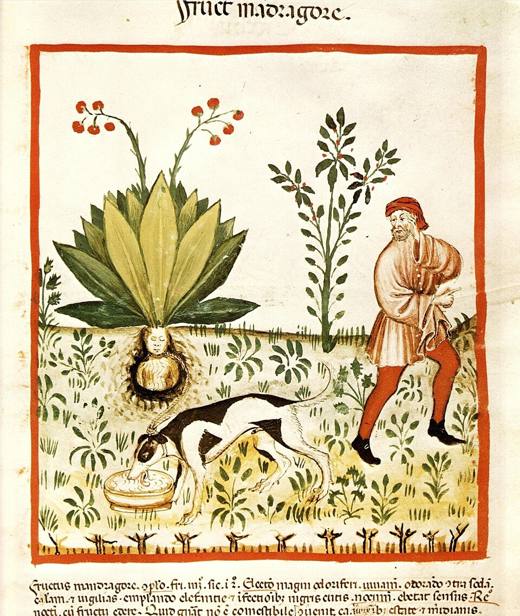
There were also dangerous “witches’ herbs”, such as deadly nightshade, henbane and thorn apple, which turn up in stories about flying ointments. Mandrake, with its human-like root, was said to scream when pulled from the ground.
Folk magic is cultural heritage. Appreciate it as a way in which people once understood their world.
The so-called witches’ herbs, such as deadly nightshade, henbane and thorn apple, are deadly poisonous. Never use them.
From the kitchen
There is no recipe from this tradition on the site yet. These recipes do use herbs it knows.
Registry
Europe · Food · № 244
Pyrus communis
A fibre-rich fruit with sorbitol, which is mildly laxative. In Chinese medicine pear (li) is cooked with rock sugar for a dry cough; no effect is described for other uses.
Asia · Food · № 249
Prunus persica
A juicy summer fruit. In Chinese medicine the kernels (tao ren) are used to move the blood; raw they are poisonous because of amygdalin.
Europe · Herb · № 219
Petroselinum crispum
A culinary herb rich in vitamins C and K. Root and seed were used as a diuretic. Large amounts of seed or oil are toxic and can induce contractions.
Central America and the Caribbean · Herb · № 212
Pimenta dioica
The dried berries contain eugenol, like cloves, and give a warm flavour. In Caribbean folk medicine they are used for stomach ache and wind; research is lacking.
Central America and the Caribbean · Food · № 263
Cucurbita moschata
Traditionally attributed effects: heart-warming and nourishing for body, mind and soul; good for skin and hair.
North America · Herb · № 192
Populus tremuloides
Traditionally attributed effects: astringent, fever-reducing, tonic, anti-inflammatory, pain-relieving (salicylates); restores the sensitive bladder (incontinence), calms the bowels in stress diarrhoea, heals wounds, lowers fever, relieves headache.
Europe · Food · № 264
Allium ampeloprasum var. porrum
A vegetable with fibre, vitamin K and sulphur compounds, related to onion and garlic. Leek soup is an old home remedy for colds and hoarseness.
Europe · Food · № 251
Prunus domestica
Prunes contain fibre and sorbitol and help with constipation; there is some research on this.
Asia · Food · № 267
Oryza sativa
Traditionally attributed effects: easily digestible, the basis of healing food; good for skin and hair.
Europe · Herb · № 99
Trifolium pratense
Contains isoflavones (plant oestrogens) and is sold for menopausal symptoms. NCCIH concludes there is no convincing evidence that it reduces hot flushes.
Europe · Herb · № 89
Rosa spp.
Rose hips are rich in vitamin C; a hip powder has been studied for osteoarthritis with modest results. Rose water and oil are used in skin care and as fragrance.
Africa · Food · № 25
Hibiscus sabdariffa
The red calyces make a tart drink. Folk medicine links it to blood pressure; it is not a substitute for treatment.
Europe · Herb · № 2
Salvia rosmarinus (syn. Rosmarinus officinalis)
An aromatic culinary herb with carnosic acid and rosmarinic acid. A few small studies point to a slight effect of the scent on alertness; that it improves memory has not been shown. The leaf is used for digestive complaints.
Africa · Herb · № 201
Pelargonium graveolens
Traditionally attributed effects: antidepressant, pain-relieving, diuretic, calming, tonic.
Europe · Herb · № 45
Salvia officinalis
A culinary herb. A few small studies suggest possible effects on memory and blood lipids, but evidence is limited.
Asia · Herb · № 140
Santalum album
Used in Ayurveda as a 'cooling' remedy for skin irritation and urinary complaints; the oil is used in aromatherapy. Clinical evidence is limited.
Europe · Herb · № 91
Salix alba
The bark contains salicin, which the body partly converts to salicylic acid. There are hints of a moderate effect on low back pain and joint pain.
Europe · Food · № 61
Apium graveolens
Vegetable and spice. The seed was traditionally used for gout, joint complaints and as a diuretic. Convincing clinical evidence is lacking.
Europe · Herb · № 204
Syringa vulgaris
An ornamental shrub with fragrant flowers. The flowers are edible but bitter; the bark was once tried as a bitter remedy for fever.
Africa · Food · № 356
Sesamum indicum
Traditionally attributed effects: soothing, softens the skin, diuretic, promotes menstruation and milk flow, laxative; leaves for respiratory complaints, diarrhoea and dysentery in children, bladder catarrh; seeds for bleeding haemorrhoids, absent or painful menstruation.
Asia · Food · № 220
Citrus sinensis
Traditionally attributed effects: against dandruff; sweet oranges good for skin and hair.
Europe · Herb · № 43
Hypericum perforatum
Research suggests it may help mild to moderate depression; evidence for other uses is insufficient.
Asia · Food · № 258
Lactuca sativa
A juicy leaf vegetable with some vitamin K and folate. The milky sap of the stem is mildly calming, but much weaker than that of wild lettuce.
Europe · Herb · № 95
Symphytum officinale
Topical preparations have been studied for bruises, sprains and back pain and appear to reduce pain. It contains allantoin, which is thought to support tissue repair.
Europe · Herb · № 236
Calluna vulgaris
The flowering herb was drunk as tea for bladder complaints and sleeplessness. Heather honey is a prized, jelly-like honey. A medicinal effect has not been studied.
Asia · Food · № 268
Triticum aestivum
Traditionally attributed effects: strengthens, rejuvenates, soothes ulcers, stimulates appetite, promotes healing of fractures, gives stability, healthy complexion; mildly aphrodisiac; anti-stress breakfast.
Asia · Herb · № 195
Taxus baccata
Traditionally attributed effects: carminative, expectorant, stomachic, tonic; leaf and fruit promote menstruation, calming, antispasmodic; for asthma, hiccups, indigestion, coughing up blood, epilepsy, stones, nervousness.
Europe · Herb · № 98
Thymus vulgaris
Traditionally used for coughs and bronchitis; thymol from the oil inhibits bacteria and fungi in the laboratory. There are some studies of thyme-based cough syrups.
Central America and the Caribbean · Food · № 157
Solanum lycopersicum
A fruit-vegetable with vitamin C and lycopene. Research on lycopene and heart or prostate health is mostly observational and not conclusive.
North America · Herb · № 152
Hamamelis virginiana
Strongly astringent due to tannins. Witch hazel water and ointment are used externally for minor skin irritation, bruises and haemorrhoids; there is limited but reasonably supportive evidence.
Asia · Herb · № 210
Tulipa spp.
An ornamental flower. The petals are edible; the bulbs were eaten in times of need but can cause eczema on contact ('tulip fingers'). In Persian poetry the red tulip stands for love and martyrdom.
Asia · Food · № 240
Allium cepa
Traditionally attributed effects: stimulating, diuretic, expectorant, skin-irritant, aphrodisiac, antiseptic; for cough, haemorrhoids, jaundice, indigestion, insect bites, boils, wounds, chilblains and sore joints.
Europe · Herb · № 20
Valeriana officinalis
The root has a traditional association with sleep and calm. Research on insomnia is inconsistent and does not establish benefit.
Europe · Herb · № 114
Arnica montana
Used externally for bruises and muscle aches. Studies give mixed results. Homeopathic arnica is so diluted that it contains no active substance.
Central America and the Caribbean · Herb · № 222
Vanilla planifolia
Traditionally attributed effects: gives a feeling of calm and comfort; fragrance.
Europe · Herb · № 72
Foeniculum vulgare
The seed is traditionally used for wind, bloating and cramps. There are some small studies, but evidence is limited.